If you are missing several teeth in a row, you may be wondering whether an implant-supported bridge is the best way to restore your smile. This treatment uses dental implants instead of neighboring teeth to support a bridge, creating a stable and natural-looking replacement. It can improve chewing, speaking, and confidence while helping preserve your jawbone.
Choosing the right tooth replacement is not always easy. You may be comparing an implant-supported bridge with a traditional bridge, dentures, or individual implants. Each option has distinct benefits, drawbacks, costs, and treatment steps, so understanding the differences is important for making an informed decision.
Long-term success also depends on factors such as bone health, healing, daily care, and regular dental visits. The sections below explain how an implant-supported bridge works, who is a good candidate, what the procedure involves, and what you can expect before, during, and after treatment.
What Is an Implant-Supported Bridge?
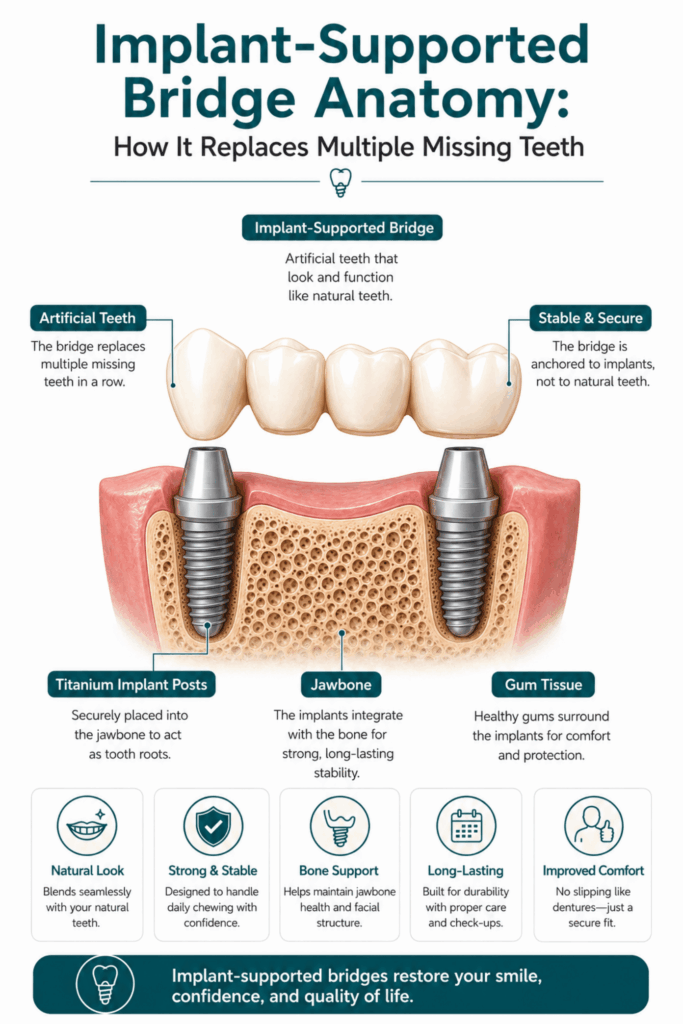
An implant-supported bridge is a fixed restoration that replaces multiple missing teeth by attaching to dental implants instead of natural teeth. Rather than relying on adjacent natural teeth for support, titanium implant posts are placed into the jawbone, where they act as artificial tooth roots and hold a custom bridge securely in place.
This type of dental bridge is often recommended for patients with several missing teeth in a row. Unlike a traditional dental bridge, an implant bridge helps preserve healthy teeth, improves chewing strength, and provides a stable solution that looks and feels like natural teeth. For many people, it offers a long-lasting way to replace missing teeth while supporting better oral health.
When Is an Implant-Supported Bridge Recommended?
An implant-supported bridge is commonly used when several neighboring teeth are missing and a patient wants a fixed replacement instead of removable partial dentures. Dental implants to support the bridge provide excellent stability while reducing stress on surrounding teeth and helping maintain jawbone health.
It may be recommended in the following situations:
- Multiple Adjacent Missing Teeth: An implant-supported dental bridge is ideal when two or more teeth in the same area have been lost and need to be replaced together.
- Healthy Gums: Good dental and gum health reduces the risk of complications and improves long-term healing around the supporting teeth and implant sites.
- Adequate Jawbone Volume: Dental implants are small titanium posts that need enough bone for stability. If bone loss has occurred, a bone graft may be recommended before implant placement.
- Desire for a Fixed Solution: Patients who dislike removable appliances often prefer a fixed bridge that stays in place all day.
- Protection of Healthy Teeth: Unlike traditional bridges that require adjacent natural teeth for support, implant-supported bridges do not require grinding down healthy teeth.
- Need for Better Chewing Ability: A bridge supported by dental implants provides greater stability and allows patients to chew a wider variety of foods with confidence.
- Long-Term Tooth Replacement: Studies show that dental implants can help provide durable support for restorations and may last for decades with proper care and maintenance.
How Does an Implant-Supported Bridge Work?
An implant-supported bridge uses dental implants instead of natural teeth to support a dental bridge. During treatment, implants are placed into the jawbone, where they gradually bond with the bone and become stable artificial tooth roots. Once healing is complete, a custom bridge is attached to the implant posts to replace multiple missing teeth.
Because the bridge is anchored directly to implants, chewing forces are distributed through the jaw instead of neighboring teeth. This creates a stable fixed bridge that looks and feels like natural teeth while helping reduce bone loss after tooth loss. The restoration also restores the ability to chew, speak, and smile comfortably without worrying about movement.
Step-by-Step Implant-Supported Bridge Procedure
Getting an implant-supported bridge takes several appointments over a few months. Although the process requires patience, each stage is designed to create a stable restoration that functions like natural teeth and supports long-term oral health.
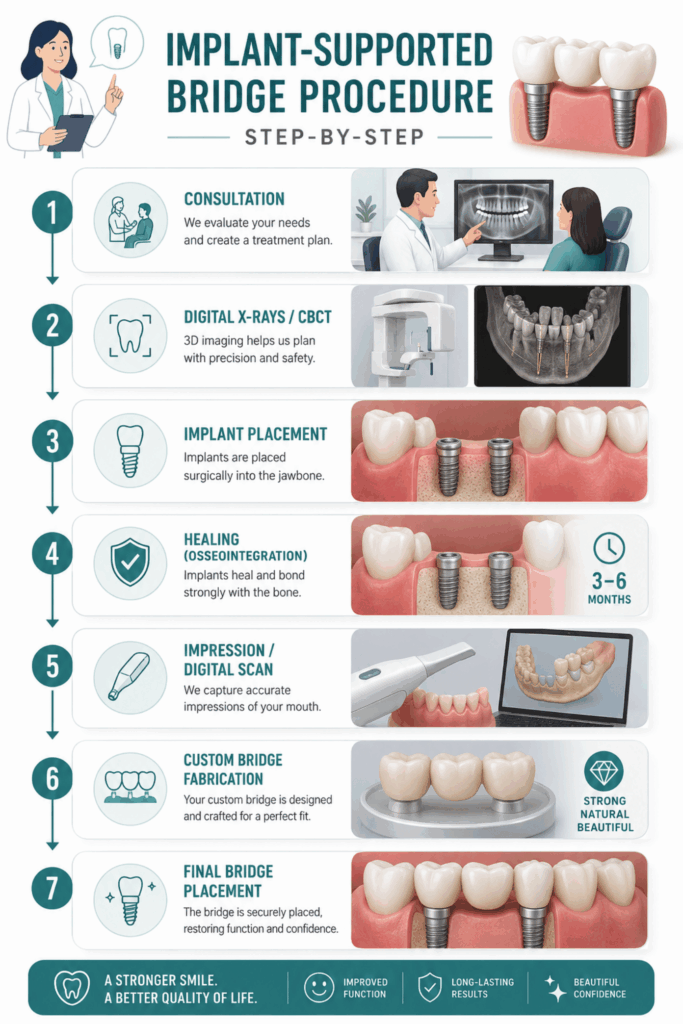
- Comprehensive Evaluation: Your dentist examines your teeth, gums, and jawbone and discusses whether you are a candidate for dental implants.
- Digital Imaging and Planning: X-rays or 3D scans help determine where implants to support a bridge should be placed for the best stability.
- Implant Placement: Titanium implant posts are surgically inserted into the jawbone and begin healing beneath the gums.
- Healing and Bone Integration: Over the next several months, the implants attach to the surrounding bone and become strong enough to support a dental bridge.
- Impressions for the Custom Bridge: Once healing is complete, impressions or digital scans are sent to a dental laboratory to create a custom bridge that matches your smile.
- Final Bridge Placement: The final bridge is attached to the implant posts, and your dentist adjusts the bite, appearance, and comfort before securing the restoration.
- Follow-Up Visits: Regular checkups ensure the implant bridge remains stable and that the gums and implant sites stay healthy.
Consultation and Treatment Planning
Treatment begins with a complete dental examination, including X-rays or 3D imaging to evaluate the jawbone, healthy teeth, and gum condition. Your dentist determines the number and position of implants needed based on the location of multiple missing teeth, bite forces, and the size of the bridge that replaces them. Careful planning improves both function and long-term success.
Dental Implant Placement
During implant placement, titanium implant posts are inserted into the jawbone under local anesthesia or appropriate sedation. Mild swelling and soreness are common for a few days, while the implants heal over several months as they bond with the bone. Precise implant placement is essential because it affects the stability, appearance, and longevity of the dental implant-supported bridge.
Bridge Placement
After healing is complete, the custom bridge is attached to the implant posts. Your dentist carefully checks the fit, bite alignment, and appearance before securing the restoration. Small adjustments ensure the bridge feels comfortable, functions efficiently during chewing, and blends naturally with the rest of your smile.
Benefits of an Implant-Supported Bridge
An implant-supported bridge offers more than simply replacing missing teeth. Using implants instead of natural teeth for support, it restores function while helping protect surrounding tissues and preserving long-term oral health.
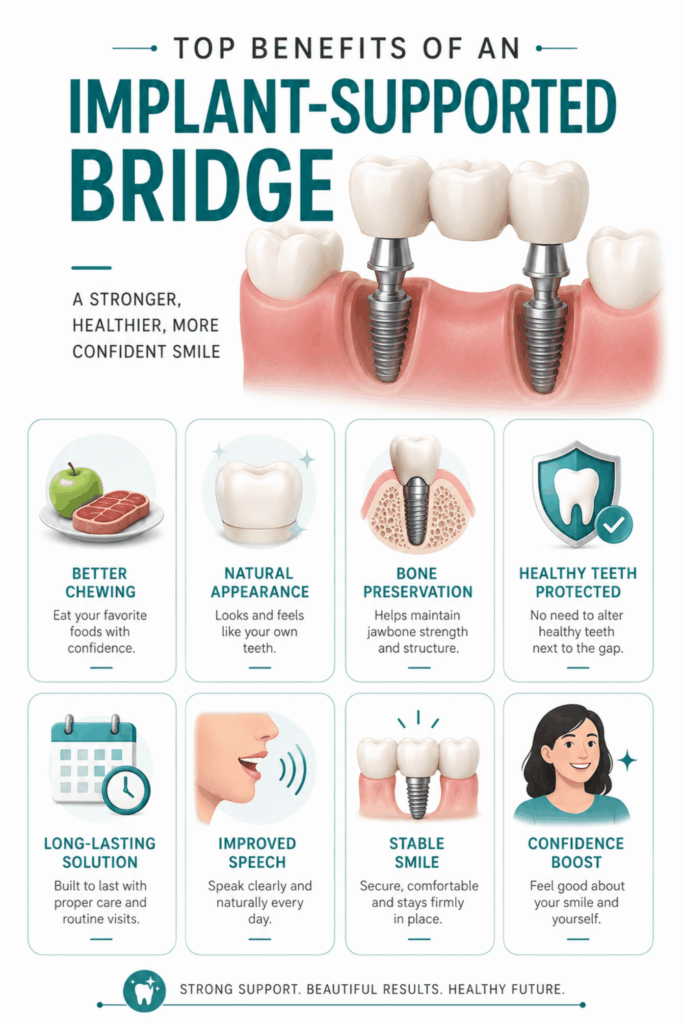
- Provides Excellent Stability: Because the bridge is anchored to implant posts, it stays firmly in place during eating and speaking without unwanted movement.
- Restores Chewing Ability: A fixed bridge supported by dental implants allows patients to bite and chew more comfortably than many removable alternatives.
- Looks and Feels Natural: Modern artificial teeth are designed to closely match natural teeth in shape, size, and color for a confident smile.
- Preserves Jawbone Structure: Since implants act as artificial tooth roots, they stimulate the jawbone and help reduce bone loss after tooth loss.
- Protects Healthy Teeth: Unlike traditional dental bridges, implant-supported bridges do not require adjacent natural teeth for support or reshaping.
- Supports Long-Term Oral Health: Maintaining natural tooth structure and preserving bone contributes to a healthier mouth over time.
- Offers Reliable Durability: Implant-supported bridges can last many years with proper care and maintenance, making them a dependable long-term solution.
- Improves Speech and Confidence: A stable bridge stays in place while talking and smiling, helping patients feel more comfortable in everyday situations.
- Functions Like Natural Teeth: Many patients quickly adapt to the restoration and enjoy eating, speaking, and smiling with minimal limitations.
- Can Replace Multiple Missing Teeth Efficiently: Instead of placing a single dental implant for every missing tooth, a bridge uses implants to support several replacement teeth, reducing treatment complexity in appropriate cases.
Drawbacks of an Implant-Supported Bridge
Although implant-supported bridges offer many advantages, they are not the best option for every patient. Understanding the limitations helps you make a well-informed treatment decision with your dentist.
- Requires Oral Surgery: Implant placement is a surgical procedure, so healing time and temporary discomfort should be expected.
- Longer Treatment Timeline: Several months may be needed before the final bridge is placed because implants must fully integrate with the jawbone.
- Higher Initial Cost: Implant-supported bridges generally cost more upfront than a traditional dental bridge or removable partial dentures, although they may provide greater long-term value.
- May Require Bone Grafting: Patients with significant bone loss may need additional procedures before dental implants can be placed safely.
- Not Every Patient Is a Candidate: Uncontrolled gum disease, poor oral hygiene, certain medical conditions, or heavy smoking may reduce implant success.
- Requires Ongoing Maintenance: Daily cleaning around the bridge and routine professional visits are essential to protect the implants and surrounding gums.
- Possible Mechanical Problems: Like any restoration, dental crowns or bridge components may occasionally loosen, wear, or chip and require repair.
- Healing Depends on Individual Factors: Bone quality, general health, smoking habits, and proper care all influence how well implants heal and how long the restoration lasts.
- Can Be Difficult to Repair in Some Cases: If one part of the bridge or implant system develops a problem, treatment may be more complex than repairing a conventional restoration.
- Needs Careful Planning: Successful implant-supported bridges depend on accurate implant placement, proper bite design, and a well-made custom bridge from an experienced dental team.
Implant-Supported Bridge vs Traditional Bridge
| Feature | Implant-Supported Bridge | Traditional Dental Bridge |
|---|---|---|
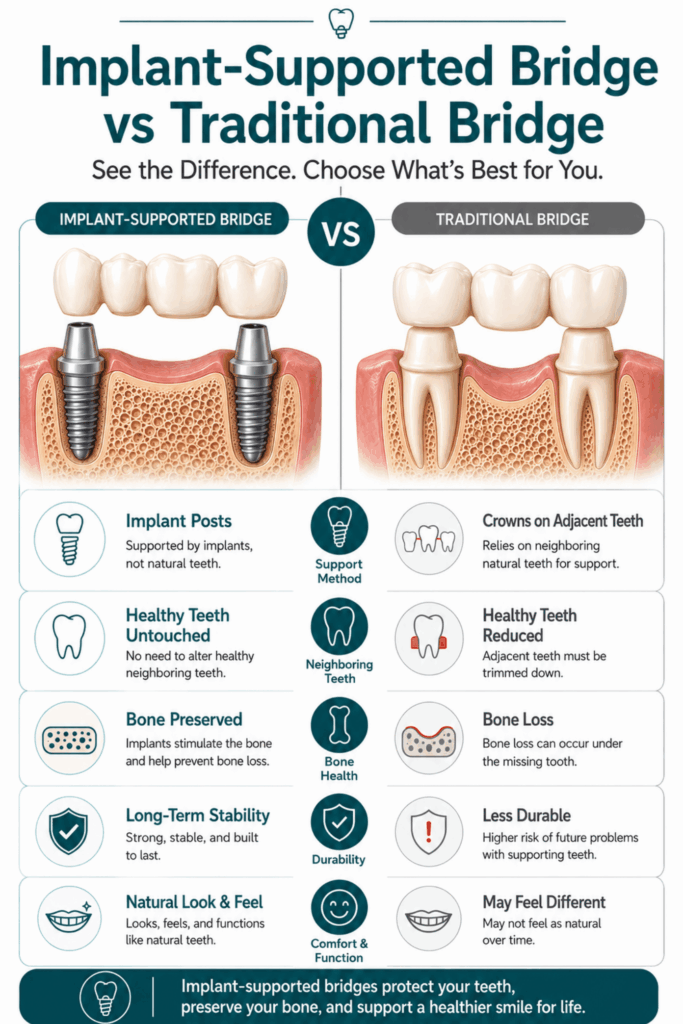
| Support Method | Supported by dental implants that act as artificial tooth roots | Supported by adjacent natural teeth with dental crowns |
| Impact on Healthy Teeth | Does not require healthy teeth for support | Requires reshaping healthy teeth for support |
| Stability | Fixed securely to implant posts for excellent stability | Stable but depends on the strength of supporting teeth |
| Jawbone Health | Helps reduce bone loss by stimulating the jawbone | Does not prevent bone loss beneath the missing teeth |
| Durability | Implant-supported bridges can last many years with proper care | Long-lasting but may need replacement sooner if supporting teeth develop decay or damage |
| Daily Care | Brushing, flossing, and cleaning around implant sites are essential | Similar daily care, with extra attention around dental crowns |
| Best For | Multiple missing teeth with adequate bone support | Patients who cannot receive dental implants or prefer a non-surgical option |
Both treatments can successfully replace missing teeth, but they work differently. Unlike traditional bridges, an implant-supported bridge preserves healthy teeth and helps maintain the jawbone after tooth loss. A traditional dental bridge may still be an excellent choice when surgery is not appropriate or when faster treatment is preferred.
Implant-Supported Bridge vs Traditional Dentures
| Feature | Implant-Supported Bridge | Traditional Dentures |
|---|---|---|
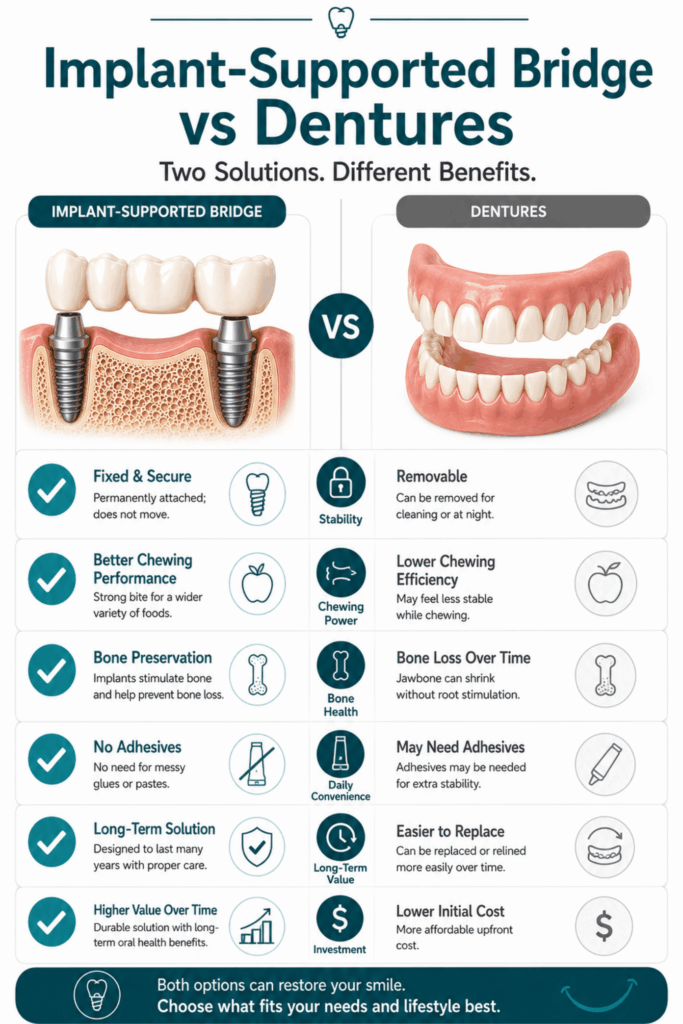
| Type of Restoration | Fixed bridge attached to implants | Removable appliance |
| Stability | Remains firmly in place during daily activities | May shift while eating or speaking |
| Chewing Ability | Provides a stronger biting force and better function | May limit certain foods |
| Appearance | Closely mimics natural teeth | Natural-looking but removable |
| Bone Preservation | Dental implants can help reduce bone loss | Does not stimulate the jawbone |
| Comfort | No movement or adhesive required | Some patients experience sore spots or looseness |
| Cleaning | Cleaned while remaining in the mouth | Removed daily for cleaning |
| Ideal Candidate | Patients seeking a fixed solution | Patients who prefer or require a removable restoration |
Many people prefer an implant-supported bridge because it offers greater stability and feels more like natural teeth. However, removable partial dentures or complete dentures remain practical options for patients with significant bone loss, medical limitations, or budget concerns.
Implant-Supported Bridge vs Individual Dental Implants
| Feature | Implant-Supported Bridge | Individual Dental Implants |
|---|---|---|
| Replacement Method | One bridge replaces several missing teeth | One implant supports one tooth |
| Number of Implants | Fewer implant posts may be needed | A single dental implant is placed for each missing tooth |
| Treatment Complexity | Often involves fewer implants and restorations | More implant placement procedures may be required |
| Cost | Usually lower than replacing every tooth individually | Higher when multiple implants are needed |
| Maintenance | The entire bridge is cleaned as one restoration | Each implant is cleaned individually |
| Clinical Use | Best for several adjacent missing teeth | Best when preserving individual tooth replacement is possible |
Both approaches provide excellent fixed solutions. A bridge supported by dental implants often reduces the number of implants needed while restoring multiple missing teeth, whereas individual implants offer separate support for each replacement tooth. Your dentist will recommend the option that best matches your bone structure, bite, and long-term goals.
How Long Does an Implant-Supported Bridge Last?
An implant-supported bridge is designed for long-term function. The titanium implant posts often last for decades and may even last a lifetime when they remain healthy and fully integrated with the jawbone. The bridge restoration itself is also durable but may eventually need repair or replacement because of normal wear.
Several factors influence longevity, including oral hygiene, smoking habits, bite forces, gum health, and regular professional care. Maintaining your implant-supported bridge with daily cleaning and routine dental visits greatly improves the chances of long-term success and helps protect both the implants and surrounding tissues.
Recovery After Getting an Implant-Supported Bridge
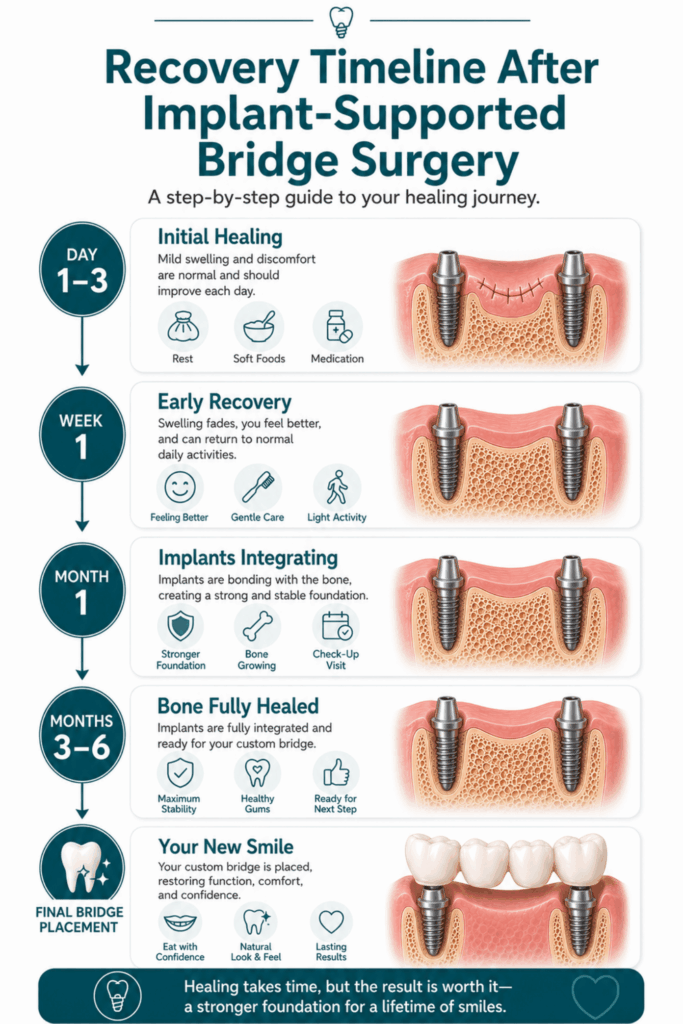
Recovery occurs in stages, beginning after implant placement and continuing until the final bridge is placed. Mild discomfort is expected for a few days, while complete healing between the implants and bone takes several months. Following your dentist’s instructions helps support healing and reduces the risk of complications.
- Expect Mild Swelling: Minor swelling and tenderness around the implant sites are common during the first few days and usually improve steadily.
- Manage Discomfort Properly: Take prescribed or recommended medications as directed to control soreness and inflammation.
- Choose Soft Foods: Eat yogurt, eggs, soup, mashed vegetables, and other soft foods while the surgical area heals.
- Avoid Excessive Chewing: Do not place heavy biting pressure on the implant area until your dentist confirms proper healing.
- Maintain Gentle Oral Hygiene: Brush carefully and follow cleaning instructions to keep the implant sites free of harmful bacteria.
- Avoid Smoking: Smoking slows healing and increases the risk of implant failure and gum disease.
- Limit Strenuous Activity: Rest during the first few days and avoid heavy exercise if your dentist recommends it.
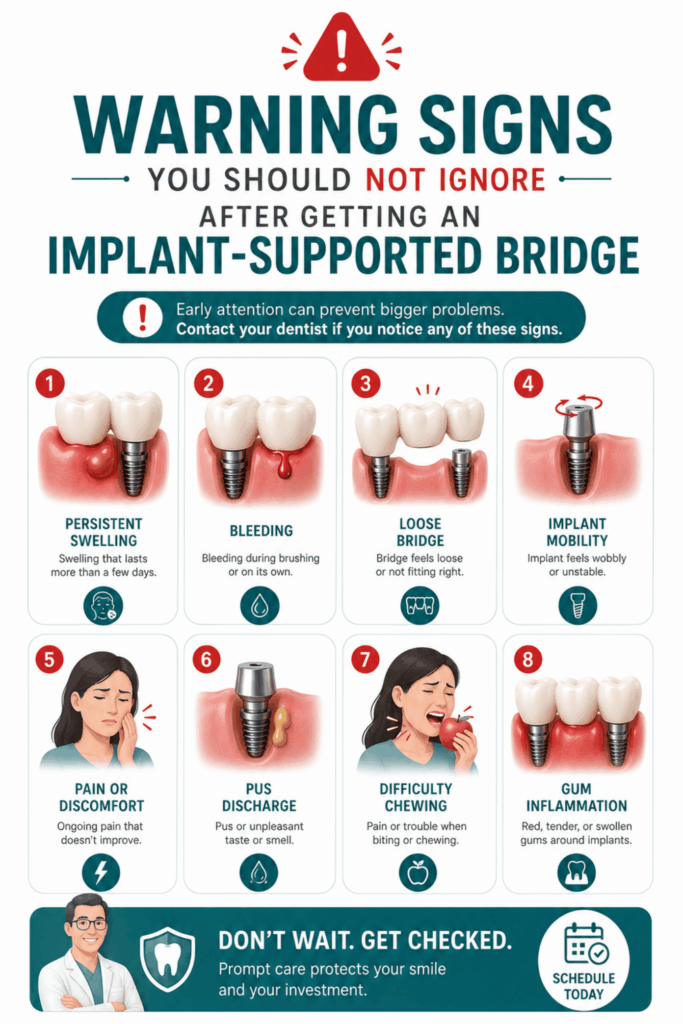
- Watch for Warning Signs: Persistent swelling, increasing pain, fever, pus, or unusual movement around the implants should prompt an immediate call to your dentist.
How to Care for an Implant-Supported Bridge
Proper care and maintenance help keep both the bridge and implants healthy for many years. Although implants cannot develop decay like natural teeth, the surrounding gums and bone still require daily attention.
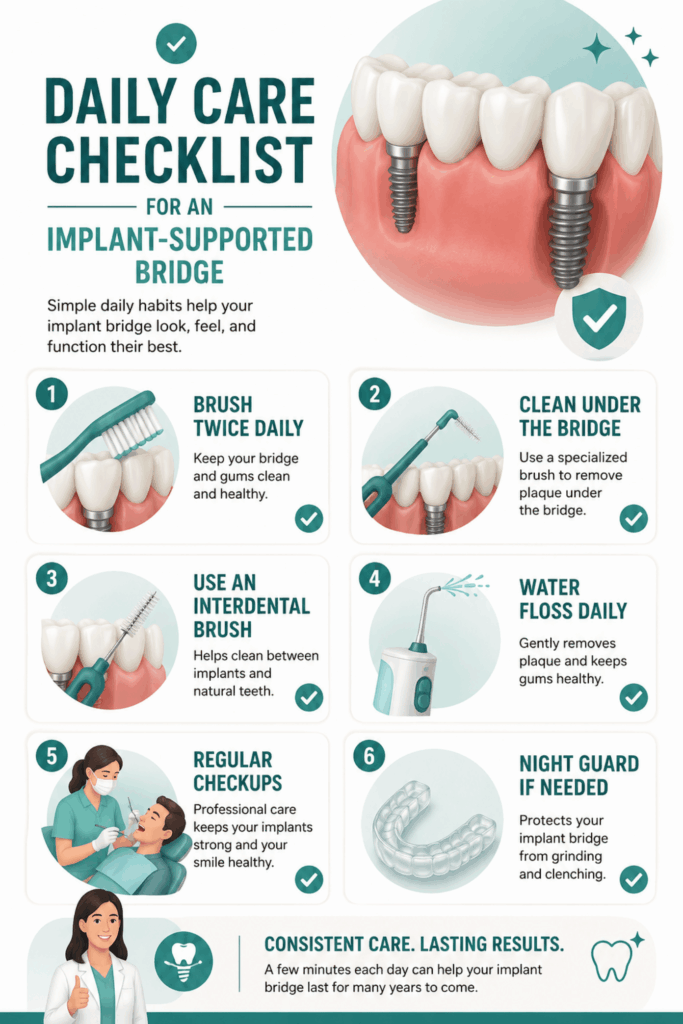
- Brush Twice Daily: Use a soft toothbrush to remove plaque around the bridge and gumline.
- Clean Under the Bridge: Special floss, floss threaders, or interdental brushes help clean areas that regular floss cannot easily reach.
- Use Recommended Cleaning Aids: Water flossers and other dentist-approved tools can improve cleaning around implant posts.
- Schedule Regular Checkups: Professional examinations allow your dentist to monitor the bridge, implants, and supporting tissues.
- Protect Against Excessive Force: A night guard may be recommended if you grind or clench your teeth while sleeping.
- Maintain Healthy Gums: Good dental hygiene reduces inflammation and supports long-term implant stability.
- Eat a Balanced Diet: Proper nutrition supports healthy gums and bone around the implants.
- Report Changes Early: If the bridge feels loose or uncomfortable, seek evaluation before a small problem becomes a larger one.
Possible Risks and Complications
Implant-supported bridges have high success rates, but like any dental treatment, complications can occur. Early recognition and prompt treatment often prevent minor issues from becoming serious problems.
- Implant Failure: Rarely, an implant may not properly bond with the jawbone, making replacement or additional treatment necessary.
- Infection Around Implants: Bacteria can cause inflammation or infection if plaque is allowed to accumulate around implant sites.
- Gum Inflammation: Redness, swelling, or bleeding around the supporting teeth or implants may indicate irritation that needs professional care.
- Loose Bridge Components: Screws or other components may loosen over time and require simple adjustment.
- Bridge Damage: Artificial teeth or dental crowns can occasionally chip or wear with heavy use.
- Bite Problems: An uneven bite may create excessive pressure that affects comfort or long-term stability.
- Bone Loss Around Implants: Poor oral hygiene, smoking, or untreated gum disease may contribute to gradual bone loss.
- Persistent Pain or Swelling: Ongoing discomfort after the expected healing period should always be evaluated by a dentist.
- Difficulty Chewing: Changes in function or pressure may indicate that the bridge needs adjustment.
- Unusual Mobility: An implant-supported bridge should remain stable, so any movement requires prompt professional assessment.
How Much Does an Implant-Supported Bridge Cost?
The cost of an implant-supported bridge depends on many factors rather than a single fixed price. The number of implants to support the bridge, the size of the restoration, the bridge material, and the complexity of implant placement all influence the final treatment cost. Additional procedures, such as bone grafting or tooth extraction, may also increase the overall investment.
Because every patient has unique needs, average prices rarely reflect the actual treatment plan. A personalized consultation allows your dentist to evaluate your oral health, determine whether you are a candidate for dental implants, and provide a detailed estimate based on your specific situation. Choosing treatment based on long-term function, durability, and oral health often provides greater value than comparing prices alone.
Frequently Asked Questions
Can an Implant-Supported Bridge Replace Front Teeth?
Yes. An implant-supported bridge can replace multiple missing front teeth while providing excellent stability and a natural appearance. Your dentist carefully plans the implant position and custom bridge design to match the shape, color, and alignment of your smile, creating a restoration that looks and feels like natural teeth.
How Many Implants Are Needed for an Implant-Supported Bridge?
The number of implants depends on how many teeth are missing, the location of the gap, your bite, and the quality of your jawbone. In many cases, two implants can support a bridge that replaces three or four teeth, while larger restorations may require additional implant posts. For a complete arch, treatment options such as All-on-4 or All-on-6 dental implants may be recommended to support a full fixed restoration.
Can an Implant-Supported Bridge Be Repaired?
Often, yes. Minor problems such as chipped porcelain, worn artificial teeth, or loose components can frequently be repaired without replacing the entire restoration. If the damage is extensive or the bridge no longer fits properly, your dentist may recommend replacing the custom bridge while keeping the existing implants if they remain healthy and stable.
Is an Implant-Supported Bridge Better Than Dentures?
It depends on your oral health, treatment goals, and budget. An implant-supported bridge provides greater stability, improved chewing ability, and better bone preservation than removable dentures because it is fixed in place. However, dentures remain a practical solution for many patients who prefer a removable option or are not candidates for dental implants.
Can Food Get Under an Implant-Supported Bridge?
Yes. Small food particles can collect beneath a fixed bridge, which is why daily cleaning is essential. Special floss, floss threaders, interdental brushes, or water flossers help remove debris and plaque from areas that a regular toothbrush cannot reach, reducing the risk of gum inflammation and keeping the implants healthy.
Key Takeaways
An implant-supported bridge is a fixed solution that replaces multiple missing teeth by attaching a custom bridge to dental implants instead of natural teeth. Because the implants act as artificial tooth roots, the restoration stays securely in place, restores chewing function, helps preserve the jawbone, and protects adjacent healthy teeth from unnecessary preparation. While the treatment involves surgery, healing time, and a higher initial investment, many patients benefit from its stability, durability, and natural appearance.
The best tooth replacement option depends on your oral health, bone support, lifestyle, and long-term goals. Whether you are comparing an implant bridge with a traditional dental bridge, removable partial dentures, or individual implants, a comprehensive dental evaluation is the best way to determine the right treatment plan. With proper care and maintenance, regular dental visits, and good oral hygiene, an implant-supported bridge can provide comfortable function and a confident smile for many years.
