Seeing blood on your child’s toothbrush or noticing red, puffy gums can be worrying. Gum disease in children is possible, but the most common form is gingivitis, an early stage caused mainly by plaque around the gumline. At this stage, the gums are inflamed, but the supporting bone is not damaged.
Early gingivitis can often improve with better daily cleaning and professional dental care. Still, bleeding or swelling should not be dismissed as normal, especially when it keeps returning. A dentist can check whether the problem comes from plaque, an erupting tooth, braces, a medicine, or another health condition.
The next step depends on the symptoms and how long they have lasted. Mild inflammation may need improved brushing, cleaning between the teeth, and a dental cleaning. Pain, pus, facial swelling, loose permanent teeth, or ongoing bleeding needs prompt assessment. First, it helps to understand what gum disease means in a growing mouth.
What Is Gum Disease in Children?
Gum disease in children is inflammation or infection of the tissues surrounding the teeth. It usually begins when dental plaque collects along the gum line. Plaque contains bacteria that can irritate the gums if brushing and flossing do not remove it regularly.
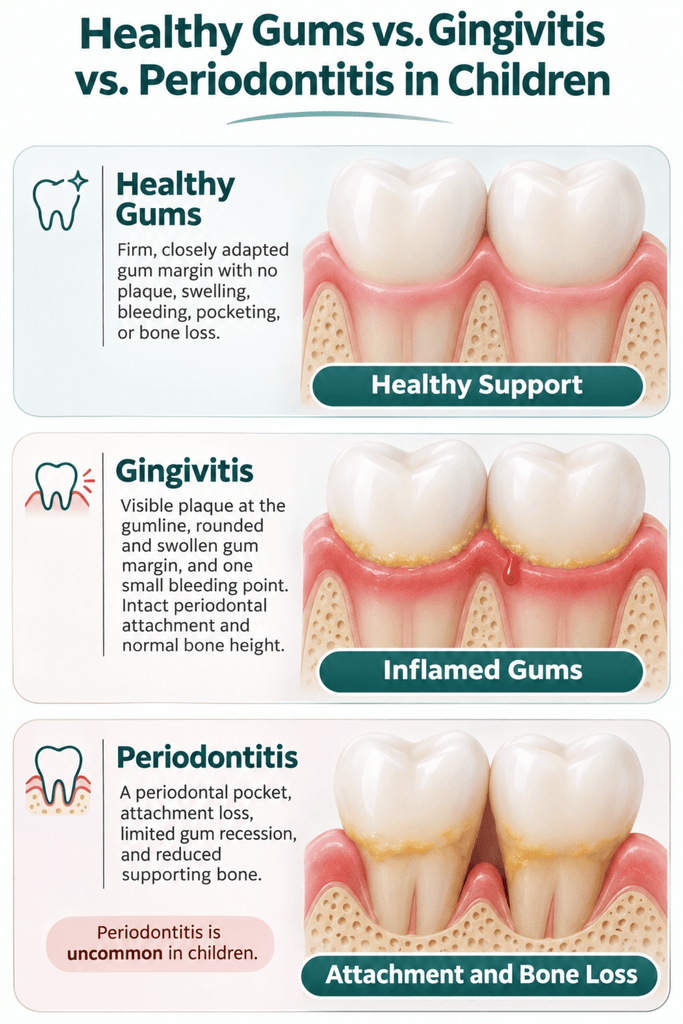
The most common form of gum disease among children and adolescents is gingivitis. Periodontitis, which damages the structures that support the teeth, is much less common. The American Academy of Pediatric Dentistry’s guidance on pediatric periodontal conditions explains how dentists assess, classify, and manage these conditions in young patients.
| Feature | Gingivitis | Periodontitis |
|---|---|---|
| Affected tissues | The surface gum tissue | The gums, periodontal attachment, and supporting bone |
| Common signs | Redness, swelling, tenderness, and bleeding gums | Gum recession, deep pockets, bone loss, or loose permanent teeth |
| Frequency in children | Relatively common | Uncommon |
| Damage | Does not destroy the tissues supporting the teeth | Causes loss of attachment and supporting bone |
| Can it be reversed? | Usually, when the cause is controlled early | Lost support cannot be restored through home care alone |
| Usual care | Better oral hygiene and professional cleaning | Individual periodontal treatment and possible specialist care |
Red or bleeding gums do not automatically mean a child has periodontitis. However, recurring symptoms deserve attention because a dentist must examine the gums and teeth to identify the cause and severity of the disease.
Can Gum Disease in Children Be Reversed?
Plaque-related gingivitis in children can usually be reversed. Thorough daily cleaning and professional removal of plaque and tartar allow the inflammation of the gums to settle. How quickly the gums recover depends on the cause, the amount of buildup, and how consistently the child follows the treatment plan.
Periodontitis is different because it destroys some of the attachment and bone around the teeth. Treatment can control the infection and help prevent further damage, but it cannot simply reverse all the support already lost. The CDC’s guidance on preventing and treating periodontal disease distinguishes reversible gingivitis from the professional treatment required for periodontitis.
Signs of Gum Disease in Children
Parents may first notice gum problems while helping a child brush, checking around braces, or responding to bad breath. Early gum disease may cause little discomfort, so visible changes can appear before a child reports pain.
Common Early Signs
Common signs of gum disease include:
- Bleeding During Cleaning: The gums may bleed when the child brushes or flosses, even when the cleaning pressure is gentle.
- Red or Darker Gums: Healthy gums usually look firm and evenly colored. Inflamed gums may appear bright red, dark red, or purplish.
- Swollen or Puffy Tissue: The gum tissue may look rounded or enlarged instead of fitting closely around each tooth.
- Tender or Shiny Gums: A child may report soreness during brushing or eating. The surface can also look smooth and shiny.
- Plaque Along the Gum Line: A soft, pale, or yellow film may be visible where the gums and teeth meet.
- Persistent Bad Breath: Bad breath that returns soon after brushing can be related to plaque, gum inflammation, tooth decay, or another oral health problem.
A small amount of bleeding after an accidental injury is different from gums that bleed repeatedly. Recurring bleeding gums in children should be discussed with a dentist.
Signs of More Serious Gum Disease
More advanced periodontal disease is uncommon in children, but it can affect children with certain health conditions or a higher risk for periodontal disease. The following signs need professional evaluation:
- Gum Recession: The gums pull away from a tooth, making it look longer.
- Pus Around a Tooth: Pus, an unpleasant taste, or a pimple-like bump may point to infection.
- Deep Spaces Around Teeth: The gum may separate from the tooth and create a periodontal pocket.
- Loose Permanent Teeth: A permanent tooth that moves without a recent injury requires prompt attention.
- New Gaps or Tooth Movement: Teeth may shift as the tissues supporting them become damaged.
- Changes in the Bite: The upper and lower teeth may no longer fit together in the same way.
These findings do not confirm periodontitis by themselves. Decay, a tooth-root infection, injury, normal tooth loss, and other conditions can produce similar changes.
What Causes Gum Disease in Children?
Dental plaque is the main cause of gingivitis in children. However, age, tooth position, orthodontic appliances, hormones, health conditions, and medicines can affect how quickly plaque collects or how strongly the gums react to it.
Plaque and Incomplete Daily Cleaning
Plaque forms on the teeth every day. It tends to collect around the gum line, between teeth, behind the lower front teeth, and around molars. Poor oral hygiene allows this bacterial film to remain in contact with the child’s gums, causing redness, swelling, and bleeding.
Plaque that remains for long enough can absorb minerals and become tartar, also called calculus. A toothbrush cannot remove hardened plaque and tartar. A dentist or dental hygienist must remove these deposits with professional instruments.
Erupting Teeth, Braces, and Mouth Breathing
Some parts of a child’s mouth are more difficult to clean than others. Local inflammation may develop even when the rest of the gums appear healthy.
- Erupting Teeth: A partly erupted molar can leave a flap or pocket where plaque and food collect.
- Crowded Teeth: Overlapping teeth create narrow spaces that a toothbrush may not reach well.
- Braces and Retainers: Brackets, wires, bands, and removable appliances can trap plaque near the gums.
- Mouth Breathing: Constant airflow can dry and irritate the gum tissue, especially around the upper front teeth.
- Limited Brushing Skills: Young children may brush the easy-to-reach surfaces while missing the gum line and back teeth.
These factors do not guarantee that children get gum disease. They mean the child may need more help with daily cleaning and regular dental monitoring.
Puberty and Teen Gum Health
Hormonal changes during puberty can make gums more sensitive to plaque. A small amount of plaque may produce more redness, swelling, or bleeding than it did before puberty. Hormones alone do not cause gum disease; dental plaque is still the main trigger.
Teenagers may also have braces, irregular brushing habits, frequent snacks, or less parental supervision. Vaping, smoking, and smokeless tobacco can further harm gum health and may change how the gums respond to infection. A pediatric dentist can help the teenager build a routine that fits around school, sports, and orthodontic care.
Medical Conditions and Medicines
Most gingivitis in children is related to plaque. However, some children have conditions that increase the risk of gum inflammation or periodontitis.
- Diabetes: Poorly controlled blood sugar can increase inflammation and make infections harder to manage.
- Immune Conditions: Disorders that affect infection-fighting cells may raise the risk of unusual or rapidly progressing periodontal disease.
- Genetic Conditions: A small number of inherited conditions can affect immune function, gum tissue, or the bone around teeth.
- Nutritional Problems: Severe nutritional deficiencies can affect healing and oral tissues, although they are not a common cause of ordinary gingivitis.
- Dry-Mouth Medicines: Some medicines reduce saliva, making plaque control more difficult.
- Gum-Enlarging Medicines: Certain seizure, immune-suppressing, or blood-pressure medicines can cause gum overgrowth in some patients.
Parents should give the dentist a current list of medicines, diagnoses, and recent health changes. The dental and medical teams may need to coordinate care when gum disease develops alongside a systemic condition.
Does Every Red or Bleeding Gum Mean Gum Disease?
No. Redness or bleeding can come from brushing too hard, a sharp food edge, trapped food, a mouth ulcer, or inflammation around an erupting tooth. A decayed tooth or infection near the root can also cause localized swelling that may look like a gum problem.
The location and pattern offer helpful clues, but they do not provide a diagnosis. Bleeding around many teeth often suggests widespread plaque-related gingivitis. Swelling around one tooth may have a local cause. A dental examination is important when the change returns, lasts, causes pain, or appears with pus, fever, facial swelling, or difficulty eating.
How Dentists Diagnose Gum Disease in Children
Dentists diagnose gum disease by combining the child’s symptoms, medical history, clinical findings, and, when necessary, dental X-rays. The examination should match the child’s age, stage of dental development, risk factors, and ability to cooperate.
Gum, Tooth, and Plaque Examination
A periodontal assessment may include the following steps:
- Reviewing the Symptoms: The dentist asks when the bleeding, swelling, pain, or bad breath began and whether it has changed.
- Checking Medical and Dental History: Health conditions, medicines, family history, brushing habits, orthodontic appliances, and previous treatment can affect the diagnosis.
- Looking for Plaque and Tartar: The dentist identifies where deposits collect and whether the child is missing certain areas during brushing.
- Examining the Gums: The dentist checks color, shape, swelling, recession, tenderness, and bleeding.
- Checking the Teeth and Bite: Tooth mobility, new spaces, decay, erupting teeth, or a change in the bite may point to a deeper or different problem.
The dentist may use plaque disclosure, photographs, or a simple brushing demonstration to show the child and parent which areas need more attention.
Gum Measurements and Dental X-Rays
A thin periodontal probe can measure the space between a tooth and the surrounding gum. Dentists interpret these measurements carefully in children because erupting teeth and changing gum positions can create deeper spaces without true periodontitis. The child’s age, tooth development, bleeding, plaque levels, and attachment to the tooth all matter.
Dental X-rays are not taken simply because a child reaches a certain age. They are used when the history and examination show that the images may help identify bone loss, infection, tooth development, or another problem. The AAPD’s recommendations for prescribing dental X-rays in children support selecting images according to individual findings and minimizing unnecessary radiation.
When a Specialist May Be Needed
A pediatric dentist or periodontist may become involved when the examination shows attachment loss, bone loss, rapidly changing symptoms, an unusual disease pattern, or a possible link to a medical condition. Referral may also be appropriate when treatment is complex or when a young child needs specialized behavior support. A pattern affecting first molars and incisors, especially with little visible plaque, deserves careful investigation.
How Gum Disease in Children Is Treated
Treatment options depend on whether the child has gingivitis, periodontitis, a local infection, or another condition that resembles gum disease. The goal is to control the cause, help the gum tissue heal, and protect the structures around the teeth.
Treatment for Gingivitis
Treatment for plaque-related gingivitis usually follows a straightforward sequence:
- Improve Plaque Removal: The dental team shows the child and parent how to brush the gum line and clean between touching teeth.
- Remove Plaque and Tartar: A professional cleaning removes deposits that the child cannot clear at home.
- Correct Plaque Traps: The dentist checks braces, crowded areas, rough fillings, cavities, and appliances that make cleaning harder.
- Manage Related Risk Factors: Dry mouth, mouth breathing, diet, medicines, and health conditions may need attention.
- Recheck the Gums: A follow-up visit confirms whether bleeding, swelling, and plaque levels have improved.
The child still needs daily care after the gums look healthier. Gingivitis can return when plaque begins collecting again.
Treatment for Periodontitis
Periodontitis requires an individualized treatment plan. Professional care may include cleaning below the gum line, controlling plaque above it, managing related health conditions, and monitoring gum measurements over time. Local anesthesia or behavior guidance may be needed, depending on the child’s age and the severity of the disease.
A periodontist may treat deeper pockets or bone loss around permanent teeth. Treatment must account for primary teeth, developing permanent teeth, tooth eruption, and areas that still have growth potential. Periodontal surgery is not routine in children and is considered only in carefully selected cases.
Antibiotics and Medicated Mouthwash
Antibiotics are not routine treatment for ordinary gingivitis. Cleaning away plaque and tartar is more important because antibiotics cannot correct poor plaque control. A dentist may use an antibiotic only when there is a specific infection or severe periodontal condition that justifies it.
Medicated mouthwash should also be used only with professional guidance. Young children may swallow the liquid, and products such as chlorhexidine can cause staining, taste changes, irritation, or increased tartar with prolonged use. The current consensus report on gingival and periodontal conditions in children and adolescents recommends age-appropriate care and limits antimicrobial products to selected situations rather than routine use.
What Parents Can Do at Home
Good home care can reduce plaque and support healing. It cannot remove hardened tartar, treat bone loss, or replace dental care when a child has persistent symptoms.
Brush Gently but Thoroughly
Help the child clean every surface without scrubbing the gums aggressively:
- Use a small, soft-bristled toothbrush that fits the child’s mouth.
- Place the bristles where the teeth and gums meet.
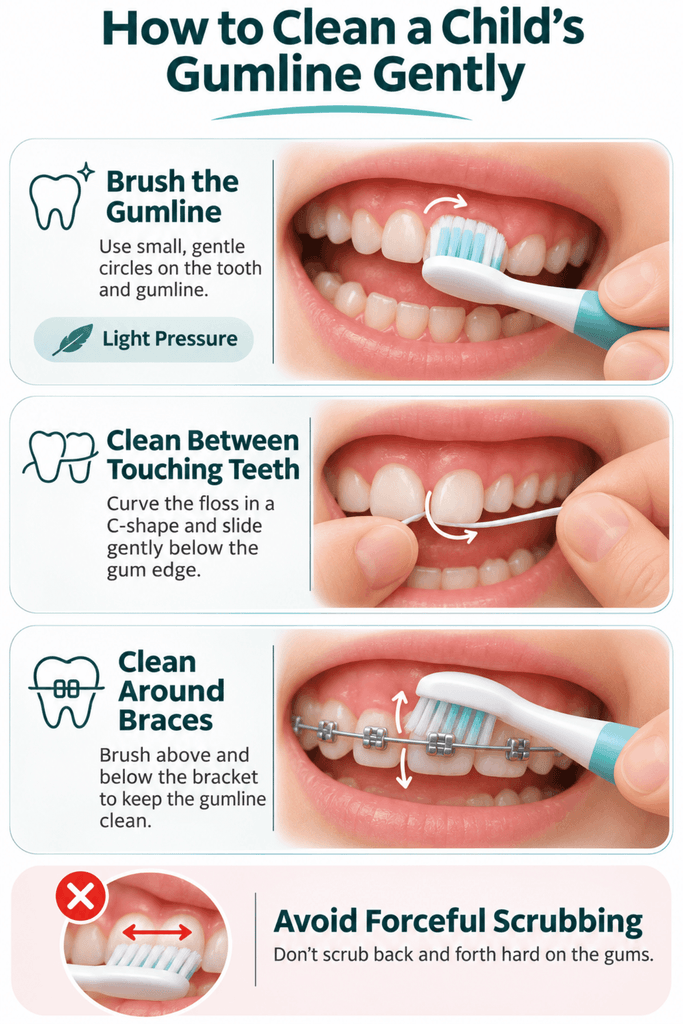
- Use small, gentle movements to clean the outer, inner, and chewing surfaces.
- Brush for about two minutes, twice each day.
- Check behind the front teeth, around molars, and around braces.
- Replace the toothbrush when the bristles become worn or spread out.
Use fluoride toothpaste in an amount suited to the child’s age. Children younger than 3 need only a rice-sized smear. Children ages 3 to 6 should use no more than a pea-sized amount. The American Dental Association’s child toothbrushing guidance also recommends adult help or supervision and teaching children to spit out excess toothpaste.
A child who can hold a toothbrush may not yet have the skill to clean every area. Parents should continue helping until the child brushes thoroughly and reliably, then check the technique from time to time.
Clean Between Teeth Safely
Start cleaning between neighboring teeth when the spaces close and the teeth touch. Floss works well when it can slide gently through the contact. A pediatric dentist may recommend a floss holder, interdental brush, or another tool when braces, spacing, or limited hand control makes regular flossing difficult.
- Use a Gentle Motion: Guide floss between the teeth without snapping it into the gums.
- Curve Around Each Tooth: Move the floss against one tooth at a time and clean slightly below the gum edge.
- Expect Possible Early Bleeding: Inflamed gums may bleed when cleaning begins, but the parent should not respond by abandoning the area.
- Watch the Pattern: Heavy, painful, unexplained, or continuing bleeding needs a dental examination.
Avoid Unsupervised Remedies
Home remedies may temporarily change how the mouth feels without treating the cause. Some can also irritate a child’s tissues or be harmful if swallowed.
Avoid:
- Harsh Scrubbing: Extra pressure can injure the gum edge without removing tartar.
- Concentrated Salt Mixtures: Strong solutions may sting or irritate sore tissue.
- Hydrogen Peroxide Products: Do not place peroxide directly on a child’s gums unless a dental professional has recommended a specific product and method.
- Essential Oils: Concentrated oils can burn oral tissues and may be unsafe when swallowed.
- Adult Medicated Mouthwash: Some formulas contain ingredients or alcohol that are unsuitable for young children.
- Leftover Antibiotics: The wrong antibiotic, dose, or treatment length can cause side effects and contribute to antimicrobial resistance.
When Your Child Should See a Dentist
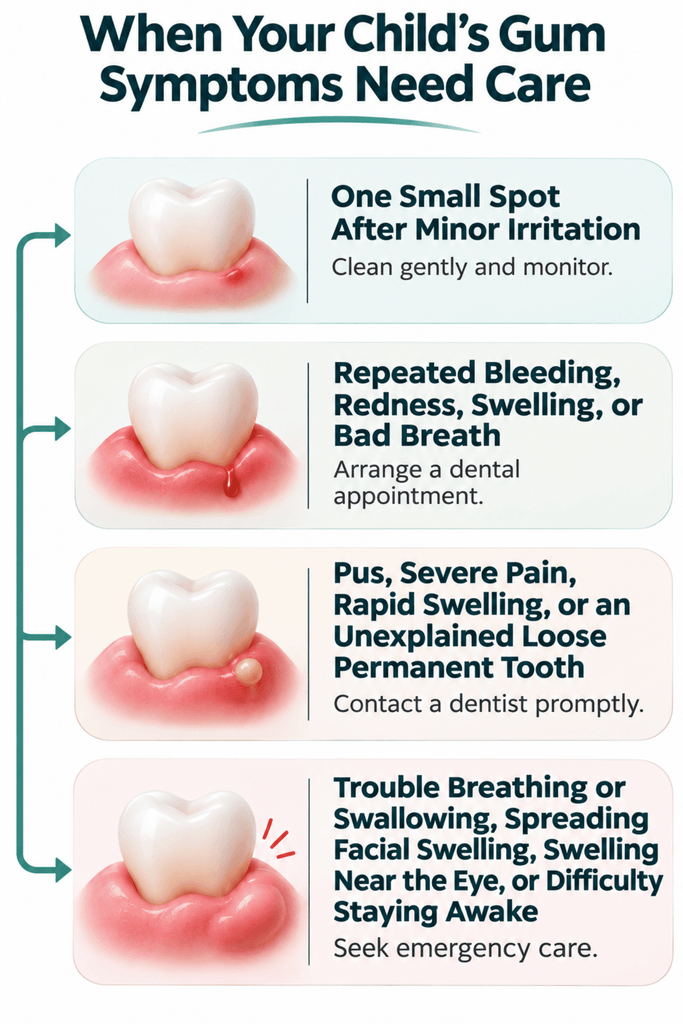
Not every small spot of blood is an emergency. However, repeated bleeding or ongoing inflammation deserves a dental assessment so the cause can be treated before the problem becomes harder to manage.
Arrange a Dental Appointment
Schedule a visit if you notice:
- Repeated Bleeding: The gums bleed during gentle brushing or flossing on several occasions.
- Ongoing Redness or Swelling: The tissue remains puffy, tender, or unusually dark.
- Persistent Bad Breath: The odor continues despite careful brushing and tongue cleaning.
- Gum Pain: Soreness interferes with brushing, eating, or sleeping.
- Gum Recession: A tooth begins to look longer or the gum line changes.
- Recurring Local Swelling: A bump or swollen area disappears and returns.
- Limited Improvement: The gums do not improve after careful daily cleaning.
Seek Prompt or Urgent Care
Contact a dentist promptly for pus, severe gum pain, rapid swelling, an unexplained loose permanent tooth, or a child who cannot eat or drink comfortably.
Seek urgent medical or dental help if facial swelling develops with fever or illness. Trouble breathing or swallowing, swelling that is spreading quickly, swelling near the eye, marked weakness, or difficulty staying awake requires emergency care. The NHS guidance on gum-disease warning signs and urgent dental care also distinguishes routine bleeding gums from severe swelling and other concerning symptoms.
How to Prevent Gum Disease From Returning
Healthy gums depend on daily plaque control and regular professional care. The routine should match the child’s age, dental development, health needs, and ability to clean independently.
- Brush Twice Daily: Clean for about two minutes with fluoride toothpaste and gentle attention to the gum line.
- Supervise the Child: Help with brushing and check commonly missed areas until the child consistently cleans them well.
- Clean Between Touching Teeth: Use floss or another tool recommended by the dentist.
- Care for Braces and Retainers: Clean around brackets, wires, bands, and removable appliances every day.
- Attend Regular Dental Visits: The dentist can monitor gum health, tooth eruption, plaque levels, and changes in risk.
- Schedule Professional Cleaning When Advised: A dental professional can remove tartar that cannot be brushed away.
- Limit Frequent Sugary Snacks and Drinks: Frequent snacking supports plaque growth and also increases the risk of tooth decay.
- Support General Health: Follow medical advice for diabetes and other conditions that can affect healing or inflammation.
- Avoid Tobacco and Vaping: These products can harm oral health and should not be used by children or teenagers.
- Check for Recurring Changes: Look for bleeding, swelling, or bad breath during normal brushing without repeatedly pressing or probing the gums.
Common Questions About Gum Disease in Children
How Long Does Gingivitis Take to Go Away in Children?
There is no single recovery time. Mild gingivitis may begin improving after plaque is removed and daily cleaning becomes effective. More extensive buildup may require a professional cleaning first. A dentist should reassess symptoms that persist, worsen, or return because tartar, braces, decay, a medicine, or another health issue may be contributing.
Can Young Children Get Gum Disease Around Baby Teeth?
Yes. Gingivitis can develop around primary teeth when plaque collects near the gums. Baby teeth still help children eat, speak, guide permanent teeth, and maintain space in the jaws. Healthy gums around them also support comfort and good brushing habits, so bleeding or swelling should not be ignored simply because the teeth will eventually fall out.
Why Are My Child’s Gums Swollen Around Only One Tooth?
Localized swelling may result from trapped food, plaque, an erupting tooth, brushing injury, decay, or an infection near the tooth root. Gently clean the area, but do not squeeze or puncture it. Arrange a dental examination if the swelling persists, returns, causes pain, releases pus, or occurs with fever or facial swelling.
Can Gum Disease in Children Damage Permanent Teeth?
Severe periodontitis can damage the attachment and bone supporting permanent teeth, but this is uncommon in children. Gingivitis does not cause bone loss and is usually reversible. Early assessment becomes especially important when a permanent tooth is loose, the gums are receding, teeth are shifting, or X-rays show changes around the roots.
Is Gum Disease in Children Contagious?
Gum disease itself is not passed from one child to another like a cold. Oral bacteria can move through saliva, but exposure alone does not mean another person will develop disease. Plaque control, gum response, health conditions, medicines, and dental care all affect risk. Families should avoid sharing toothbrushes and maintain separate oral-care items.
Is Childhood Gum Disease Hereditary?
A family history may increase susceptibility to some forms of periodontal disease, but it does not guarantee that a child will develop them. Daily plaque control and regular dental care still matter. Tell the dentist about close relatives who developed severe gum disease at a young age, especially if the child has unexplained bone loss or loose permanent teeth.
Bottom Line for Parents
Bleeding or swollen gums deserve attention, but they usually do not mean a child has advanced periodontal disease. Plaque-related gingivitis is the mildest form of gum disease and can often improve when the child receives effective home care and appropriate professional treatment.
Focus on three actions: help your child clean the gum line gently every day, arrange a dental visit for symptoms that persist or return, and seek urgent care for pus, fever, facial swelling, or trouble breathing or swallowing.
