Seeing blood around a newly filled tooth can be unsettling, especially if the gum did not bleed before treatment. Gum bleeding after filling is often caused by minor irritation from the dental tools, matrix band, or polishing process. A small amount that settles within a short time may be part of normal healing, particularly when the filling sits close to the gumline.
Bleeding that keeps returning, however, deserves attention. Plaque, food trapped between the teeth, gum disease, or a rough or overhanging filling can keep the tissue inflamed. Clues such as floss catching or shredding, swelling, a bad taste, or pain when biting can help your dentist narrow down the cause.
Do not stop cleaning the area just because you see blood. Gentle brushing and careful flossing usually protect the gum better than avoiding it, but heavy bleeding or symptoms that are getting worse should be checked. The first step is understanding what can happen after a dental filling and how to tell brief irritation from a problem that needs dental care.
Is Gum Bleeding After a Filling Normal?
A small amount of gum bleeding after filling treatment can be normal if the tissue was touched or pressed during the procedure. This is more common when the cavity extends between two teeth or close to the gumline. The area may also feel mildly sore when you brush or floss.
Brief irritation should gradually improve rather than stay the same or worsen. Bleeding that continues for several days, returns whenever you clean one spot, or appears with swelling or pain may have another cause. The American Dental Association’s guidance on bleeding gums advises speaking with a dentist when gum bleeding happens regularly or causes concern.
Why Gum Bleeding Can Happen After a Filling
The timing and location of the bleeding often provide useful clues. The gum may have been irritated during treatment, but plaque, food trapping, or the shape of the dental filling can also keep one area inflamed. A dental examination is needed to confirm the cause.
Temporary Irritation During the Procedure
A matrix band may be placed around the tooth to shape a filling, while a small wedge may hold the band in position between the teeth. These tools can press against the gum between the teeth. Dental instruments, the suction tip, or polishing materials may also irritate nearby tissue.
This is more likely when the cavity reaches below the gumline or deep between two teeth. The resulting bleeding should be minor and should lessen as the tissue recovers.
Plaque and Existing Gum Inflammation
Plaque is a sticky layer of bacteria that collects along the gumline. When it is not removed, the gum may become red, swollen, and easy to bleed. This early inflammation is called gingivitis. Good oral hygiene helps control plaque around the filling, but soreness may cause some patients to avoid cleaning the area.
Dental treatment can make an already inflamed area more noticeable. The filling may not have caused the gum problem, even if the patient first notices blood after the appointment. Bleeding around several teeth rather than only the filled tooth also points toward a wider oral health issue.
A Rough or Overhanging Filling
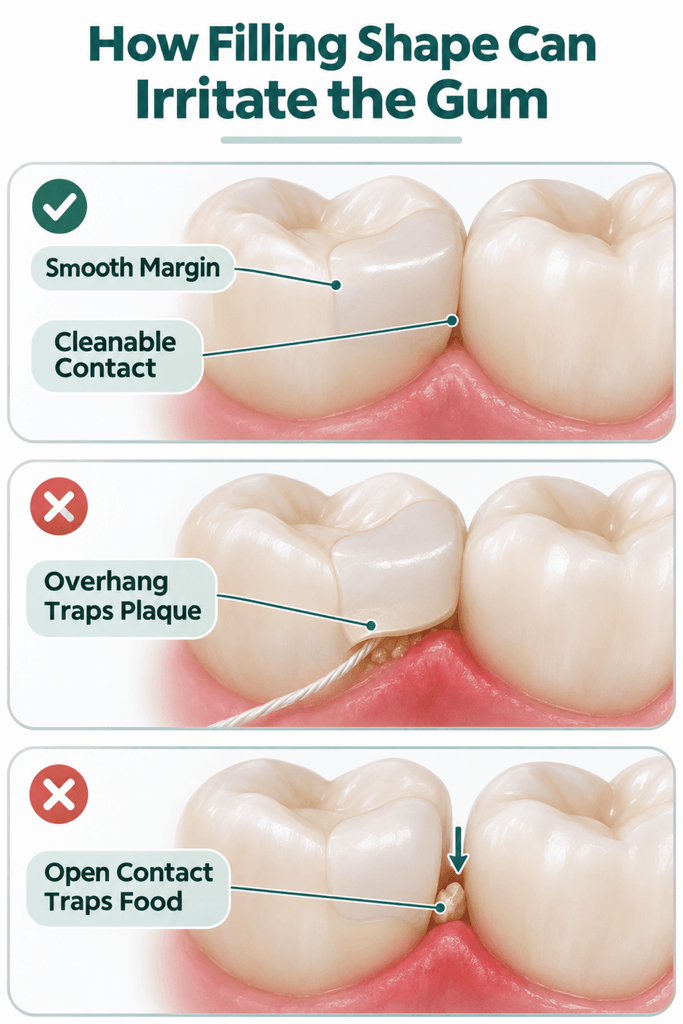
A rough filling margin can rub against the gum or make plaque harder to remove. An overhang occurs when filling material extends past the natural edge of the tooth. It often develops between teeth, where it may not be easy to see. This is why restorative dentistry focuses on creating smooth, well-shaped filling margins that patients can clean easily.
The extra material can create a ledge that traps plaque and food. A recent systematic review of overhanging restorations and periodontal health found an association with unfavorable gum and bone measurements, although the certainty of the evidence was low. A dentist should examine the area rather than assuming that every rough feeling represents an overhang.
An Open or Tight Contact Between the Teeth
The contact is the point where two neighboring teeth touch. If the space is too open after a dental filling, food may become packed between the teeth and press into the gum. Repeated food trapping can lead to soreness, bleeding, or an unpleasant taste.
An overly tight or rough contact can make floss difficult to pass. The floss may snap into the gum, become stuck, or shred against the filling. These signs do not always mean the filling has failed, but they are worth reporting if they continue.
Causes Unrelated to the Filling
Not all bleeding near a filled tooth comes from the restoration. Other possible causes include:
- Forceful Brushing: Hard bristles or heavy pressure can injure the gum, especially when it is already tender.
- Incorrect Flossing: Snapping floss into the gum can cut or irritate the tissue between the teeth.
- Wider Gum Disease: Bleeding around several teeth, persistent bad breath, or swollen gums may point to gingivitis or periodontitis rather than one filling.
- Blood-Thinning Medicines: Anticoagulant and antiplatelet medicines can make bleeding more noticeable or harder to stop. Do not change a prescribed medicine without speaking with the prescribing professional. The American Dental Association’s guidance on blood thinners and dental care explains why medication changes require medical guidance.
- Medical Factors: Certain blood disorders, vitamin deficiencies, hormonal changes, and other health conditions may affect the gums. These causes are more concerning when bleeding is widespread, spontaneous, or accompanied by easy bruising or other unexplained symptoms.
What the Timing and Location of Bleeding Can Reveal
Timing cannot diagnose the cause by itself, but it helps the dentist understand what may be happening. Notice when the bleeding began, what triggers it, and whether it comes from one small area or several parts of the mouth.
- Immediate and Improving: This pattern is more consistent with temporary irritation from the procedure.
- Triggered by Cleaning: Bleeding during brushing or flossing may reflect inflamed tissue, cleaning technique, or difficulty cleaning beside the dental filling.
- Persistent or Delayed: Bleeding that continues, returns, or begins later may be linked to trapped food, plaque, or a filling margin that needs examination.
Bleeding Soon After Treatment
A small amount of blood during or shortly after treatment may come from tissue touched by a band, wedge, or dental instrument. Mild tenderness may occur at the same time. The key sign is steady improvement as the gum recovers.
Contact the dental office if the amount increases, does not settle, or seems greater than expected after a routine filling. Individual healing can vary, especially when the gum was inflamed before treatment.
Bleeding Only When Brushing or Flossing
Bleeding during cleaning often means that the gum is inflamed or being injured by too much pressure. Avoiding the area entirely can allow more plaque to collect and may prolong the problem.
Pay attention to how the floss moves. It should pass through the contact with gentle pressure and slide around each tooth. Floss that repeatedly catches, shreds, or cannot be removed normally may indicate a rough surface or contact problem.
Bleeding That Starts or Continues Days Later
Gum bleeding after filling treatment that continues for days may not be simple procedural irritation. Plaque may be collecting around the new restoration, or food may be entering a space between the teeth. A rough edge or overhang can also make the area difficult to clean.
Arrange a dental review if the same spot bleeds repeatedly, particularly if the gum remains swollen or floss catches beside the filling. The dentist can check the restoration before the irritation becomes a longer-term problem.
Signs Gum Bleeding May Be Related to the Filling
Bleeding alone does not prove that a filling is defective. However, several localized signs together can suggest that the restoration or its contact with the neighboring tooth needs attention:
- Repeated Bleeding in One Spot: The same area bleeds each time you brush, floss, or use an interdental cleaner.
- Catching or Shredding Floss: Floss does not move smoothly or comes out damaged beside the filling.
- Frequent Food Trapping: Food repeatedly packs between the filled tooth and its neighbor.
- A Rough or Sharp Edge: Your tongue or floss detects an uneven area that was not present before treatment.
- Localized Swelling: The gum beside the filling remains puffy, red, or tender.
- Difficulty Cleaning: The contact is so tight or irregular that you cannot clean between the teeth normally.
- Bite Discomfort: The filled tooth hits first or hurts when you bite. A high filling does not explain every case of gum bleeding, but it still requires an adjustment.
- Persistent Bad Taste or Odor: A repeated unpleasant taste may occur when food and plaque collect around the area.
What to Do for Gum Bleeding After a Filling
Continue caring for the area, but use a gentle technique. These steps can limit plaque buildup while you watch for improvement:
- Brush With Light Pressure: Use a soft-bristled toothbrush and clean along the gumline without scrubbing. Do not skip the filled tooth.
- Clean Between the Teeth Carefully: Guide the floss through the contact rather than forcing it. Curve it around one tooth, move it gently up and down, then repeat on the neighboring tooth.
- Follow Your Aftercare Instructions: Your dentist may provide advice based on the depth and location of the filling. Follow those instructions if they differ from general guidance.
- Use Rinses With Care: A mild warm saltwater rinse may feel soothing, but it does not correct a defective filling. Ask your dentist before using medicated or strong antiseptic rinses.
- Watch the Pattern: Note whether the bleeding is decreasing, which activity triggers it, and whether floss catches or food becomes trapped.
- Contact the Dental Office if Needed: Report persistent bleeding, swelling, increasing pain, or difficulty cleaning around the restoration.
Daily cleaning between the teeth helps remove plaque and trapped food. The American Dental Association’s flossing guidance also describes string floss, interdental brushes, dental picks, and water flossers as possible cleaning tools.
What to Avoid While the Gum Heals
Some attempts to protect or fix the area can make the irritation worse:
- Do Not Stop All Cleaning: Plaque can build up quickly when you avoid the area, which may increase inflammation.
- Do Not Snap the Floss: Forcing floss through a tight contact can cut the gum. Stop and call the dentist if you cannot pass it safely.
- Do Not Pick at the Filling: Fingernails, pins, toothpicks, or other sharp objects can injure the gum and damage the restoration.
- Do Not Reshape It Yourself: Never file, scrape, or polish a filling at home. The dentist must check its shape, contact, and bite.
- Do Not Use Harsh Remedies: Concentrated peroxide, undiluted oils, acidic mixtures, and abrasive powders may irritate the tissue.
- Do Not Stop Prescribed Medicine: Blood thinners and other medicines should only be changed under professional medical guidance.
- Do Not Ignore Worsening Symptoms: Increasing swelling, pain, pus, fever, or uncontrolled bleeding needs professional attention.
When to Contact Your Dentist
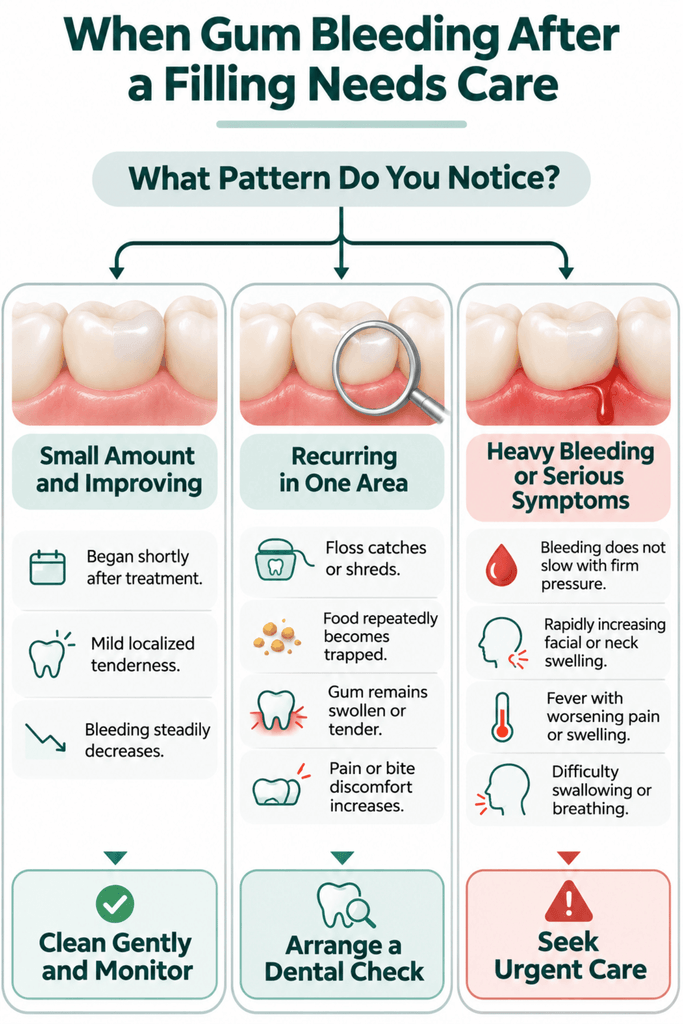
A brief trace of blood that steadily improves can often be monitored with gentle oral care. Contact your dentist when the bleeding continues, keeps returning, or appears with another sign that the gum or filling needs attention.
Arrange a Dental Check
Schedule an examination if you notice any of the following:
- Persistent Localized Bleeding: One spot continues to bleed after the first few days or returns every time you clean it.
- Flossing Problems: Floss catches, tears, becomes stuck, or cannot pass through the contact.
- Repeated Food Trapping: Food regularly becomes packed beside the filled tooth.
- Continued Gum Swelling: The tissue remains red, puffy, tender, or painful.
- Bite Changes: The tooth feels too high or becomes painful when chewing.
- Increasing Sensitivity or Pain: Discomfort becomes stronger instead of gradually improving.
- Bad Taste or Drainage: A persistent unpleasant taste, pus, or fluid may indicate infection or another dental problem.
- Bleeding in Several Areas: Widespread bleeding may require a broader gum and medical evaluation.
Seek Urgent Care for Serious Symptoms
Heavy bleeding after a routine filling is not expected. Apply firm pressure with clean gauze or a clean cloth while arranging professional help. Government guidance on first aid and assessment for dental bleeding recommends evaluation for frequent or heavy bleeding and describes using direct pressure to control it.
Seek urgent dental or medical care for:
- Bleeding That Will Not Slow: The mouth continues filling with blood despite firm pressure.
- Rapidly Increasing Swelling: Swelling spreads into the face, jaw, neck, or area around the eye.
- Fever With Worsening Symptoms: Fever, increasing pain, swelling, or a bad taste may indicate an infection.
- Difficulty Swallowing or Breathing: These are emergency warning signs, especially when swelling is present.
- Severe Weakness or Dizziness: Significant blood loss or feeling faint needs urgent medical assessment.
The NHS guidance on dental abscess warning signs advises emergency care when mouth swelling interferes with breathing, speaking, or swallowing. These complications are uncommon after a filling, but they should never be monitored at home.
How a Dentist Finds the Cause
The dentist will first determine whether the blood comes from a small gum injury, plaque-related inflammation, or a problem around the restoration. The examination may include:
- Reviewing the History: The dentist asks when the bleeding began, what triggers it, and whether it is improving.
- Examining the Gum: Redness, swelling, injury, plaque, food debris, and drainage are checked.
- Inspecting the Filling: The dentist looks and feels for rough margins, excess material, gaps, cracks, or decay.
- Testing the Contact: Dental floss helps show whether the contact is open, too tight, rough, or likely to trap food.
- Checking the Bite: Bite-marking paper can show whether the filled tooth contacts too heavily during chewing.
- Measuring the Gum: A periodontal probe may be used gently to check the space around the tooth and look for localized gum disease.
- Taking an X-Ray When Needed: An X-ray may help reveal decay between the teeth, some overhanging margins, bone changes, or other problems that cannot be seen directly. Not every patient needs one; the decision depends on the clinical findings and available previous images.
How the Dentist May Treat the Problem
Treatment depends on why the gum is bleeding. The dentist may recommend one or more of the following:
- Allowing the Tissue to Heal: Minor irritation from the dental filling procedure may only need gentle cleaning and time.
- Improving Plaque Control: The dentist or hygienist may demonstrate a safer brushing or flossing method for that area.
- Professional Cleaning: Removing plaque and tartar can help when gingivitis is contributing to the bleeding.
- Polishing a Rough Area: A small rough spot may be smoothed if the filling remains otherwise sound.
- Correcting the Contact or Contour: The dentist may reshape the restoration so floss can pass and food is less likely to become trapped.
- Adjusting the Bite: A high area can be reduced when the tooth contacts too heavily during chewing.
- Replacing the Filling: Replacement may be necessary if the restoration has a significant overhang, gap, fracture, poor contact, or decay around it.
- Treating Gum Disease: Persistent inflammation may require gum treatment rather than filling adjustment alone.
- Coordinating Medical Care: Unusual or widespread bleeding may require discussion with the patient’s physician, especially when medicines or health conditions may be involved.
Can Gum Bleeding Around a New Filling Be Prevented?
Not every case can be prevented, especially when a deep cavity reaches close to the gum. However, several habits can lower the chance of continued irritation:
- Maintain Daily Oral Care: Brush twice a day and clean between the teeth daily to limit plaque around the filling.
- Use Gentle Technique: Choose a soft toothbrush and avoid snapping floss into the gum.
- Check the Contact Early: Tell the dentist if floss will not pass normally or if food becomes trapped after treatment.
- Follow Post-Filling Instructions: Wait until numbness fades before chewing, and follow any care advice given by the dental office.
- Attend Follow-Up Visits: A dentist can check the filling, bite, and surrounding gum if symptoms do not improve.
- Share Your Medical History: Tell the dental team about gum disease, unusual bleeding, blood thinners, and other prescribed medicines.
- Do Not Delay Routine Care: Regular examinations and professional cleanings help detect decay, filling damage, and gum inflammation before symptoms become more noticeable.
Frequently Asked Questions About Gum Bleeding After Filling
Can Dental Floss Pull Out a New Filling?
Normal flossing should not remove a secure permanent filling. However, floss may catch on excess material, a rough margin, or an uneven contact. Do not yank the floss upward if it becomes stuck. Gently slide it out through the side if possible, then contact your dentist if the problem happens again or the filling feels loose.
Why Does My Gum Bleed Around an Old Filling?
Bleeding around an old filling may result from plaque, trapped food, gingivitis, a worn margin, a fracture, or decay beside the restoration. The contact between the teeth may also have changed over time. Because these problems can look similar at home, repeated bleeding around one old filling should be examined by a dentist.
Does Bleeding Mean the Filled Tooth Is Infected?
Bleeding alone does not prove that the tooth is infected. The blood usually comes from inflamed or injured gum tissue beside the filling. Infection becomes more concerning when bleeding occurs with worsening pain, swelling, pus, fever, or a persistent bad taste. These symptoms require a dental examination rather than home treatment alone.
Can a Temporary Filling Make the Gum Bleed?
Yes. The dental procedure may irritate the gum, especially when the temporary filling sits close to or below the gumline. A temporary material that feels rough or extends beyond the tooth can also collect plaque. Minor bleeding should improve, while persistent bleeding, increasing swelling, or difficulty cleaning the area should be reported to your dentist.
Is the Blood Coming From the Gum or the Filled Tooth?
Visible blood during brushing or flossing usually comes from the soft gum beside the tooth. The hard outer surface of a tooth or filling does not bleed. A dentist can identify the source if blood appears without touching the gum, seems to come from under a loose restoration, or continues without a clear trigger.
Can I Use a Water Flosser Around a New Filling?
A water flosser can usually be used around a secure filling, and a low-pressure setting may feel more comfortable while the gum is tender. Follow your dentist’s instructions if the filling was placed below the gumline or the tissue was injured. Stop if the device causes pain or heavy bleeding, and do not use it to force debris under the gum.
Bottom Line: When Gum Bleeding After a Filling Needs Care
A small amount of short-lived bleeding may follow gum irritation during treatment. Keep the area clean with gentle brushing and careful flossing, and watch for steady improvement.
Persistent, recurring, or worsening gum bleeding after filling treatment deserves a dental check. The dentist can determine whether the gum needs time and better plaque control or whether the restoration needs smoothing, adjustment, or replacement.
