If your dentist says you need a dental implant crown, you may wonder what it is, how the procedure works, or how long it will last. A dental implant crown is the visible replacement tooth that attaches to a dental implant after it has healed in the jawbone. It looks and works like a natural tooth, helping you chew, speak, and smile with confidence.
Not all implant crowns are the same. They come in different materials, attachment methods, and designs. The right choice depends on the tooth being replaced, your bite, your budget, and your dentist’s recommendation. Knowing these options can help you make an informed decision before treatment begins.
Good care also plays a big role in how long an implant crown lasts. Daily cleaning, regular dental visits, and healthy habits can help prevent problems and keep your restoration in great shape for many years. The sections below explain each step, from choosing the right crown to caring for it after placement.
What Is a Dental Implant Crown?
A dental implant crown is the visible part of a dental implant restoration that replaces the portion of a missing tooth above the gumline. It is a custom-made artificial tooth designed to look, feel, and function like a natural tooth. After the implant surgery and healing process are complete, the crown is attached to the implant, allowing you to chew, speak, and smile with confidence. It is one of the most common treatments in modern implant dentistry for people who want to replace missing teeth.
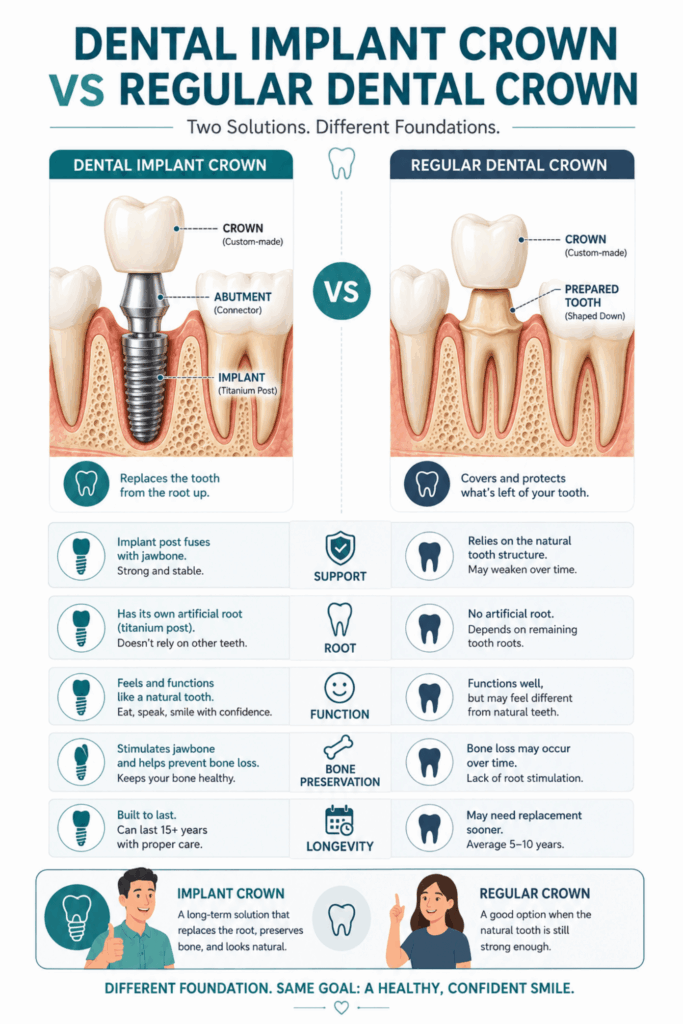
Although many people use the term “implant” to describe the entire restoration, it actually has three separate parts. The titanium post acts as the new tooth root and is surgically placed into the jawbone. The abutment connects the implant post to the crown, while the dental crown is the part you can see. Together, these components create a strong, stable replacement that closely mimics the appearance and function of a natural tooth.
Dental Implant Crown vs a Regular Dental Crown
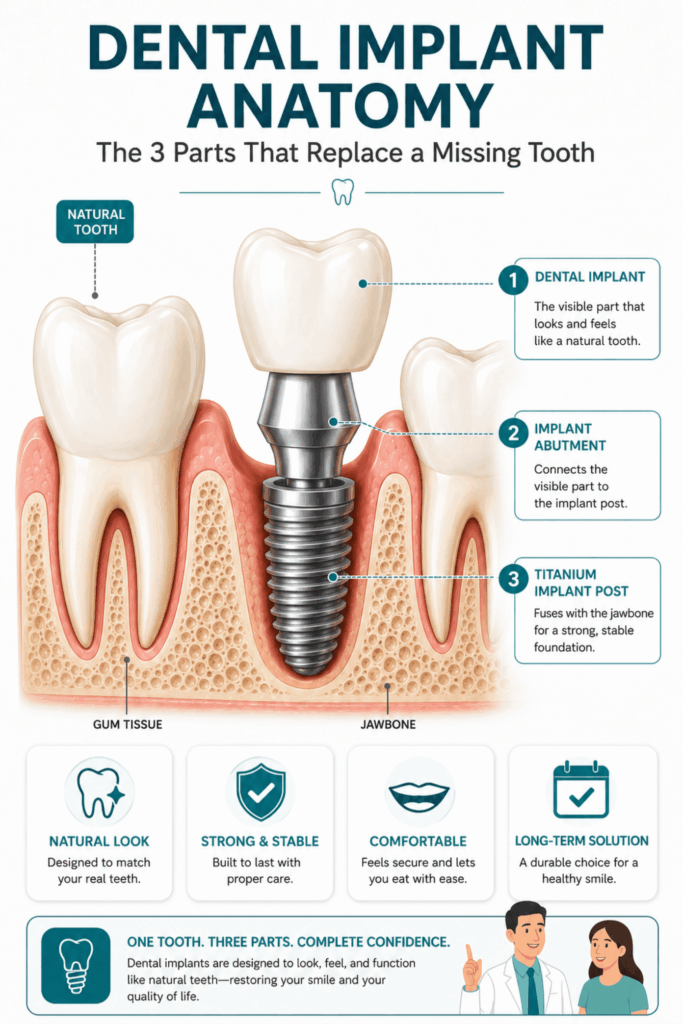
Although both restorations are called crowns, they serve different purposes. A regular crown covers a damaged natural tooth, while a dental implant crown replaces a tooth that is completely missing and is supported by an implant instead of a natural tooth root.
| Feature | Dental Implant Crown | Regular Dental Crown |
|---|---|---|
| What It Restores | A completely missing tooth | A damaged or weakened natural tooth |
| Support | Attached to the implant through an abutment | Cemented directly onto a prepared natural tooth |
| Tooth Root | An artificial titanium post replaces the root | Natural tooth root remains in place |
| When Used | To replace missing teeth | To restore teeth with decay or damage, fractures, or large fillings |
| Bone Support | Helps stimulate the jawbone through the implant | Does not prevent bone loss after tooth extraction |
| Longevity | Implants and crowns can last for many years with proper maintenance | Depends on the health of the remaining natural tooth |
The right treatment depends on your individual situation. If the natural tooth can still be saved, a traditional dental crown is often the preferred option. If the tooth has already been lost or cannot be saved, dental implants and crowns are often considered the most predictable long-term solution. Your dentist can help you choose the treatment that best supports your smile, function, and long-term dental health.
Parts of a Dental Implant
A complete dental implant restoration has three main parts that work together to replace an entire tooth. Understanding what each component does can help patients understand why implant procedures involve several steps and why each stage is important for long-term success.
- Titanium Implant Post: The implant post is a small titanium screw that is surgically placed into the jawbone. It replaces the natural tooth root and becomes firmly anchored through osseointegration, creating a stable foundation.
- Implant Abutment: The implant abutment is the connector that joins the implant post to the final restoration. It sits above the gumline and supports the custom crown while helping it fit securely.
- Dental Implant Crown: The crown is the visible artificial tooth that restores your smile. Because every patient’s bite is different, dental crowns can be made from a variety of materials and customized to match the color, size, and shape of nearby teeth.
Types of Dental Implant Crowns
Not every dental implant crown is designed the same way. Your dentist may recommend a specific type of crown based on the location of the missing tooth, your bite, your oral health, and how easy it will be to maintain the restoration over time.
The biggest differences involve how the crown is attached to the implant and which material is used to make it. Some crowns are easier to remove if repairs are needed, while others provide excellent esthetics with no visible access hole. Understanding these options makes it easier to discuss treatment with your dentist and choose the restoration that best fits your needs.
Screw-Retained Implant Crowns
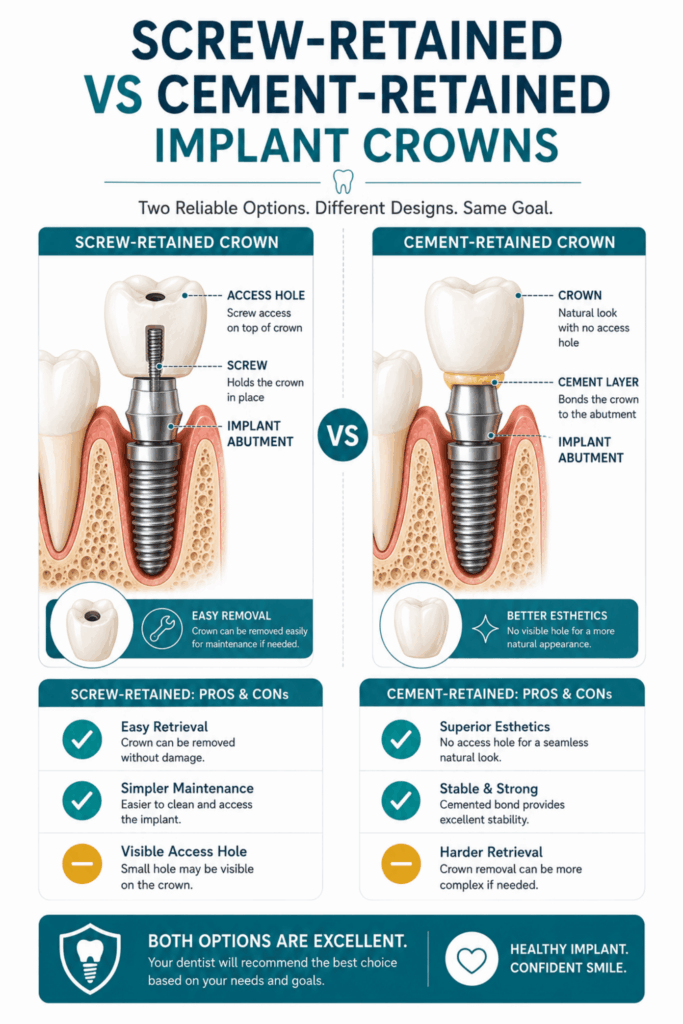
A screw-retained implant crown is attached to the implant using a small abutment screw that passes through the crown into the implant. After the screw is tightened, the access opening is sealed with tooth-colored filling material. Many dentists prefer this option because the crown can be removed without damage if repairs, cleaning, or adjustments become necessary. Screw-retained restorations are often recommended in implant dentistry when future maintenance is likely or when precise positioning allows the access hole to stay out of sight.
Cement-Retained Implant Crowns
A cement-retained implant crown is bonded to the abutment using special dental cement, much like a traditional crown is attached to a prepared tooth. This design usually offers a natural appearance because there is no screw access hole on the chewing surface. However, removing the crown later can be more difficult if repairs are needed. For this reason, the dentist must carefully remove excess cement during crown placement, as leftover cement may increase the risk of gum irritation around the implant.
Crown Materials
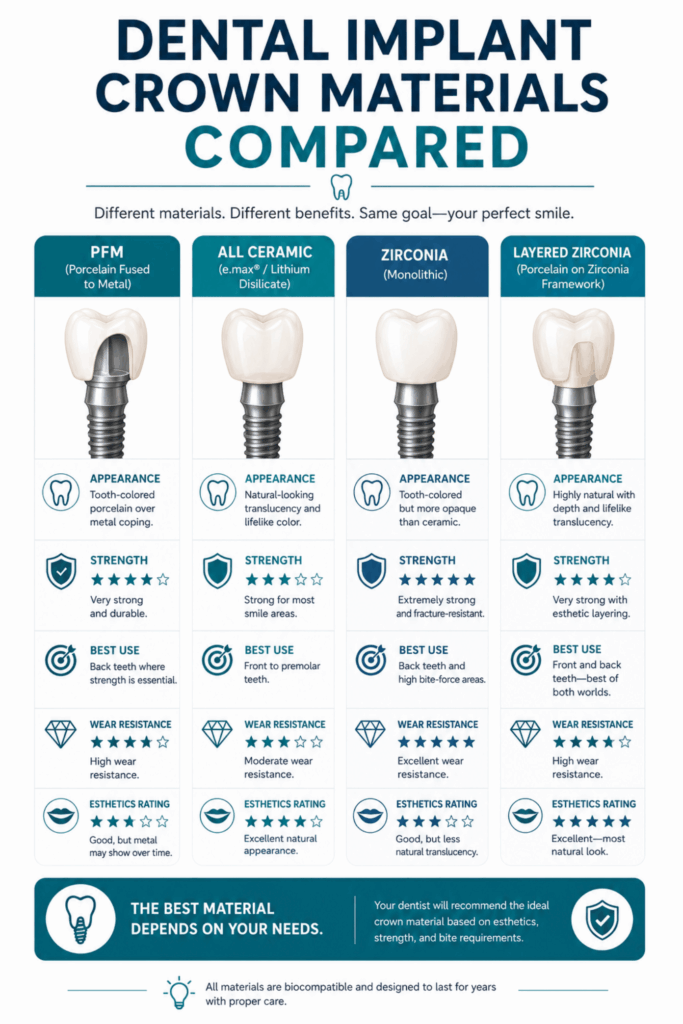
Different materials offer different advantages in strength, appearance, and durability. Your dentist will recommend the most suitable material based on the location of the implant, your bite, and your cosmetic goals.
| Crown Material | Appearance | Durability | Typical Uses |
|---|---|---|---|
| Porcelain-Fused-to-Metal (PFM) | Natural appearance with a porcelain outer layer | Very durable, but porcelain may chip over time | Back teeth and some front teeth where extra strength is needed |
| Zirconia | Tooth-colored with excellent esthetics | Extremely strong and resistant to wear | Front and back teeth, especially for patients who grind their teeth |
| All-Porcelain/Ceramic | Highly natural and translucent | Strong but generally less resistant than zirconia in high-pressure areas | Front teeth where appearance is the highest priority |
| Layered Zirconia | Combines natural esthetics with added strength | Excellent durability | Patients who want both appearance and long-lasting performance |
No single material is best for every patient. Modern dental technology allows dental crowns to be made from a variety of materials, giving dentists the flexibility to choose the option that balances beauty, strength, and long-term function for each case.
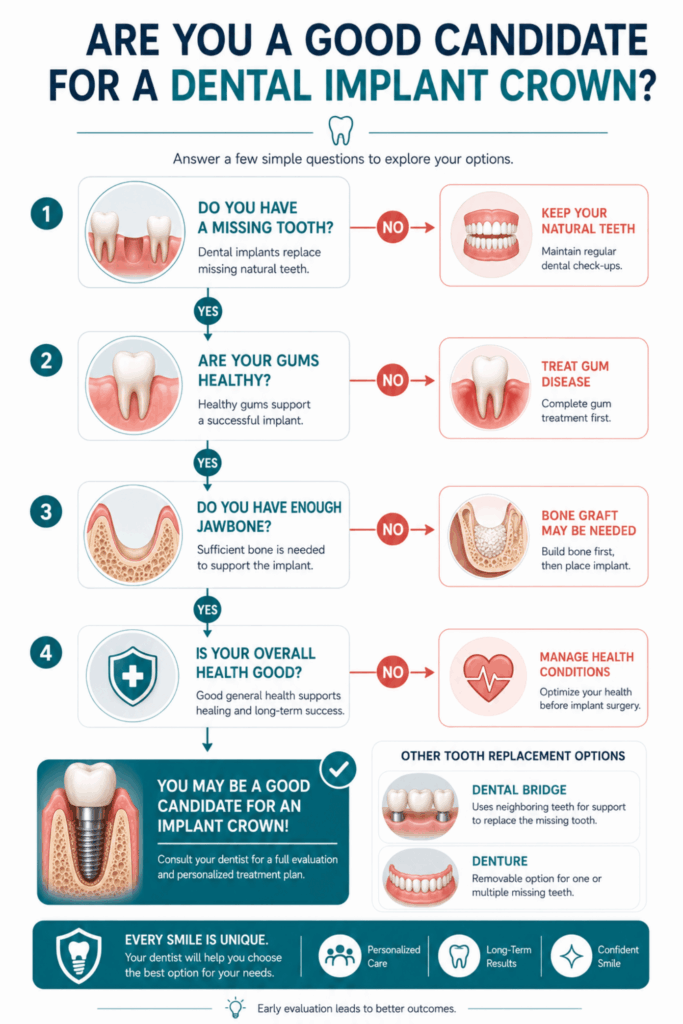
Who Is a Good Candidate for a Dental Implant Crown?
A dental implant crown is often the ideal solution for replacing a single missing tooth after implant placement has healed. However, successful treatment depends on more than simply having a gap in your smile. Your dentist will evaluate your jawbone, gums, bite, and overall oral health before recommending dental implants and crowns or suggesting another restorative option.
- Healthy Jawbone: Enough bone must be available to support the titanium post. If significant bone loss has occurred, bone grafting may be recommended before implant surgery.
- Healthy Gums: Healthy gum tissue lowers the risk of infection and helps support the long-term success of the implant restoration.
- Good Overall Health: Medical conditions such as uncontrolled diabetes or heavy smoking can slow healing and reduce implant success if they are not properly managed.
- Missing One Tooth: One implant with one custom crown is often the most conservative way to replace a single missing tooth without affecting neighboring teeth.
- Missing Multiple Teeth: Patients with several missing teeth may receive multiple crowns, implant-supported bridges, or other restorative solutions, depending on the number and location of the missing teeth.
- Commitment to Dental Care: Long-term success depends on proper oral hygiene, regular checkups, and professional cleanings after treatment.
If implant surgery is not appropriate, your dentist may recommend dental bridges, a removable denture, or another dental restoration based on your individual needs.
Dental Implant Crown Procedure Step by Step
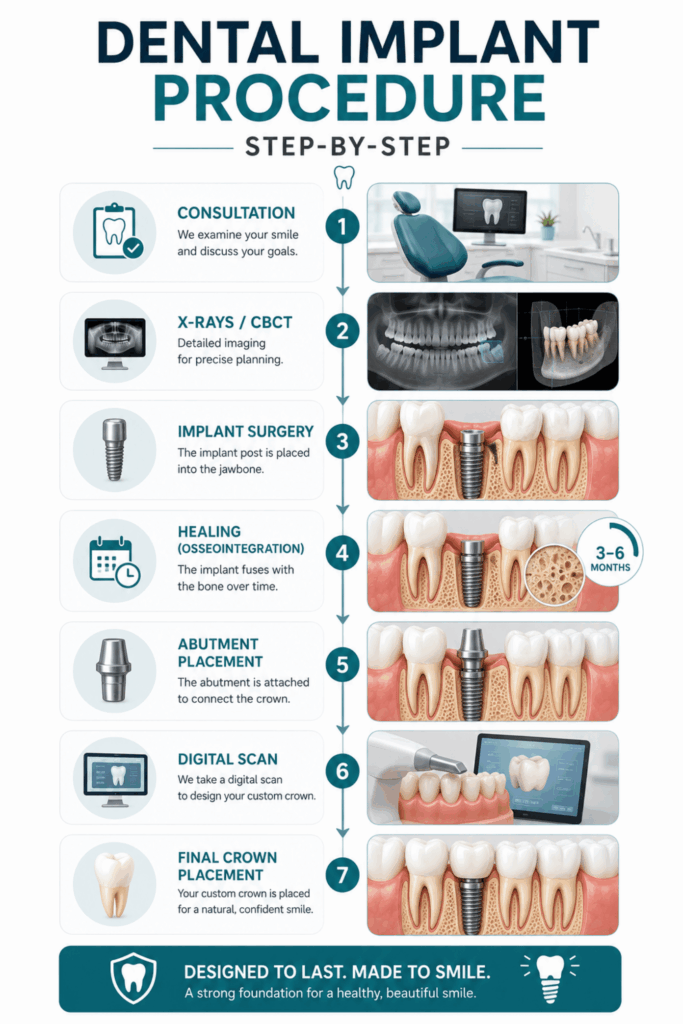
Receiving a dental implant crown usually takes several appointments because the treatment involves several steps. While the exact timeline varies, the complete dental implant process often takes several months because the implant must heal before the final crown is attached. Knowing what happens at each stage helps patients understand what to expect from beginning to end.
- Initial Consultation: Your dentist examines your mouth, discusses your goals, and determines whether implants are ideal for your situation.
- Diagnostic Imaging: X-rays or a CBCT scan provide detailed images of your jawbone and nearby structures to support accurate treatment planning.
- Implant Surgery: During implant surgery, the titanium post is placed surgically into the jawbone under local anesthesia.
- Healing Period: The jawbone bonds with the implant through osseointegration, creating a stable foundation for the future restoration.
- Abutment Placement: After healing, the implant abutment is connected to the implant so it can support the final crown.
- Digital Scan or Impression: Your dentist records the exact shape of your mouth so a laboratory can create a custom crown that matches your natural teeth.
- Final Crown Placement: Once completed, the final crown is attached to the implant and adjusted until it feels comfortable and bites correctly.
Examination and Treatment Planning
Every successful implant treatment begins with careful planning. During your first visit, your dentist performs a complete examination, reviews your medical and dental history, and evaluates the health of a tooth next to the missing space if nearby teeth are present. Digital X-rays or a CBCT scan show the amount of available bone, the position of nearby nerves, and the best location for implant placement. This planning stage helps reduce complications, improve accuracy, and increase the chances that your dental implant restoration will last for many years.
Implant Healing Before Crown Placement
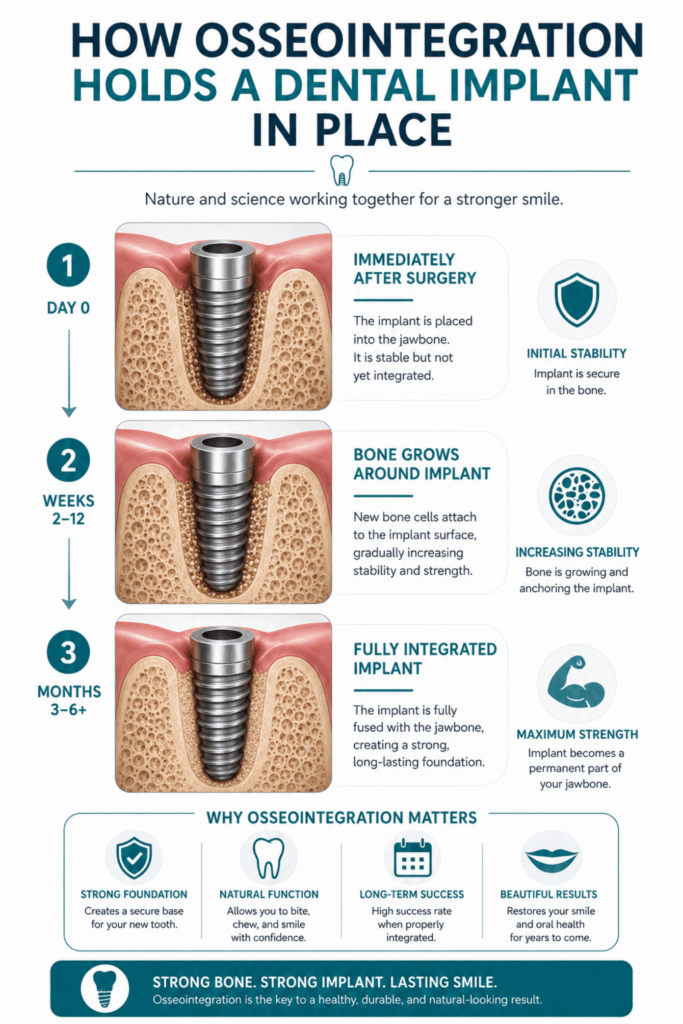
After the implant post is placed, your body begins a natural healing process called osseointegration. During this stage, the jawbone gradually grows around the titanium post, locking it firmly into place. This strong connection is what allows implants to function like natural tooth roots.
Healing usually takes several months, although the exact time depends on your overall health, bone quality, and the location of the implant. It is normal to experience mild swelling, bruising, or soreness for a few days after surgery, and most people manage these symptoms with over-the-counter pain relievers as directed by their dentist.
Your dentist checks the implant before moving forward with crown placement. Signs that healing is complete include a stable implant with no movement, healthy gums around the implant, and no ongoing pain or infection. Once these goals are reached, treatment can continue with the final restoration.
Abutment Placement and Impressions
After the implant has fully healed, the dentist connects the implant abutment to the implant. This small connector supports the future crown and shapes the surrounding gum tissue for a natural appearance. Digital scans or traditional impressions are then taken so the dental laboratory can create a custom crown that fits comfortably, matches your surrounding teeth, and restores normal chewing function.
Final Dental Implant Crown Placement
When the laboratory finishes the restoration, your dentist places the final crown and carefully checks the fit, color, bite, and overall appearance. Depending on the treatment plan, the crown is attached with an abutment screw or dental cement. Small adjustments may be made so the restoration feels comfortable and looks and functions like a natural tooth. Before you leave, your dentist explains how to care for your new restoration so it can last for many years with proper maintenance.
How Long Does a Dental Implant Crown Last?
A dental implant crown is designed to be a long-lasting solution for missing teeth, but its lifespan depends on several factors. While the implant itself often lasts for decades, the crown may eventually need repair or replacement because of normal wear. With proper care, many dental crowns can last 10 to 15 years or longer, and some remain in excellent condition for 20 years or more.
- Crown Material: Zirconia and porcelain-fused-to-metal (PFM) crowns are highly durable, while all-ceramic crowns may wear faster in patients with heavy bite forces.
- Oral Hygiene: Good oral hygiene helps prevent gum disease around the implant, protecting the tissues that support the restoration.
- Teeth Grinding: Clenching or grinding places extra pressure on the crown and may increase the risk of chipping or loosening.
- Bite Alignment: A well-balanced bite spreads chewing forces evenly, reducing unnecessary stress on the restoration.
- Regular Dental Visits: Routine examinations allow your dentist to detect small problems before they become major repairs.
- Daily Habits: Avoiding hard objects such as ice, pens, or hard candy helps protect the crown from unnecessary damage.
- Overall Oral Health: Healthy gums and surrounding teeth contribute to the long-term success of both the implant and the crown.
Benefits of a Dental Implant
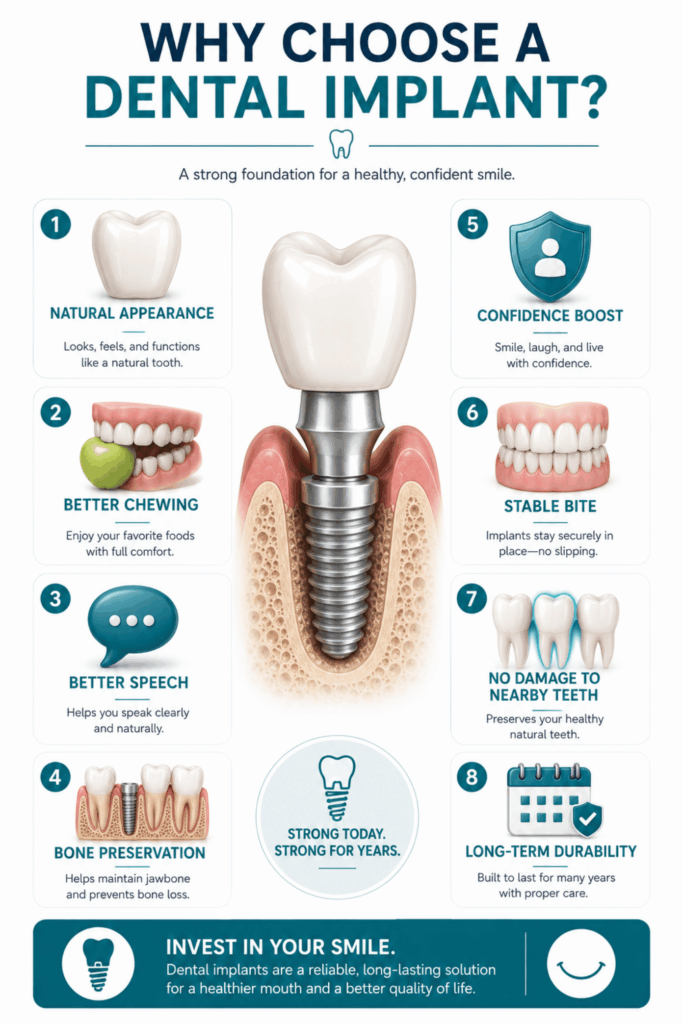
Replacing a missing tooth does more than improve your smile. A dental implant restores everyday function while supporting long-term oral health. Compared with leaving a gap, this dental restoration offers benefits that improve comfort, confidence, and chewing ability.
- Restores Natural Appearance: A custom crown is shaped and colored to blend with your surrounding teeth, making the restoration look natural.
- Improves Chewing: The crown functions like natural teeth, allowing you to enjoy a wider variety of foods with greater comfort.
- Supports Clear Speech: Replacing a missing tooth can improve pronunciation, especially when front teeth are involved.
- Protects Jawbone Health: Because the implant replaces the tooth root, it helps stimulate the jawbone and reduce bone loss over time.
- Does Not Affect Neighboring Teeth: Unlike some dental bridges, one implant replaces one missing tooth without reshaping healthy adjacent teeth.
- Provides Long-Term Stability: Once healing is complete, the restoration feels secure during everyday activities such as eating and speaking.
- Improves Confidence: Filling the gap in your smile helps many people smile, laugh, and socialize more comfortably.
- Supports Overall Dental Health: Replacing missing teeth helps keep nearby teeth from shifting out of position, preserving a healthier bite.
Risks and Possible Complications
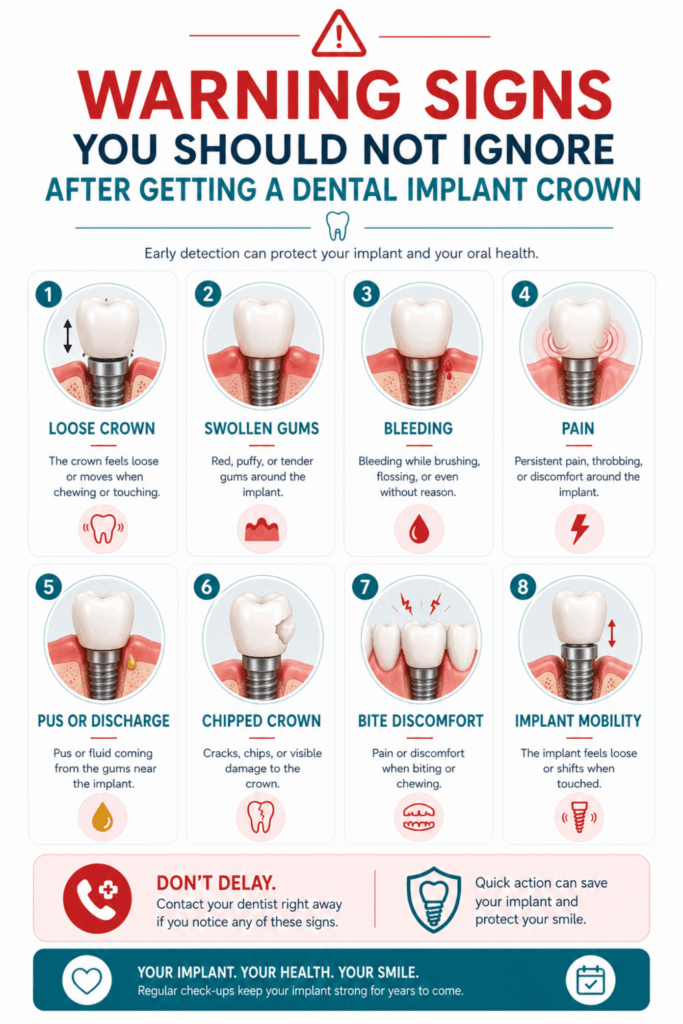
Dental implants have a high success rate, but like any treatment, they are not completely free of risk. Knowing the possible complications helps you recognize early warning signs and seek treatment before a small issue becomes a larger problem.
- Crown Loosening: The crown or abutment screw may loosen over time because of normal chewing forces or teeth grinding.
- Crown Chipping or Fracture: Porcelain surfaces can chip after trauma or repeated heavy biting, especially in patients who grind their teeth.
- Gum Inflammation: Poor plaque control can cause irritation around the implant, increasing the risk of peri-implant disease.
- Excess Cement Problems: In cement-retained restorations, leftover cement beneath the gums may lead to inflammation if not completely removed.
- Implant Failure: Although uncommon, the implant may fail if osseointegration does not occur or if significant infection develops.
- Bite Problems: A crown that is too high can create discomfort, jaw soreness, or excessive pressure during chewing.
- Wear Over Time: Even durable materials experience gradual wear after years of normal use.
- Call Your Dentist Promptly: Contact your dentist if the implant feels loose, the crown moves, you notice swelling or pus, or you develop pain that does not improve.
How to Care for a Dental Implant Crown
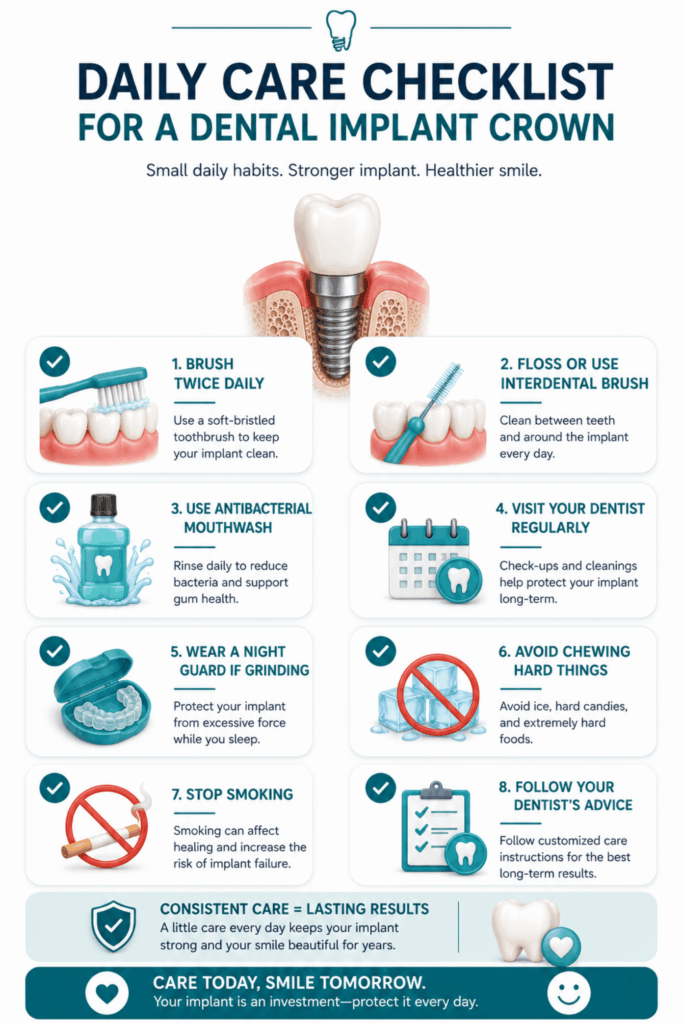
A dental implant crown cannot develop tooth decay, but the surrounding gums and bone still need daily attention. Consistent dental care is one of the most important factors in helping your implant restoration stay healthy for many years.
- Brush Twice Daily: Use a soft-bristled toothbrush to clean the crown and gumline thoroughly every morning and evening.
- Clean Between Teeth: Dental floss, floss threaders, or interdental brushes remove plaque from areas a toothbrush cannot reach.
- Use Recommended Mouthwash: Your dentist may recommend an antibacterial mouthwash if you are at higher risk of gum inflammation.
- Attend Regular Checkups: Professional cleanings allow your dental team to monitor the implant, crown, and surrounding tissues.
- Avoid Hard Objects: Chewing ice, opening packages with your teeth, or biting very hard foods can damage the restoration.
- Protect Against Grinding: If you clench or grind your teeth during sleep, a custom night guard may help protect the crown.
- Stop Smoking: Smoking slows healing and increases the risk of implant complications over time.
- Follow Your Dentist’s Advice: Every patient is different, so follow the maintenance schedule recommended for your specific restoration.
How Much Does a Dental Implant Crown Cost?
The cost of a dental implant crown varies widely because every treatment plan is different. Some patients only need the final crown because the implant is already in place, while others require the complete dental implant process, including implant surgery, healing, and restoration.
Several factors influence the total cost. The type of crown, the material selected, laboratory fees, the experience of the dental team, and your geographic location all affect the final price. Additional procedures, such as bone grafting or gum treatment before implant placement, can also increase the overall cost.
It is important to ask what is included in the treatment estimate. Some dental offices provide one fee for the complete dental implant restoration, while others list separate charges for the implant, abutment, custom crown, imaging, and follow-up visits. Understanding these details helps you compare treatment options more accurately.
When Should a Dental Implant Crown Be Replaced?
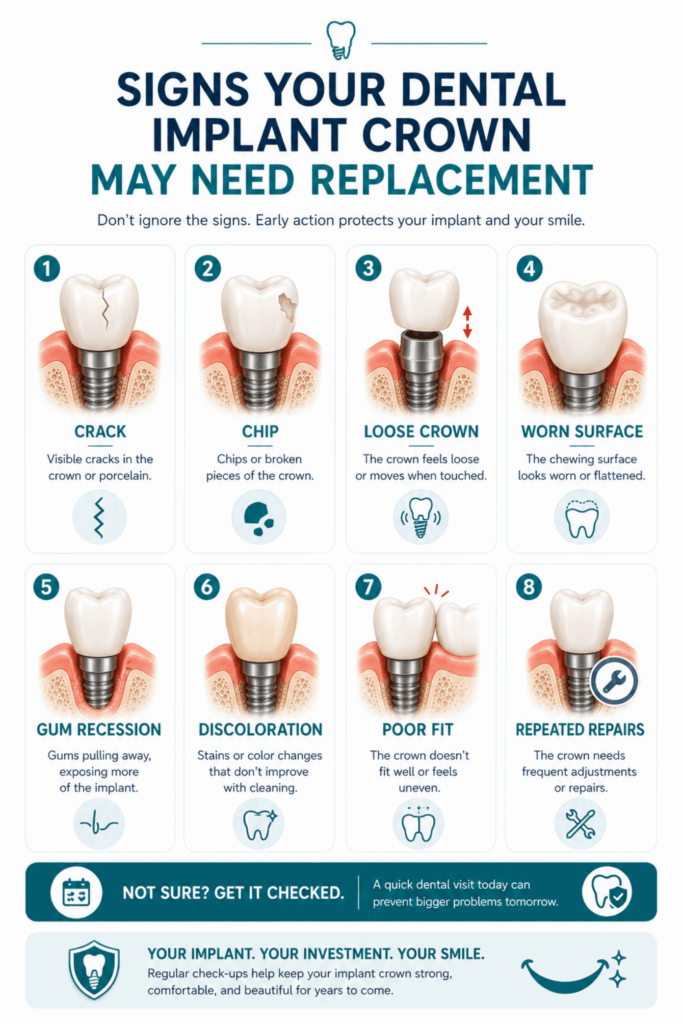
A dental implant crown is built to last, but it is not expected to last forever. Even if the titanium post remains healthy and securely fused to the jawbone, the crown may eventually need repair or replacement because of normal wear or accidental damage. Recognizing the warning signs early can help prevent more extensive treatment later.
- Visible Cracks or Chips: Small chips may sometimes be repaired, but larger fractures usually require a new custom crown to restore strength and appearance.
- A Loose Crown: If the crown feels like it moves when you bite or chew, the abutment screw may have loosened, or the crown may no longer fit properly.
- Excessive Wear: Years of chewing or teeth grinding can gradually wear down the chewing surface, changing your bite and reducing function.
- Poor Fit: A crown that no longer fits well may trap food, irritate the gums, or make cleaning more difficult.
- Changes in Appearance: Staining, discoloration, or worn porcelain can make the restoration look different from your natural teeth.
- Repeated Repairs: If the same crown continues to chip or loosen despite treatment, replacing it is often the more reliable long-term solution.
- Gum Problems Around the Implant: Ongoing swelling, bleeding, or gum recession should be evaluated promptly because the problem may involve the tissues supporting the implant rather than the crown itself.
- Bite Changes: Teeth naturally shift slightly over time. If your bite changes significantly, replacing or adjusting the crown may improve comfort and chewing.
Replacing the crown does not usually mean the implant has failed. In many cases, the implant remains healthy, and only the visible restoration needs to be replaced.
Frequently Asked Questions About Dental Implant Crowns
Does Getting an Implant Crown Hurt?
Placing the final crown is usually not painful because the implant has already healed. You may feel mild pressure while the crown is fitted and adjusted, but most patients do not need anesthesia unless additional procedures are being performed.
Can a Dental Implant Crown Fall Off?
Yes, although it is uncommon. A crown may become loose if the abutment screw loosens, the cement fails, or the restoration becomes damaged. If this happens, avoid chewing on that side and contact your dentist as soon as possible. In many cases, the crown can be reattached or repaired without replacing the implant.
Can an Implant Crown Get a Cavity?
No. The crown itself cannot develop cavities because it is made from materials such as zirconia, porcelain, or metal rather than natural tooth enamel. However, plaque can still build up around the gums, increasing the risk of peri-implant disease. Good oral hygiene remains essential.
How Do You Clean Under an Implant Crown?
Brush the crown twice a day using a soft-bristled toothbrush, and clean around the implant every day with dental floss, implant floss, or an interdental brush. These tools help remove plaque from the gumline and hard-to-reach areas, supporting healthy gums and long-term implant success.
Can a Dental Implant Crown Be Repaired Instead of Replaced?
Sometimes. Minor chips can often be polished or repaired, while a loose screw-retained crown may simply need to be tightened. However, large fractures, severe wear, or a poor fit usually require a new dental implant crown to restore proper function and appearance.
Final Thoughts
A dental implant crown is a durable, natural-looking solution that can restore your smile, chewing ability, and confidence after losing a tooth. Understanding the types of dental crowns, how the procedure replaces a missing tooth, and the factors that affect the lifespan of a dental crown can help you make informed decisions about your treatment.
Although the process may take months from start to finish, the result is a new artificial tooth that is designed to fit comfortably and function like a natural tooth when the crown fits properly. If you are considering this advanced dental treatment, schedule a consultation or request an appointment with your dentist to find out whether it is the right option for your smile.
