Replacing all or most of your teeth can feel overwhelming, especially if your dentures slip, make eating difficult, or affect the way you speak. Implant-supported dentures offer a more secure solution by attaching to dental implants placed in your jawbone. They provide better stability, improved chewing, and greater comfort than traditional removable dentures for many people.
Not everyone is a candidate for this treatment, and the process takes longer than getting conventional dentures. Factors such as your jawbone health, overall health, treatment goals, and budget all play a role. Understanding how the procedure works and what results to expect can help you decide whether this option is right for you.
Many people also wonder how long implant-supported dentures last, how they compare with regular dentures, and what daily care they require. The following sections answer these common questions and explain each step, from planning your treatment to maintaining your new smile for years to come.
What Are Implant-Supported Dentures?
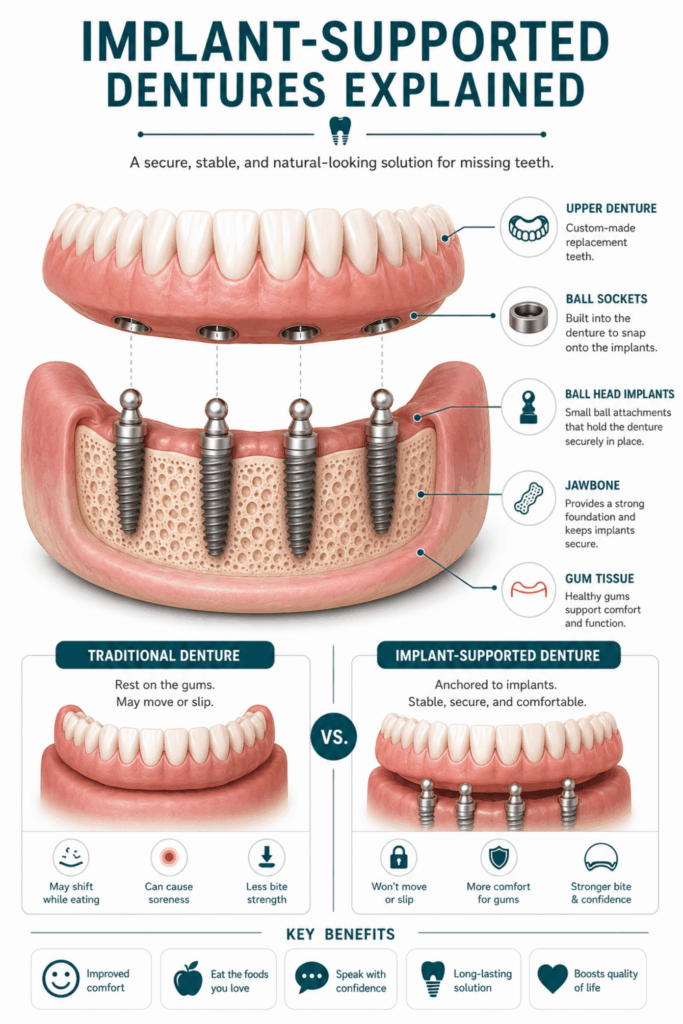
Implant-supported dentures are dentures that replace multiple missing teeth by attaching to dental implants instead of resting only on the gums. During dental implant surgery, titanium implant posts are placed into the jawbone, where they act like artificial tooth roots. This creates a stronger, more stable foundation than a traditional denture, helping the denture stay in place while you eat, speak, and smile.
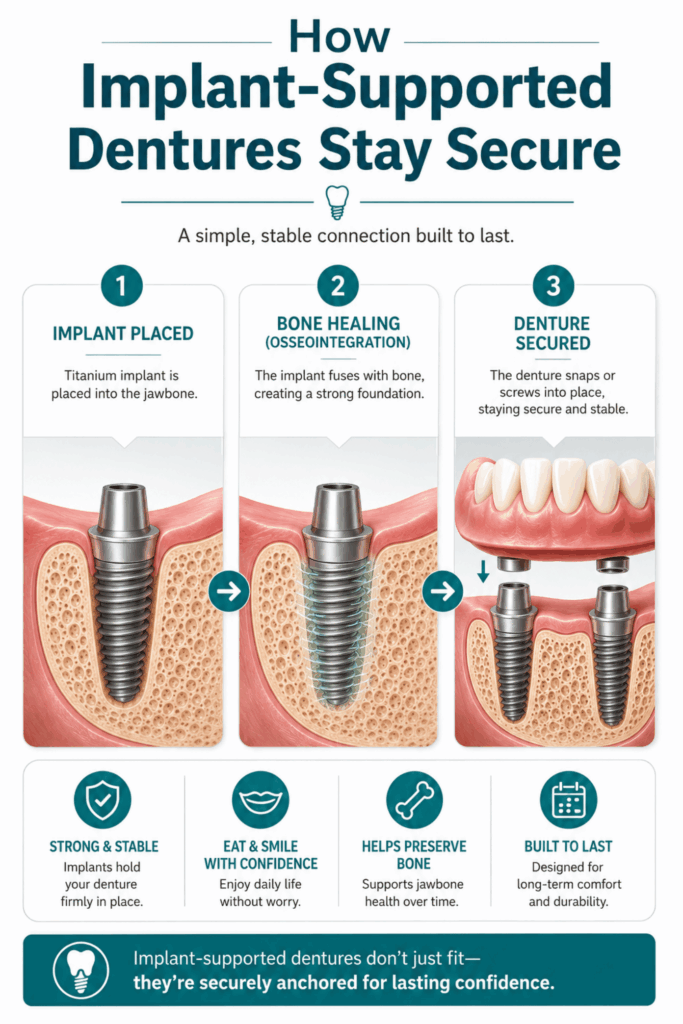
There are two main types of implant-supported dentures: removable and fixed. Removable dentures snap onto special attachments and can be taken out for cleaning, while fixed implant-supported dentures remain securely attached and are removed only by a dental provider. Both options offer greater denture stability and comfort compared with traditional dentures that can slip during daily activities.
How Implant-Supported Dentures Work
Implant-supported dentures work by using dental implants that fuse with the jawbone through a natural process called osseointegration. As the implants heal, the surrounding bone grows around them, creating a secure anchor. Unlike traditional dentures that rely mainly on the gums for support, implant-supported dentures transfer chewing forces into the jawbone, making them feel more stable and helping reduce bone loss over time.
Once healing is complete, special attachments connect the denture to the implants. The implant posts provide support, the attachment system locks the denture into place, and the denture replaces the visible teeth and surrounding gum tissue. Depending on your treatment plan, a full or partial denture may be supported by implants, allowing you to chew more comfortably and speak with greater confidence.
Types of Implant-Supported Dentures
Not every patient needs the same type of implant-supported denture. Your dentist will recommend the best option based on the number of missing teeth, the amount of available jawbone, your budget, and your lifestyle. Implant-supported dentures can be classified by how they attach to the implants and by how many teeth they replace.
Based on How They Attach
- Removable Implant-Supported Dentures: Also called snap-in dentures or overdentures, these attach securely to dental implants but can be removed at home for daily cleaning. They usually require fewer implants, making them a practical option for many patients.
- Fixed Implant-Supported Dentures: These dentures remain securely attached to dental implants and can only be removed by a dentist. They provide excellent stability and feel more like natural teeth, but typically require more implants and have a higher initial cost.
Based on the Number of Teeth Replaced
- Full Implant-Supported Dentures: These dentures replace all the teeth in the upper or lower jaw. They may be removable or fixed, depending on the treatment plan, and are commonly supported by four to six dental implants.
- Partial Implant-Supported Dentures: These dentures replace several missing teeth while preserving healthy natural teeth. Depending on the treatment plan, they may be removable or fixed, although fixed implant-supported bridges are often recommended for greater stability and comfort.
Removable Implant-Supported Dentures
Removable implant-supported dentures, often called snap-in dentures or overdentures, attach to dental implants using special clips or locator attachments that hold them securely in place. You can remove them at home for daily cleaning before snapping them back onto the implants. This option is often recommended for people who want better stability than traditional dentures while keeping maintenance simple or reducing treatment costs by using fewer implants.
Fixed Implant-Supported Dentures
Fixed implant-supported dentures are permanently attached to dental implants and can only be removed by a dentist during maintenance visits. Because they remain securely in place, they closely mimic the feel and function of natural teeth. Many patients choose this option because it provides the strongest biting force, greater comfort, and increased confidence when eating, speaking, and smiling.
Who Is a Good Candidate for Implant-Supported Dentures?
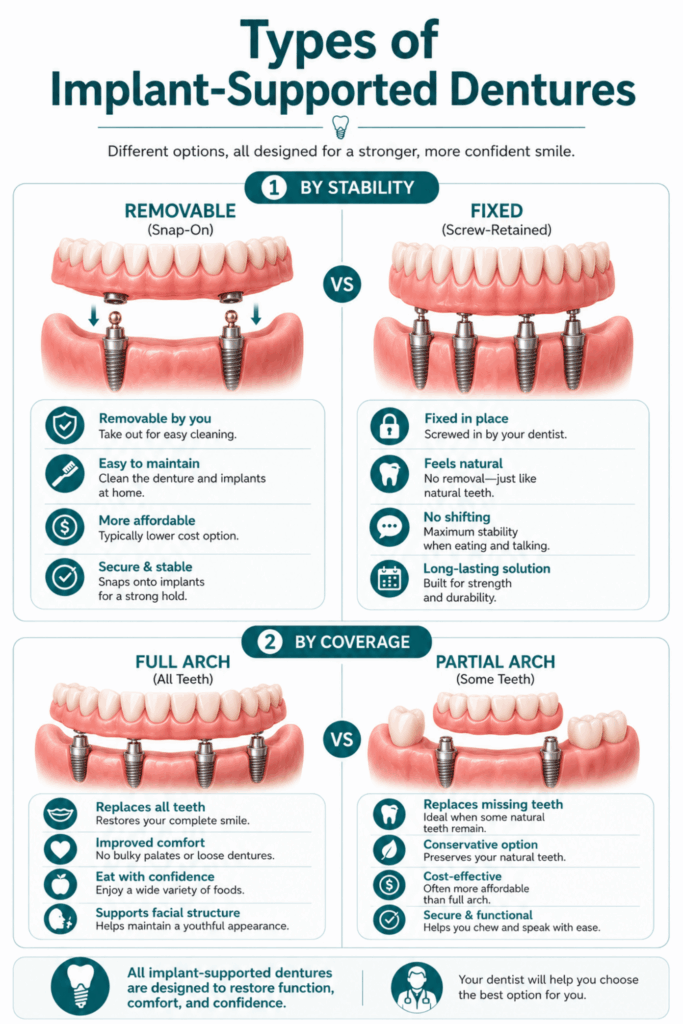
Implant-supported dentures are an excellent option for many people with multiple missing teeth, but not everyone is an ideal candidate right away. Before recommending treatment, your dentist carefully evaluates your overall oral health, medical history, and the condition of your jawbone to ensure the implants have a strong, healthy foundation.
- Good Overall Oral Health: Healthy teeth and gums reduce the risk of infection and improve the chances of long-term implant success.
- Adequate Jawbone Volume: There must be enough bone to support implants securely. If significant bone loss has occurred, a bone graft may be recommended before implant placement.
- Healthy Gum Tissue: Healthy gums provide important support around dental implants and lower the risk of complications such as peri-implant disease.
- Multiple Missing Teeth: Implant-supported dentures are designed for people who need to replace several or all missing teeth in one or both jaws.
- Non-Smoker or Willing to Quit: Smoking slows healing after implant surgery and increases the risk of implant failure. Quitting before and after treatment can improve outcomes.
- Well-Controlled Medical Conditions: Conditions such as diabetes do not automatically prevent treatment, but they should be well managed to support proper healing.
- Commitment to Proper Care: Daily oral hygiene and regular dental visits are essential because implants require lifelong maintenance, just like natural teeth.
- Realistic Expectations: Implant treatment often takes several months from implant placement to the final denture. Understanding the timeline helps patients stay committed to the process and achieve the best long-term results.
Benefits of Implant-Supported Dentures
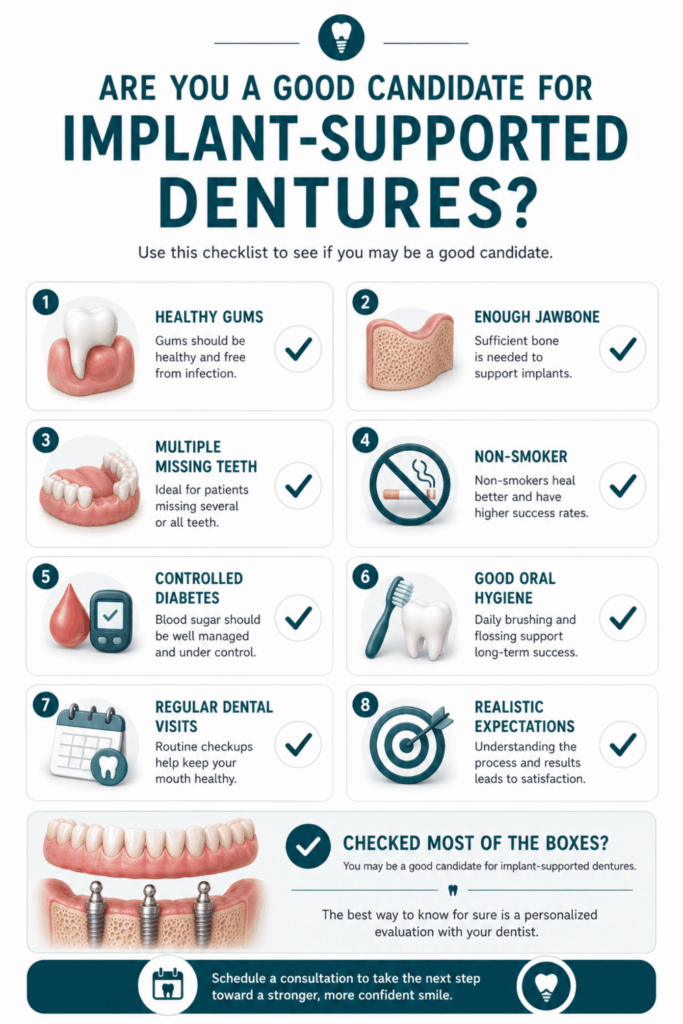
Implant-supported dentures offer more than just replacement teeth. Because they are supported by dental implants instead of resting only on the gums, they provide greater stability, improved function, and better long-term oral health. For many patients, these benefits make everyday activities such as eating, speaking, and smiling feel much more natural.
- Improved Stability: Dental implants hold the denture firmly in place, reducing the movement that often occurs with a traditional denture.
- Stronger Chewing Ability: The added support allows you to bite and chew a wider variety of foods with greater confidence and comfort.
- Clearer Speech: Stable dentures are less likely to shift while talking, making it easier to pronounce words clearly.
- Greater Comfort: Because the denture is supported by implants, there is less pressure on the gums, which can reduce irritation and sore spots.
- Preserves the Jawbone: Implants stimulate the jawbone during chewing, helping slow the bone loss that commonly occurs after teeth are lost.
- More Natural Feel: Many patients say implant-supported dentures feel more like natural teeth than conventional dentures.
- Increased Confidence: Dentures that stay securely in place allow you to smile, laugh, and socialize without worrying about slipping.
- Long-Term Solution: With proper care, dental implants can last for decades, making implant-supported dentures a durable treatment option.
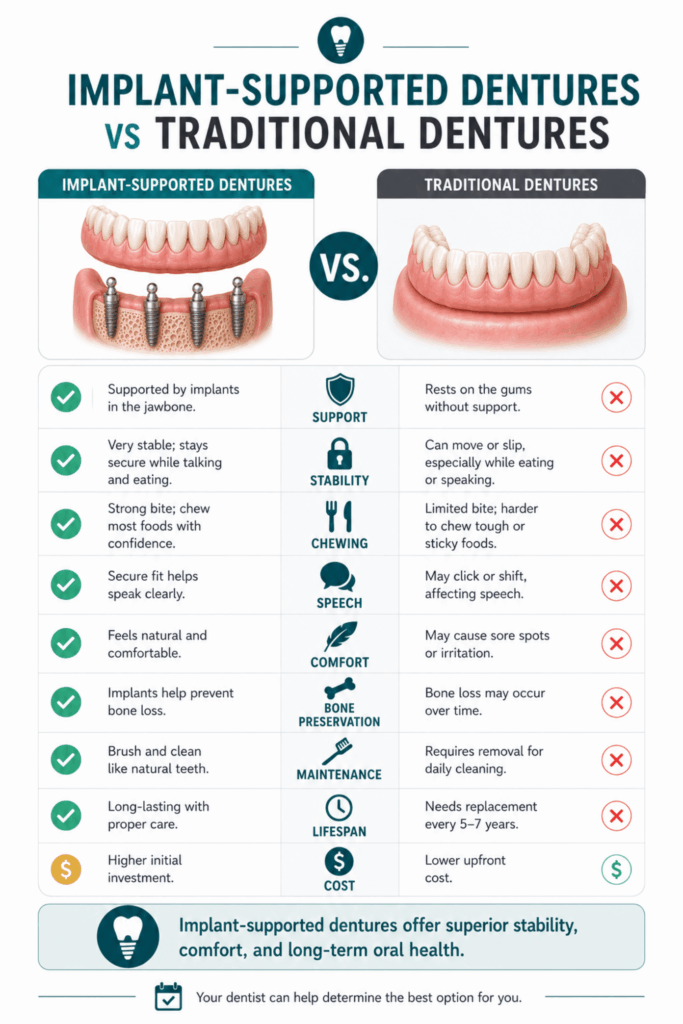
Implant-Supported Dentures vs. Traditional Dentures
| Feature | Implant-Supported Dentures | Traditional Dentures |
|---|---|---|
| Support | Anchored to dental implants placed in the jawbone | Rest directly on the gums |
| Stability | Very stable with little movement | Dentures can slip during eating or speaking |
| Chewing Ability | Stronger biting force and improved chewing | Reduced chewing efficiency, especially with lower dentures |
| Comfort | Less gum pressure and irritation | May rub against the gums and cause sore spots |
| Speech | More secure, making speech easier | May shift and affect pronunciation |
| Bone Preservation | Helps reduce jawbone loss by stimulating the bone | Does not prevent bone loss after tooth loss |
| Daily Maintenance | Requires cleaning around the implants and dentures | Requires daily cleaning and adhesive may be needed |
| Initial Cost | Higher because it includes dental implant surgery | Lower initial cost |
| Expected Lifespan | Implants may last a lifetime with proper care, while the denture may need replacement over time | Dentures typically need replacement or relining more often because of changes in the jaw |
Although implant-supported dentures require a greater initial investment and a longer treatment process, many patients find the improved comfort, stability, and chewing ability well worth it. Traditional dentures remain a good option for some people, especially when implants are not suitable, but they generally provide less support and require more adjustment as the jawbone changes over time.
Step-by-Step Implant-Supported Dentures Procedure
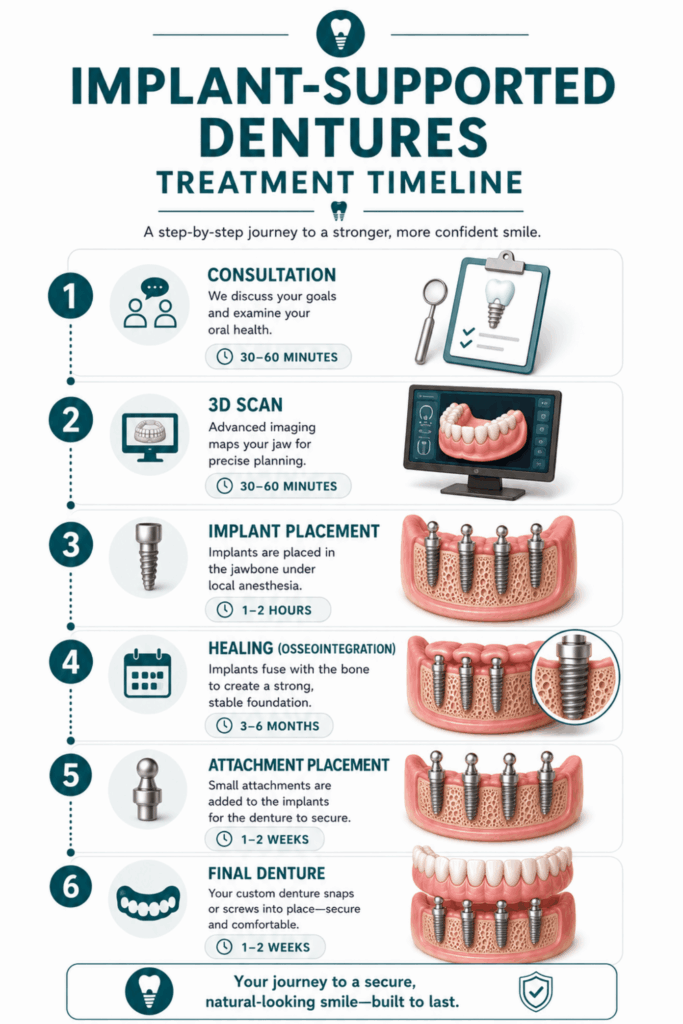
Getting implant-supported dentures usually takes several months because the implants need time to heal and bond with the jawbone. While every treatment plan is different, most patients follow the same general steps from consultation to placement of the final denture.
- Initial Consultation: Your dentist examines your teeth, gums, and jawbone to determine whether implant-supported dentures are the right treatment for you.
- Treatment Planning: Digital X-rays or 3D scans help your dentist decide the number of implants, their ideal locations, and whether additional procedures, such as a bone graft, are needed.
- Dental Implant Placement: The implants are surgically placed into the jawbone under local anesthesia or another appropriate form of sedation.
- Healing Period: Over the next several months, the implants fuse with the jawbone through osseointegration, creating a strong and stable foundation.
- Attachment Placement: Once healing is complete, special connectors are attached to the implants to support the denture.
- Final Denture Delivery: Your custom denture is secured to the implants, checked for proper fit, and adjusted to provide comfort, function, and a natural appearance.
Consultation and Treatment Planning
The process begins with a comprehensive dental examination. Your dentist evaluates your oral health, reviews your medical history, and takes digital X-rays or a 3D CBCT scan to assess the amount of bone available for implant placement. Based on these findings, your dentist develops a personalized treatment plan, determines how many implants are needed, and identifies their ideal positions to provide the best support for your denture. If there is not enough bone to support implants, a bone graft may be recommended before treatment continues.
Dental Implant Placement
During implant surgery, titanium implant posts are carefully placed into the jawbone through small openings in the gum. The procedure is typically performed under local anesthesia, so most patients feel pressure rather than pain. Mild swelling, bruising, and soreness are common for a few days afterward, but these symptoms usually improve with prescribed or over-the-counter pain medication, a soft diet, and proper home care.
Healing and Osseointegration
After implant placement, the jawbone gradually bonds to the surface of the implants through a process called osseointegration. This healing phase typically takes three to six months, although the exact timeline varies depending on the patient’s health, bone quality, and whether bone grafting was performed. Allowing enough time for this bond to develop is one of the most important factors for achieving long-term implant stability and success.
Denture Attachment
Once the implants have fully healed, your dentist attaches the final denture to the implants using the appropriate attachment system. The denture is carefully adjusted to ensure an even bite, comfortable fit, clear speech, and a natural-looking smile. Several follow-up visits may be needed to make minor adjustments as you adapt to your new implant-supported dentures.
Recovery After Getting Implant-Supported Dentures
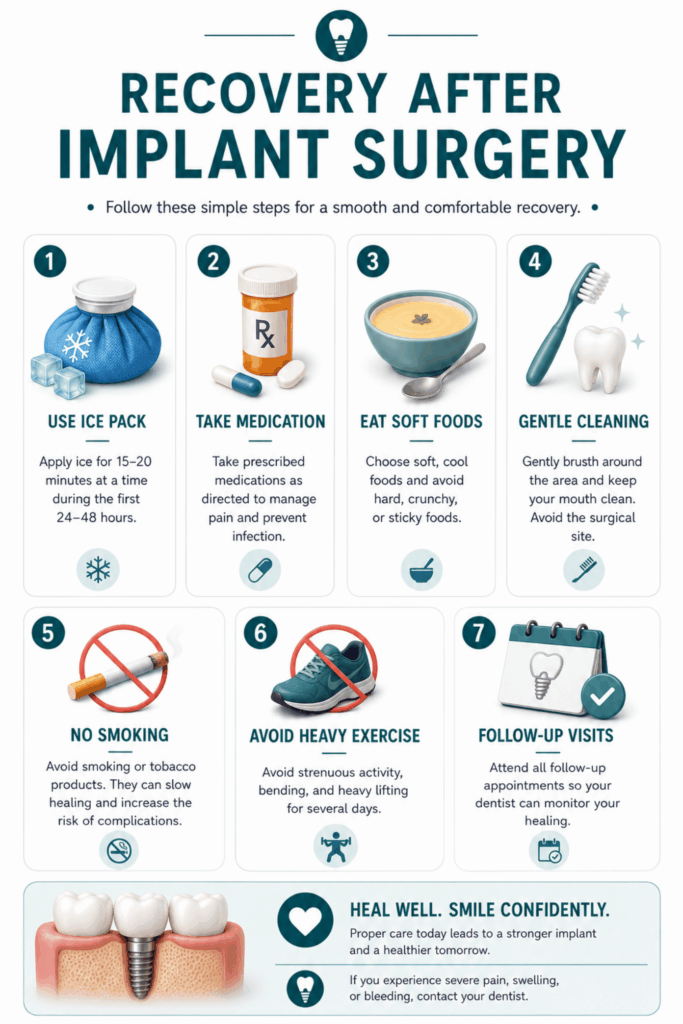
Recovery after getting implant-supported dentures happens in stages. Most people experience mild swelling, bruising, or discomfort for a few days after dental implant surgery, while complete healing takes several months as the implants fuse with the jawbone. Following your dentist’s instructions during this period helps promote healing, lowers the risk of complications, and prepares your mouth for the final denture.
- Manage Swelling: Apply an ice pack to the outside of your face during the first 24 to 48 hours to help reduce swelling and discomfort.
- Take Medications as Directed: Use prescribed or recommended pain relievers and antibiotics exactly as instructed to support healing and prevent infection.
- Choose Soft Foods: Eat foods such as yogurt, eggs, mashed potatoes, soup, and smoothies while the surgical sites heal. Gradually return to firmer foods as advised by your dentist.
- Keep Your Mouth Clean: Brush the remaining teeth gently and clean around the implants according to your dentist’s instructions to reduce plaque buildup.
- Avoid Smoking: Smoking slows healing and increases the risk of implant failure, so it is best avoided before and after implant surgery.
- Limit Strenuous Activity: Rest for the first day or two and avoid heavy exercise until your dentist says it is safe to resume normal activities.
- Attend Follow-Up Visits: Regular checkups allow your dentist to monitor healing, remove sutures if necessary, and ensure the implants are integrating properly.
How Long Do Implant-Supported Dentures Last?
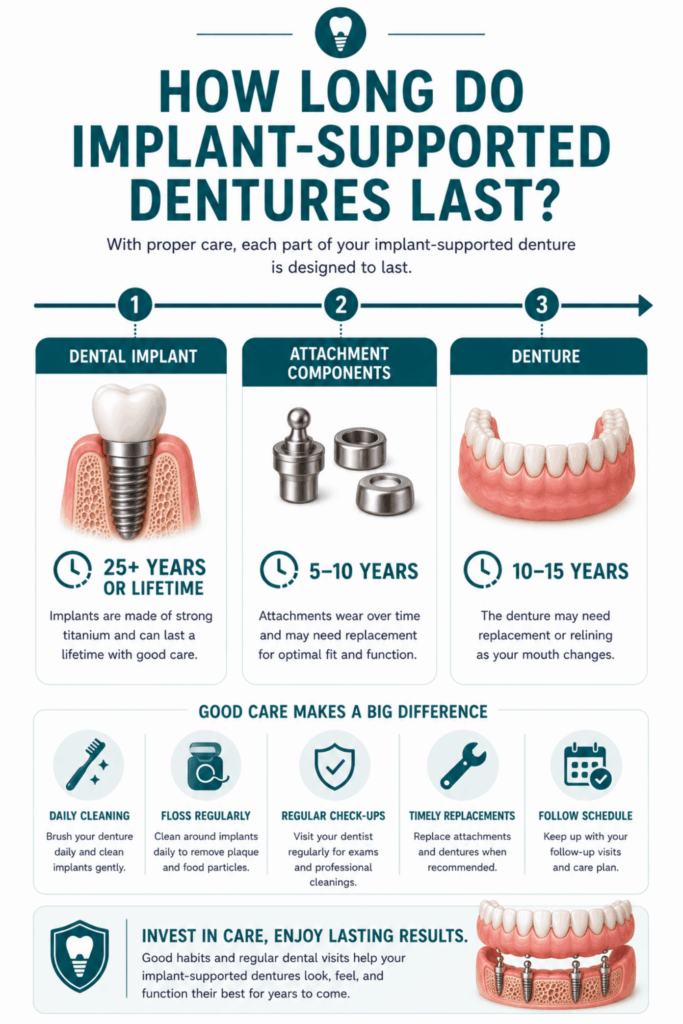
Dental implants are designed to be a long-term solution and can often last 25 years or more. In many cases, implants can last a lifetime when they are placed correctly, supported by healthy bone, and maintained with good oral hygiene and regular dental care. The denture attached to the implants has a shorter lifespan because it experiences daily wear from chewing and speaking.
Most implant-supported dentures last about 10 to 15 years before they need replacement or significant repair, although many last longer with proper care. Attachment components used with removable dentures may wear out after 5 to 10 years and can usually be replaced during a routine dental visit. Factors that affect longevity include oral hygiene, smoking, teeth grinding, bite forces, medical conditions, regular dental checkups, and the overall quality of the treatment. Promptly repairing worn attachments or damaged dentures also helps protect the implants and extend the life of the restoration.
How to Care for Implant-Supported Dentures
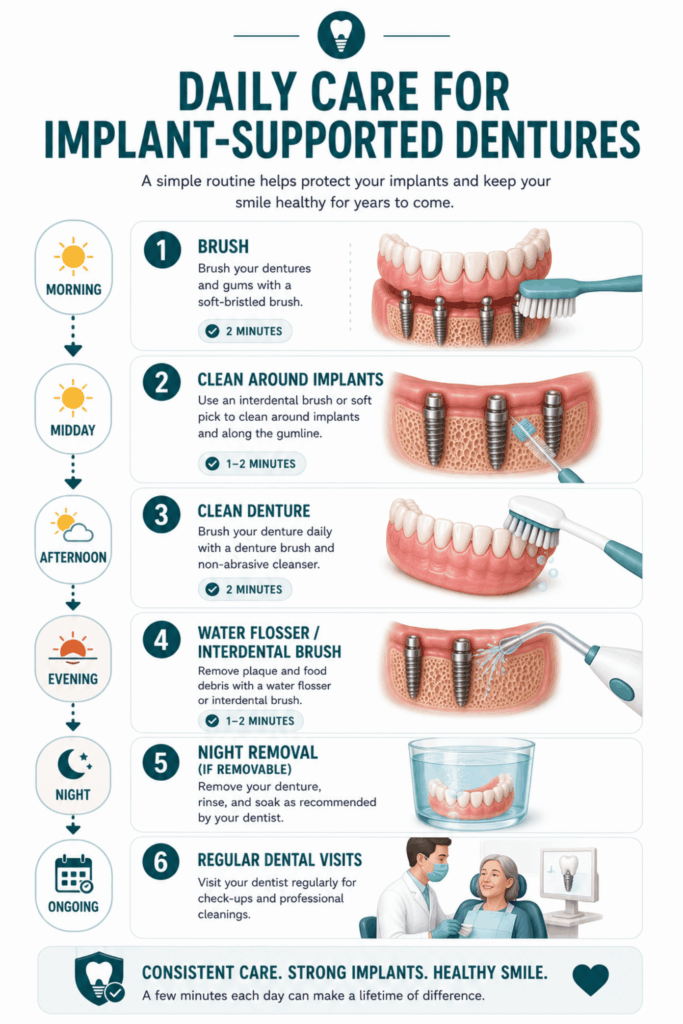
Although implant-supported dentures cannot develop cavities, the surrounding gums and supporting bone still need daily care to stay healthy. A consistent cleaning routine and regular dental visits help protect both the implants and the denture, reducing the risk of complications and helping your restoration last as long as possible.
- Brush Every Day: Clean the denture and surrounding gum tissue daily using a soft toothbrush and products recommended by your dentist.
- Clean Around the Implants: Use floss designed for implants, interdental brushes, or a water flosser to remove plaque around the implant posts and attachments.
- Remove Removable Dentures at Night: If you have removable implant-supported dentures, take them out each day for thorough cleaning unless your dentist advises otherwise.
- Keep the Denture Clean: Wash the denture every day to remove food debris, bacteria, and plaque that can cause odor or irritation.
- Visit Your Dentist Regularly: Professional cleanings and routine examinations help identify worn attachments, loose components, or early signs of gum disease.
- Avoid Using Your Teeth as Tools: Do not use your dentures to open packages or bite hard objects, as this can damage the denture or attachments.
- Protect Against Teeth Grinding: If you grind your teeth during sleep, your dentist may recommend a night guard to reduce excessive force on the implants and dentures.
- Do Not Skip Maintenance: Even if your dentures feel comfortable, routine maintenance helps prevent small problems from becoming more serious.
Risks and Possible Complications
Implant-supported dentures have a high success rate, but like any dental treatment, they carry some risks. Careful treatment planning, good oral hygiene, and regular follow-up visits greatly reduce the likelihood of complications and help ensure long-term success.
- Infection Around the Implants: Poor plaque control can lead to inflammation or infection of the surrounding gums and bone.
- Implant Failure: In rare cases, an implant may not properly fuse with the jawbone or may become loose over time.
- Sore Spots: The denture may place pressure on certain areas, causing temporary discomfort until adjustments are made.
- Attachment Wear: Clips, locator attachments, or other connecting components can wear down with repeated use and may need periodic replacement.
- Bone Loss Around the Implant: Ongoing infection, smoking, or excessive bite forces can contribute to bone loss that affects implant stability.
- Fractured Denture: Like any dental prosthesis, the denture can crack or break if dropped or exposed to excessive force.
- Temporary Numbness or Sinus Issues: Although uncommon, implants placed near nerves or the sinus may occasionally cause temporary complications that require additional care.
How Much Do Implant-Supported Dentures Cost?
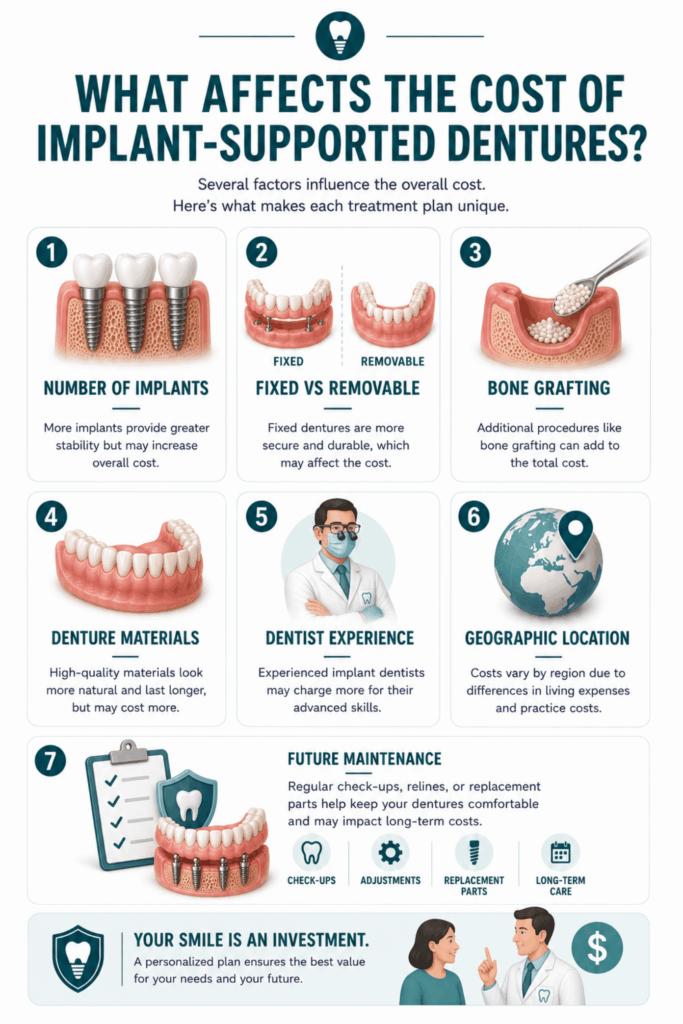
The cost of implant-supported dentures varies widely because every treatment plan is customized. Your total cost depends on the complexity of your case, the number of implants needed, and whether additional procedures are required before implant placement. Your dentist can provide an accurate estimate after a comprehensive examination.
- Number of Implants: More implants generally increase the overall treatment cost.
- Type of Denture: Fixed implant-supported dentures usually cost more than removable overdentures because they often require additional implants and materials.
- Bone Grafting or Other Procedures: Some patients need bone grafts, tooth extractions, or other treatments before implants can be placed.
- Materials Used: The type of denture base, artificial teeth, and attachment system all influence the final cost.
- Dental Provider’s Experience: Specialists and highly experienced implant dentists may charge different fees based on their training and expertise.
- Geographic Location: Treatment costs vary between cities, regions, and countries because of differences in operating expenses and local fees.
- Follow-Up Care: Future maintenance, replacement attachments, or denture repairs should also be considered when planning the long-term cost of treatment.
Frequently Asked Questions
Can Implant-Supported Dentures Be Removed?
It depends on the type of denture. Removable implant-supported dentures can be taken out at home each day for cleaning. Fixed implant-supported dentures remain attached to the implants and are removed only by a dentist during maintenance visits.
Are Implant-Supported Dentures Painful?
Most patients experience little or no pain during implant surgery because local anesthesia keeps the area numb. Mild soreness, swelling, and bruising are common for a few days afterward, but they usually improve quickly with medication and proper care. Once healing is complete, implant-supported dentures should feel comfortable during normal daily use.
How Many Implants Are Needed?
The number of implants depends on your treatment plan, the amount of available jawbone, and whether you are receiving a fixed or removable denture. Many removable overdentures are supported by two to six implants, while fixed full dentures often require four to six implants per arch.
Can You Eat Normally With Implant-Supported Dentures?
Yes. After the implants have fully healed and your final denture is attached, most patients can return to eating a wide variety of foods. Your dentist will recommend starting with softer foods and gradually progressing to firmer foods as your comfort and chewing ability improve.
The Bottom Line on Implant-Supported Dentures
Implant-supported dentures provide a stable, comfortable, and long-lasting way to replace multiple missing teeth. Compared with traditional dentures, they offer better chewing ability, clearer speech, improved denture stability, and help slow the jawbone loss that often follows tooth loss. Although the treatment requires dental implant surgery, a healing period, and a higher initial investment, many patients find the long-term benefits well worth it.
The best type of implant-supported denture depends on your oral health, the amount of available jawbone, your lifestyle, and your treatment goals. A comprehensive dental examination can determine whether you are a good candidate and whether additional procedures, such as a bone graft, are needed. By working with an experienced dental provider and following proper care, you can enjoy a healthy, confident smile for many years.
