Your extraction site may look strange or feel sore during the first few days. That does not always mean something is wrong. When comparing dry socket vs normal healing, the most useful clue is how your pain changes. Normal discomfort should gradually improve, while dry socket pain often becomes stronger after initially easing.
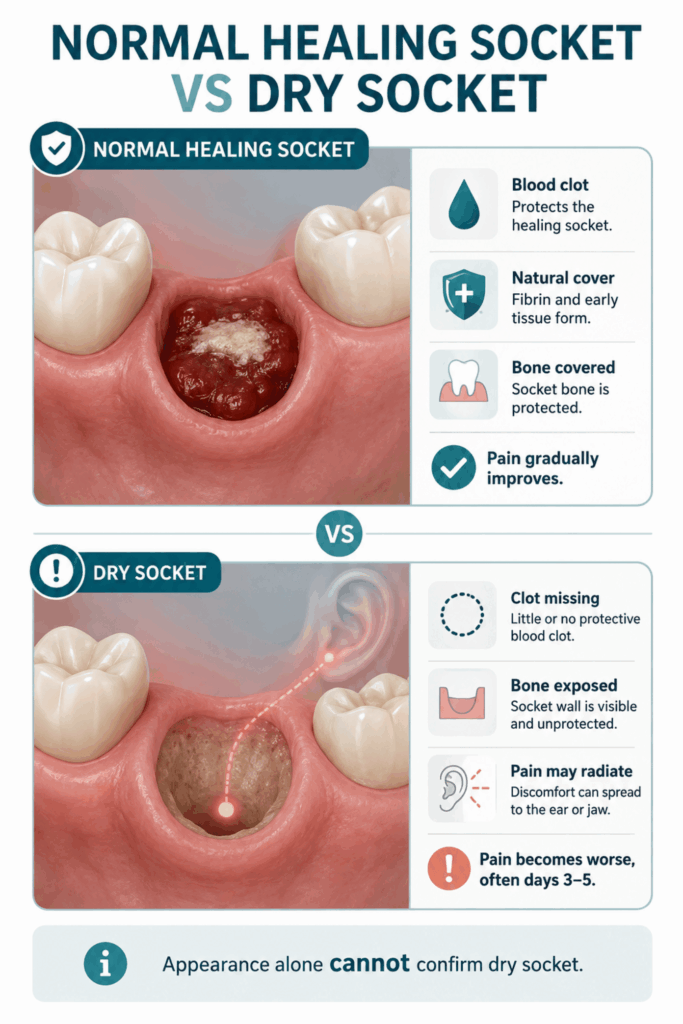
A normally healing socket may contain a dark blood clot at first. It can later develop white or yellow healing tissue that patients sometimes mistake for pus or exposed bone. Dry socket may look empty, but appearance alone is not enough to identify it. Increasing, deep pain is usually more important than the socket’s color.
Bad breath, an unpleasant taste, or pain that spreads toward the ear can also suggest dry socket. However, fever, pus, and increasing facial swelling may point to an infection or another problem. Understanding the expected changes first will make the differences easier to recognize and help you decide when to contact your dentist.
Dry Socket vs Normal Healing: Key Differences at a Glance
The main difference between dry socket and normal healing is the direction of the pain. Normal pain usually becomes easier to manage each day. With dry socket, pain often becomes stronger after the first day or two, commonly around days 3 to 5.
| Feature | Normal Healing | Dry Socket |
|---|---|---|
| Pain | Gradually improves | Becomes severe or worsens after initial improvement |
| Blood clot | Forms in the socket and is gradually replaced by new tissue | May break down, become dislodged, or fail to form properly |
| Appearance | Dark clot followed by white, cream, or pink healing tissue | Socket may look empty, with little clot or possible exposed bone |
| Pain location | Usually stays near the extraction site | May radiate from the socket toward the ear, temple, or jaw |
| Taste and breath | Mild temporary changes may occur | Unpleasant taste or bad breath may develop |
| Swelling | Often increases early, then begins to settle | Usually limited; marked or spreading swelling suggests another problem |
| Timing | Pain and swelling improve as healing continues | Symptoms often become noticeable several days after tooth removal |
| Dental care | Routine follow-up may be enough | A dentist should assess worsening or severe pain |
A socket can look unusual and still be healing normally. White tissue, a deep hole, or a clot that is no longer easy to see does not confirm alveolar osteitis, the clinical name for dry socket. A dentist considers the pain pattern, timing, socket appearance, and other symptoms together.
What Does a Normally Healing Tooth Socket Look Like?
Normal healing after tooth extraction changes from day to day. At first, the socket may contain a dark red blood clot. The clot protects the underlying bone and nerves while the early healing process begins.
The socket may then look white, cream, yellow, or pink as new tissue forms. The opening can remain visible for several weeks, especially after a large molar or wisdom tooth was removed. A visible hole does not mean that healing has stopped.
Normal Blood Clot and Early Healing Tissue
Soon after the tooth is removed, a blood clot forms in the socket. It acts as a temporary protective layer and provides a base for new blood vessels and soft tissue. Over time, the body replaces the clot with granulation tissue, which is delicate tissue involved in wound repair.
The clot does not always remain dark red or clearly visible. Its appearance changes as healing continues, so it may seem to shrink or disappear beneath new tissue. Do not touch the socket with a finger, toothbrush, cotton swab, or other object to check whether the clot is present. Probing the site can cause bleeding, introduce bacteria, or dislodge the blood clot.
Normal White or Yellow Tissue in the Socket
A white or pale yellow layer in the socket is often part of normal healing. Fibrin, a protein involved in clotting and wound repair, can cover the area while granulation tissue develops underneath. This layer may look unfamiliar, but it is not automatically pus.
Common and concerning findings differ:
- White or Cream Healing Layer: A thin, attached layer without increasing pain or swelling often represents fibrin or new tissue.
- Pink or Red Tissue: The socket may look pink or mildly red as new tissue forms and the gum edges begin to close.
- Food Debris: Food may appear white, yellow, or brown. Do not scrape it out or begin using an irrigation syringe unless your dentist has explained when and how to use one.
- Possible Pus: Thick discharge combined with increasing swelling, worsening pain, fever, or feeling unwell needs dental evaluation.
- Firm White Area: A hard white point may be a small bone spicule rather than healing tissue. A dentist can determine whether it needs treatment.
What Does Normal Pain After a Tooth Extraction Feel Like?
Normal pain feels sore, tender, or achy near the socket. The jaw may also feel stiff, particularly after a difficult tooth extraction or wisdom tooth removal. Mild bruising and swelling can occur, and nearby teeth may feel temporarily sensitive.
The most important feature is gradual improvement. Pain and swelling may be more noticeable during the first day or two, but they should become easier to manage rather than suddenly intensify. Recovery can take longer after surgical removal, and the NHS guidance on wisdom tooth recovery notes that some soreness, swelling, and jaw stiffness may continue for up to two weeks even as the overall condition improves.
What Does a Dry Socket Look and Feel Like?
Dry socket is a painful condition that occurs when the blood clot protecting an extraction site breaks down, becomes dislodged, or does not form properly. This leaves the socket walls and nerves underneath less protected during early healing.
Worsening pain is usually a stronger clue than what the socket looks like. Common dry socket symptoms include:
- Increasing Pain: Pain becomes stronger instead of following the expected pattern of improvement.
- Radiating Pain: The discomfort may spread from the socket toward the ear, temple, eye area, or side of the jaw.
- Missing Clot: The socket may appear to have little or no visible blood clot.
- Possible Exposed Bone: Part of the underlying bone may be visible, although it can be difficult to identify at home.
- Bad Taste or Breath: An unpleasant taste or odor may develop, sometimes because debris collects in the socket.
- Limited Response to Pain Medicine: Pain relief may be incomplete or short-lived even when medication is taken as directed.
Pain That Worsens Instead of Improving
Dry socket pain is often deep, throbbing, and difficult to ignore. A patient may feel reasonably comfortable on the first day, then notice that the pain becomes much stronger around day three or four. The pain can feel more intense than the original extraction discomfort.
It may also radiate from the socket toward the ear or temple on the same side. This pattern is especially common after a lower back tooth has been removed. Severe pain is not the only factor dentists consider, but pain that worsens after initial improvement is a strong reason to call the dental office.
An Empty Socket or Visible Bone
A dry socket may look like an empty tooth socket because part or all of the clot is missing. In some cases, the socket looks like an empty opening with pale underlying bone. However, shadows, sutures, saliva, food debris, and normal white healing tissue can all change what you see. An empty-looking socket without increasing pain does not prove that dry socket has developed.
Bad Taste, Bad Breath, and Other Symptoms
Bad taste and bad breath can accompany dry socket, but they can also result from food, reduced brushing near the wound, or temporary changes during healing. Dentists interpret them alongside the pain pattern and clinical examination.
- Unpleasant Taste: A persistent foul taste may occur when the clot breaks down or debris collects in the socket.
- Bad Breath: Odor from the extraction area may accompany dry socket but is not enough to confirm it.
- Localized Tenderness: The gum and socket may feel very sensitive when touched or exposed to food and liquids.
- Minimal Swelling: Dry socket often causes intense pain without major facial swelling. Rapidly increasing swelling may suggest infection or another complication.
- No Typical Infection Signs: Fever and pus are not classic dry socket symptoms. Their presence requires assessment for infection.
Dry Socket vs Normal Healing Day by Day
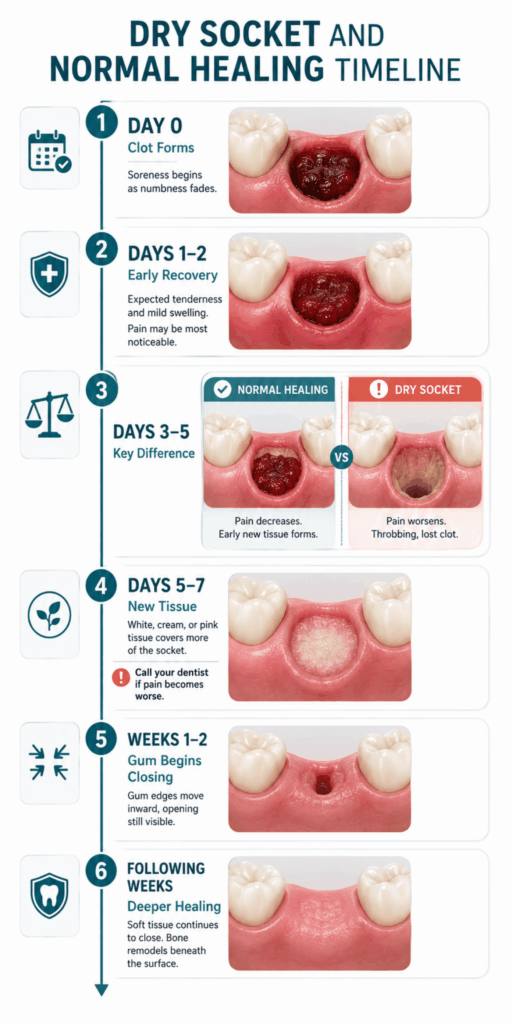
Healing after a tooth extraction varies with the tooth removed, the difficulty of the procedure, your general health, and how closely you follow aftercare instructions. The following timeline shows common patterns rather than strict deadlines.
- Day 0—Extraction Day: Bleeding slows and a blood clot forms in the socket. Soreness begins as the anesthetic wears off. A missing clot cannot usually be judged simply by looking at the site.
- Days 1–2: Normal pain, tenderness, swelling, and jaw stiffness may be most noticeable. The socket typically contains a dark clot, although it may be partly covered by saliva or surrounding tissue.
- Days 3–5: With normal recovery, pain should be becoming more manageable. New tissue forms over or around the clot. Dry socket usually develops during this period and may cause pain that becomes severe, throbs, or spreads toward the ear.
- Days 5–7: Normal swelling and soreness should continue to improve. White, cream, or pink granulation tissue may be visible. If new pain begins or existing pain becomes much worse, contact your dentist.
- Weeks 1–2: The gum edges gradually move inward, although the hole may remain visible. Healing continues below the surface even if the socket has not closed completely.
- Following Weeks and Months: Soft tissue closure and bone healing continue at different rates. Larger sockets generally take longer to fill, and the deeper bone remodeling process lasts much longer than the visible gum healing.
The risk of dry socket decreases as new tissue protects the extraction site. Pain that starts for the first time well after the usual dry socket period may have another cause and should be evaluated rather than assumed to be alveolar osteitis.
Can Pictures Show Dry Socket vs Normal Healing?
A picture can show broad differences between dry socket and normal healing, such as a visible clot, new tissue, an unusually empty socket, or possible exposed bone. It cannot show how the pain is changing, which is one of the most useful diagnostic clues.
Photos can also be misleading. Flash, shadows, saliva, food, stitches, and fibrin may make a normal socket look white, deep, or empty. A dentist may suspect dry socket after reviewing the symptoms and examining the site, but a photo alone cannot confirm the diagnosis.
Other Problems That Can Resemble Dry Socket
Worsening pain after a tooth extraction deserves attention, but it does not always mean dry socket. Food debris, infection, a sharp bone fragment, or a problem involving a nearby tooth can produce similar concerns. The timing and combination of symptoms help a dentist tell the difference.
Dry Socket vs Food Trapped in the Socket
Trapped food may cause pressure, irritation, bad taste, or odor without the deep, radiating pain typical of dry socket. Do not probe the site or flush it forcefully. If your dentist has recommended an irrigation syringe, use it only from the instructed day and with the technique provided, because starting too early could disturb healing tissue.
Dry Socket vs Infection
Dry socket is mainly an inflammatory healing complication, not the same as a bacterial infection. It often causes severe localized pain and may cause bad breath or taste, but marked facial swelling, pus, fever, or feeling generally ill are not typical features.
An infection may cause pain and swelling that continue to increase several days after surgery. The gum may appear red, and discharge may come from the site. Because symptoms can overlap, a dental examination is the safest way to distinguish infection from dry socket.
Bone Spicules and Other Sources of Pain
A small piece of bone may work toward the gum surface during healing. It can feel sharp and irritate the tongue without causing the deep pain of dry socket. Retained tooth fragments, problems in a nearby tooth, jaw-joint soreness, or less common postoperative complications may also cause pain. Do not pull out a hard fragment yourself; ask your dentist to examine it.
How Dentists Diagnose Dry Socket
When evaluating dry socket vs normal healing, a dentist begins by asking when the pain started, whether it was improving, and whether it spreads toward the ear or jaw. The dentist then examines the socket for a missing or broken-down clot, exposed bone, trapped debris, discharge, swelling, and other possible causes.
Dry socket is usually diagnosed from the symptoms and clinical examination. An X-ray does not directly show dry socket, but it may help rule out a retained root, bone fragment, or another dental condition. The overview of dry socket diagnosis from Mayo Clinic describes this combination of pain assessment, socket examination, and selective imaging.
What to Do if You Think You Have Dry Socket
Contact the dentist or oral surgeon who removed the tooth if your pain is becoming stronger instead of improving. Prompt treatment can provide pain relief and allow the dentist to rule out infection or another problem.
While waiting for care:
- Follow Your Existing Instructions: Continue the aftercare plan given by your dentist unless the office advises you to change it.
- Use Pain Medicine Safely: Take only medication that is safe for you and follow the label or your clinician’s directions. The American Dental Association guideline for acute dental pain recommends nonsteroidal anti-inflammatory drugs, or NSAIDs, alone or with acetaminophen as first-line options for many adults and adolescents, but these medicines are not suitable for everyone.
- Keep the Mouth Gently Clean: Brush the other teeth carefully. Use salt water or a prescribed rinse only according to your postoperative instructions, and avoid forceful swishing or spitting.
- Choose Soft Foods: Eat foods that do not crumble easily, and chew on the opposite side when possible.
- Avoid Smoking and Vaping: Tobacco, heat, and suction can irritate the socket and delay healing.
- Do Not Place Remedies in the Socket: Avoid putting aspirin, clove oil, peroxide, alcohol, powders, or other substances directly into the wound. These products can burn or irritate healing tissue.
- Do Not Probe or Flush the Socket: Do not try to remove tissue or debris with fingers, tools, cotton swabs, or an irrigation syringe unless your dentist has instructed you to use one.
How a Dentist Treats Dry Socket
Treatment focuses on controlling pain while the socket continues to heal. The dentist may numb the area, gently flush the socket to remove trapped food and debris, and place a medicated dressing over the sensitive socket walls.
Treatment may involve:
- Socket Irrigation: The dentist may flush the socket gently with saline or another suitable solution.
- Medicated Dressing: A soothing paste or dressing may be placed in the socket to cover the sensitive underlying bone and provide pain relief.
- Dressing Review: Some dressings need to be replaced or removed. Follow-up depends on the material used and how the symptoms respond.
- Pain Management: The dentist may recommend or prescribe pain medicine based on your health history, current medicines, and level of discomfort.
- Home Cleaning Instructions: Once appropriate, the dentist may show you how to keep the socket clean without damaging new tissue.
Antibiotics do not routinely treat dry socket because alveolar osteitis is not primarily a bacterial infection. They may be appropriate when the examination shows a separate infection. Evidence for specific local dressings remains limited; a Cochrane review of dry socket prevention and treatment found uncertainty when comparing some dressing materials.
How Long Does Dry Socket Take to Improve?
Many patients begin to feel some pain relief after the socket is cleaned and protected with a medicated dressing. Improvement may begin quickly, but the response varies. Some people need a dressing review or another visit before the pain settles.
Pain relief does not mean that the socket has finished healing. New tissue still needs time to cover the socket, and bone healing continues below it. Contact your dentist again if pain remains severe, returns after treatment, or fails to improve as expected.
Dry Socket vs Normal Healing: When to Contact a Dentist
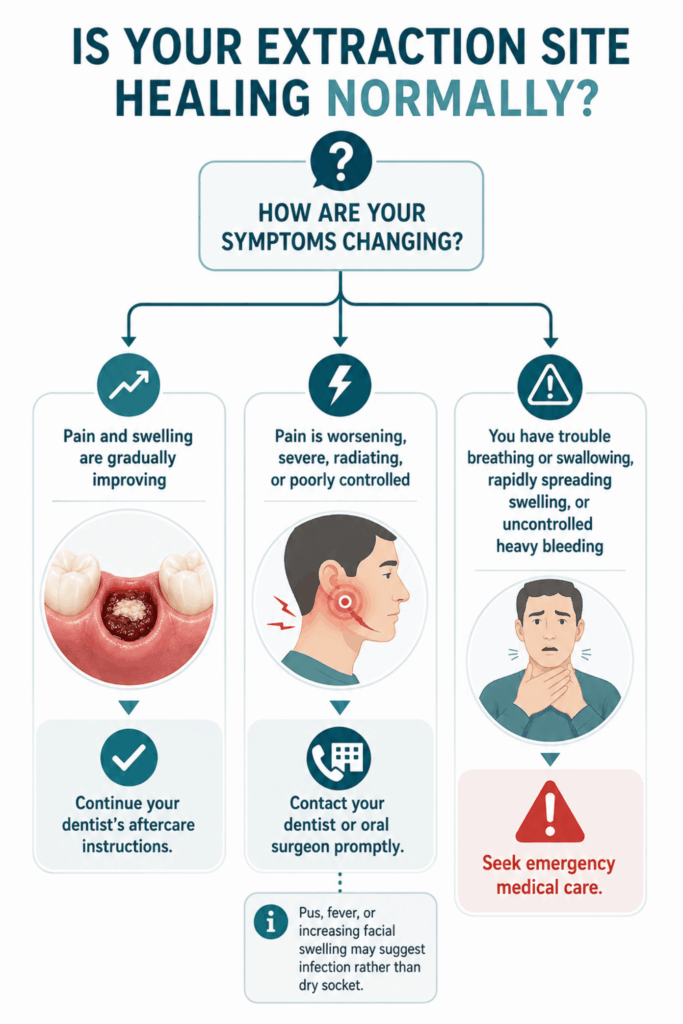
Call your dentist or oral surgeon when pain is worsening, severe, or not responding to the recommended care. The office can determine whether you need an examination, treatment for dry socket, or assessment for another complication.
Contact a dentist promptly for:
- Worsening Pain: Pain becomes stronger after initially improving or begins to spread toward the ear, temple, or jaw.
- Poor Pain Control: Pain remains severe even though you are taking medication as directed.
- Possible Infection: You develop pus, fever, increasing redness, spreading swelling, or feel generally unwell.
- Persistent Bleeding: The extraction site continues bleeding despite following the pressure instructions given by your dental team.
- New Symptoms: Numbness, a sharp fragment, worsening difficulty opening your mouth, or pain from a nearby tooth concerns you.
Seek emergency medical care for:
- Breathing Problems: Swelling affects your breathing or makes you feel that your airway is narrowing.
- Difficulty Swallowing: Swelling in the mouth, throat, or neck makes swallowing difficult.
- Rapidly Spreading Swelling: Significant swelling spreads toward the neck or eye or becomes worse quickly.
- Uncontrolled Heavy Bleeding: Bleeding remains heavy despite firm pressure and professional instructions.
Difficulty breathing or swallowing requires emergency assessment, as emphasized in hospital guidance on complications after surgical tooth removal.
How to Protect Normal Healing and Prevent Dry Socket
Good aftercare helps protect the clot and allows new tissue to develop. Follow the instructions from your own dentist because recommendations may vary with the extraction and any other treatment you received.
- Avoid Suction: Do not use straws or create strong sucking motions during the early healing period.
- Do Not Smoke or Vape: Smoking increases the risk of developing a dry socket and can delay healing.
- Rinse Gently: Do not rinse forcefully during the first 24 hours. After that, use warm salt water or a prescribed mouth rinse only as directed.
- Brush Carefully: Keep the rest of the mouth clean while avoiding direct trauma to the socket.
- Eat Suitable Foods: Choose soft foods at first and avoid hard, sharp, sticky, or crumbly items that may injure the area.
- Protect the Site: Do not touch the wound with your tongue, fingers, or objects, even if you want to see what the socket looks like.
- Limit Strenuous Activity: Follow your dentist’s advice about exercise, bending, and heavy lifting during early recovery.
- Use Prescribed Rinses Correctly: Chlorhexidine may reduce the risk of dry socket in some situations, but it can cause side effects and should be used only when recommended.
Frequently Asked Questions About Dry Socket vs Normal Healing
Can You Get Dry Socket With Stitches?
Yes. Stitches may help stabilize the gum edges and protect the extraction site, but they do not guarantee that the clot will remain intact. Dry socket can still happen beneath or around sutures. Contact your dentist if pain becomes much worse after the first few days, especially if it radiates toward your ear or jaw.
Can You Have Dry Socket Without Severe Pain?
Dry socket usually causes noticeable pain that worsens after tooth removal, but people experience pain differently. An unusual-looking socket without increasing pain is more likely to reflect normal healing than classic dry socket. However, pus, fever, spreading swelling, or another concerning change should be assessed even when the site is not very painful.
What if the Blood Clot Falls Out but I Have No Pain?
The clot changes as granulation tissue replaces it, so it may become difficult to see without actually falling out. If you have no increasing pain, the socket may still be healing normally. Do not touch the area to check. Follow your aftercare instructions and call your dentist if pain, swelling, discharge, or bleeding develops.
Can Dry Socket Develop More Than a Week After Extraction?
Most cases begin within the first several days, often around days 3 to 5. The risk of dry socket decreases as new tissue covers the socket. Pain that starts or becomes worse after more than a week may have another cause, such as trapped debris, infection, a bone fragment, or a nearby tooth problem, so arrange a dental examination.
Can You Get Dry Socket After Any Tooth Extraction?
Dry socket can follow the removal of any tooth, but it is more common after difficult extractions and lower wisdom tooth removal. The risk may also rise with smoking and certain other factors. Regardless of which tooth was pulled, pain that becomes stronger after initial improvement should be discussed with your dentist.
Can Dry Socket Occur in an Upper Tooth?
Yes, dry socket can occur after an upper tooth extraction, although it is more often associated with lower back teeth. The main clue remains the pain pattern rather than the tooth’s location. Increasing, deep pain several days after extraction, especially with bad taste or an empty-looking socket, warrants a call to your dentist.
The Bottom Line on Dry Socket vs Normal Healing
With dry socket vs normal healing, the best clue is whether your symptoms are improving. Normal pain and swelling gradually settle, while dry socket often causes pain that becomes much worse after the first few days and may spread toward the ear or jaw.
The appearance of the socket cannot confirm the diagnosis. White tissue, a visible hole, or a clot that is difficult to see may be completely normal. Contact your dentist if pain is worsening, severe, or accompanied by swelling, pus, fever, or other concerning symptoms.
