Jaw pain after tooth extraction can make chewing, speaking, or opening your mouth uncomfortable. In many cases, mild soreness and stiffness are normal, especially after a difficult extraction or wisdom tooth removal. The discomfort should follow an improving pattern rather than becoming stronger each day.
The jaw may hurt because the procedure placed pressure on nearby tissues or required you to keep your mouth open for a long time. Swelling can also make the jaw muscles feel tight. However, severe pain, pain that begins to worsen after initial improvement, or pain with other unusual symptoms may need a dental check.
Pay attention to where the pain starts, how it changes, and whether you have swelling, a bad taste, fever, or difficulty opening your mouth. These details can help separate expected healing from dry socket, infection, or jaw-joint irritation. First, it helps to know what normal jaw pain should look like.
Is Jaw Pain After Tooth Extraction Normal?
Mild jaw pain after tooth extraction is usually a normal part of recovery. Your jaw may feel sore, tight, or tired, and you may have trouble opening your mouth fully. These symptoms are more common after oral surgery, wisdom teeth extraction, removal of impacted teeth, or a dental procedure that required your mouth to stay open for an extended time.
The pattern matters more than a single pain score. Expected jaw soreness should gradually become easier to manage, even if swelling briefly makes it feel worse during the first few days. Pain that continues to intensify, returns after improving, or occurs with fever, discharge, or increasing swelling needs attention from your dentist.
How Long Does Jaw Pain Last After Tooth Extraction?
How long jaw pain lasts after tooth extraction depends on which tooth was removed, how difficult the procedure was, and how your body heals. A simple extraction of one tooth may cause only mild jaw discomfort. Surgical removal of back teeth or multiple impacted wisdom teeth can cause more soreness and stiffness.
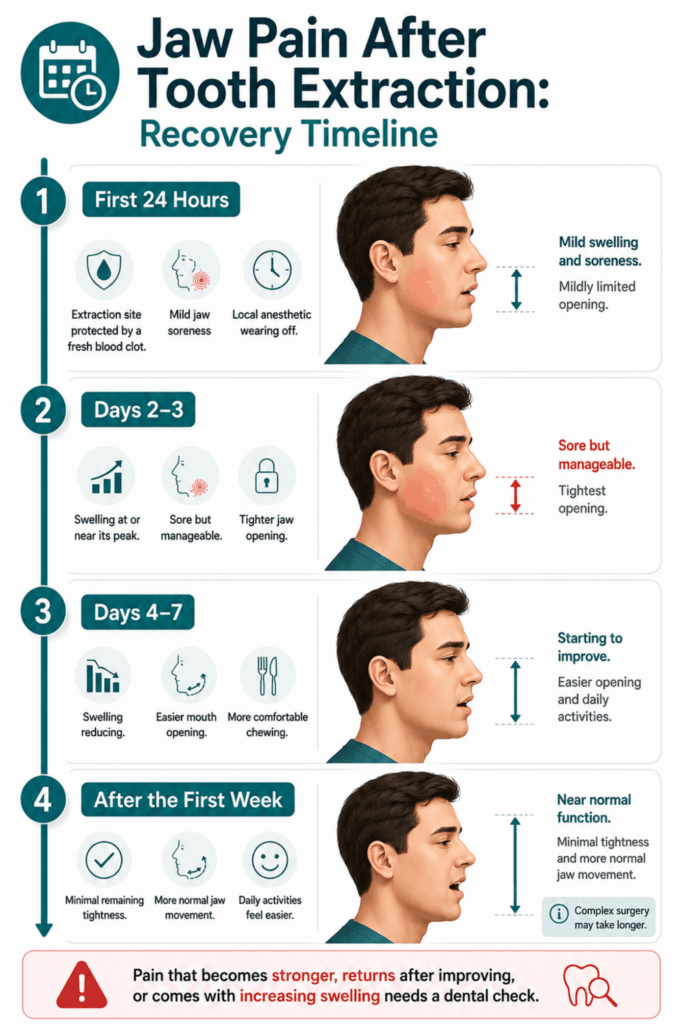
A typical recovery may look like this:
- Initial 24 Hours: Pain may begin as the local anesthetic wears off. The extraction site, nearby gum, and jaw muscles can feel tender, but prescribed or over-the-counter pain relievers may help.
- Days 2–3: Swelling may reach its highest point, so the jaw can feel tighter. Pain should remain manageable rather than becoming suddenly severe.
- Days 4–7: Swelling and jaw soreness should begin to ease. Mouth opening and chewing often become more comfortable as the healing process continues.
- After the First Week: Most people notice meaningful improvement. Mild tightness may linger longer after complex oral surgery, but it should continue to decrease.
Recovery is not identical for everyone. According to NHS guidance on recovery after wisdom tooth removal, jaw soreness and stiffness can occur for up to two weeks, although pain and swelling should begin improving much earlier. Contact your dentist if significant pain persists without improvement or begins getting worse.
Why Your Jaw May Hurt After a Tooth Extraction
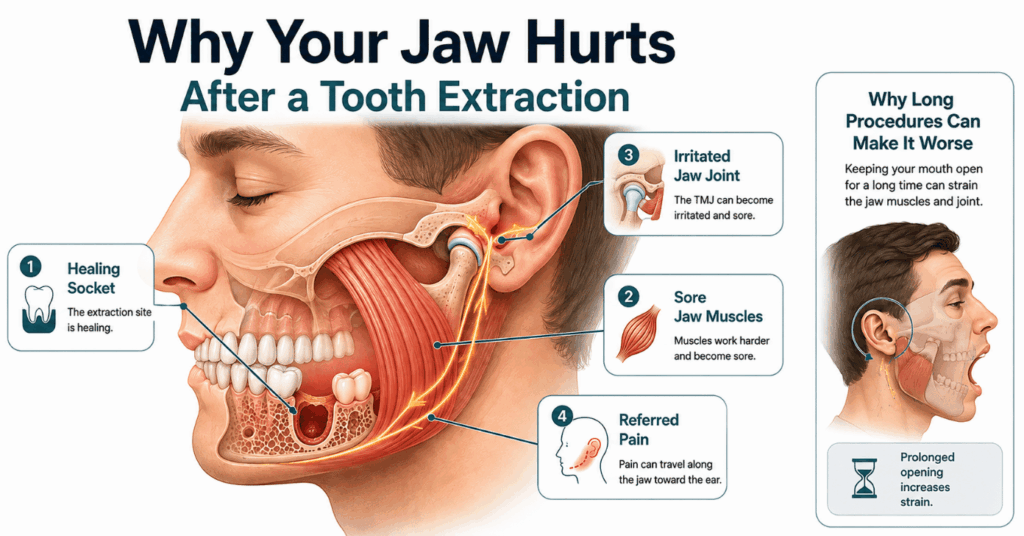
A tooth extraction affects more than the empty socket. The procedure may place temporary stress on the chewing muscles, temporomandibular joint, surrounding gum, jawbone, and nerves. Understanding where the discomfort comes from can help you describe it accurately to your dentist.
Jaw-Muscle Strain and Prolonged Mouth Opening
Holding your mouth open during a long dental procedure can strain the muscles that move your jaw. Pressure used to remove a difficult tooth may add to this strain. The result can feel like muscle fatigue, tightness, or an ache that becomes more noticeable when you chew or open wide.
This type of soreness is more likely after surgical extraction, removal of several teeth, or treatment of impacted back teeth. It should gradually improve with rest, soft foods, and gentle movement. Do not force a stiff jaw open.
Swelling and Inflammation Around the Extraction Site
Inflammation is part of the early healing process. Blood flow to the extraction area increases as the body begins repairing damaged tissue. This response can cause swelling, warmth, tenderness, and pressure around the extraction area.
Swelling can make your jaw feel stiff even when the joint and muscles are healthy. It often becomes most noticeable within the first two or three days and then starts to settle. Swelling that continues to expand, becomes hard or hot, or occurs with fever requires dental care.
Temporary Jaw-Joint Irritation
The temporomandibular joint, often called the TMJ, connects the lower jaw to the skull in front of each ear. Keeping the mouth open or applying pressure during an extraction can temporarily irritate this joint.
You may notice soreness near the ear, clicking, muscle tension, or discomfort when opening and closing your mouth. People who already clench their teeth or have temporomandibular symptoms may notice a short flare-up. Jaw locking, major changes in movement, or pain that does not improve should be assessed.
Pain Referred From the Extraction Socket
Pain does not always stay exactly where it begins. Nerves that supply the teeth, jaw, ear, and nearby areas share connected pathways. Your brain may therefore interpret pain from an empty socket as discomfort along the jaw or near the ear.
Referred pain is especially common after a lower molar or wisdom tooth is removed. It does not automatically mean that the jawbone or ear has been damaged. Its timing, severity, and associated symptoms provide more useful clues.
Dry Socket, Infection, or Nerve Irritation
Most jaw discomfort comes from normal inflammation or muscle strain. Less routine causes include:
- Dry Socket: A dry socket can develop when the protective blood clot does not form properly, breaks down, or becomes dislodged before the socket heals. The resulting pain is often severe, throbbing, and able to spread toward the ear, temple, or jaw.
- Infection: Increasing pain, swelling, redness, pus, fever, a persistent bad taste, or feeling unwell may suggest infection. Infection requires a dental assessment; antibiotics are not automatically needed for normal postoperative soreness.
- Nerve Irritation: Lower wisdom teeth may sit close to nerves that supply feeling to the tongue, lower lip, and chin. Persistent numbness, tingling, burning, or altered sensation is different from ordinary jaw soreness and should be reported to the dentist or surgeon.
Normal Jaw Pain vs. Pain That Needs Attention
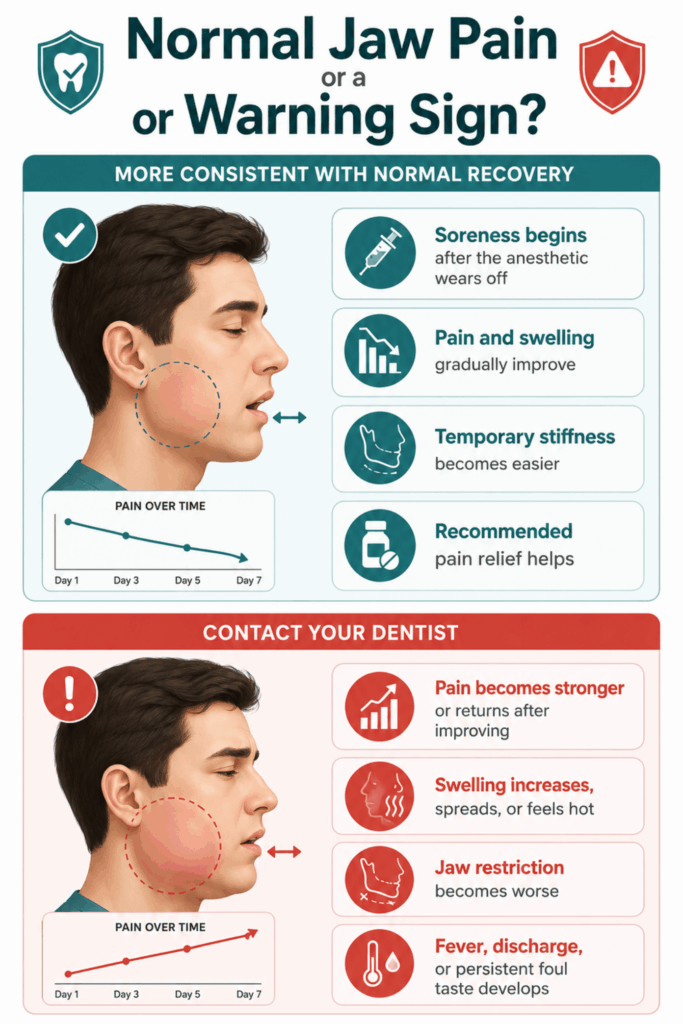
No single symptom can confirm dry socket or infection at home. Look at the full pattern, including when the pain started, whether it is improving, and which other symptoms are present.
| Feature | More Consistent With Normal Recovery | May Need Dental Attention |
|---|---|---|
| Timing | Starts as the anesthetic wears off | Becomes severe several days later or returns after improving |
| Direction | Gradually improves | Continues to worsen |
| Pain quality | Mild to moderate soreness, pressure, or muscle tightness | Severe, deep, persistent, or excruciating pain |
| Jaw movement | Temporary stiffness that slowly improves | Increasing restriction, locking, or inability to open adequately |
| Swelling | Mild to moderate swelling that peaks early and then decreases | Swelling that increases, spreads, becomes hard, or feels hot |
| Taste or odor | Mild blood taste early in recovery | Persistent foul taste, bad breath, or discharge |
| General health | Otherwise feeling well | Fever, chills, weakness, or feeling generally unwell |
| Pain relief | Improves with recommended pain medication | Remains severe despite taking medication correctly |
Normal recovery can still be uncomfortable, especially after wisdom teeth extraction. However, pain should move in the right direction. A sudden change in that pattern is a better reason to call your dentist than soreness alone.
How to Relieve Jaw Pain and Stiffness Safely
The safest approach combines pain control, swelling management, jaw rest, and protection of the clot at the extraction site. Follow the instructions from your own dentist because aftercare may vary based on the tooth removed, use of stitches, bone grafting, or other details of the procedure.
Reduce Swelling During the Early Recovery Period
- Rest During the First Few Days: Limit strenuous activity that makes the area throb or increases bleeding. Rest with your head slightly raised rather than lying completely flat.
- Use a Wrapped Cold Compress: Apply an ice pack or cold compress to the outside of your cheek for short periods during the early recovery phase. Place a cloth between the pack and your skin.
- Keep Ice Outside the Mouth: Do not place ice directly on the skin, gum, or inside the extraction site. Direct contact can injure tissue.
- Follow Your Surgeon’s Timing: The American Association of Oral and Maxillofacial Surgeons’ postoperative oral-care guidance notes that short periods of external ice-pack use during the first 24 to 72 hours can reduce swelling. Your dentist may adjust this advice for your procedure.
Rest the Jaw Without Keeping It Completely Still
Choose soft foods that require little chewing, such as yogurt, eggs, mashed potatoes, soft pasta, or smooth soup that is not hot. Take small bites and chew away from the extraction site when possible. Avoid hard, sticky, or chewy foods that strain the jaw or enter the empty socket.
A stiff jaw still benefits from normal, gentle movement. Unless your surgeon gave different instructions, slowly open and close your mouth within a comfortable range. Do not pull on the jaw, force it open, or continue an exercise that causes sharp or exacerbating pain. Hospital guidance on restricted mouth opening after surgical extraction advises gentle daily movement while specifically warning against forcing the jaw.
Use Pain Medicine as Directed
Over-the-counter pain relievers may help manage pain after a tooth extraction. The American Dental Association’s guideline summary on acute dental pain recommends nonopioid medication as the first-line approach for most acute pain after dental extraction. However, the right medicine depends on your age, health history, allergies, pregnancy status, and other medications.
Follow the label and any instructions from your dentist. Some people should not take nonsteroidal anti-inflammatory drugs, such as ibuprofen or naproxen, because of kidney disease, stomach ulcers, bleeding risks, certain heart conditions, or medication interactions. Acetaminophen also requires care, especially with liver disease or when other cold, flu, or prescription products contain the same ingredient. Never combine products without checking their active ingredients.
Protect the Extraction Site While It Heals
- Follow the First-Day Instructions: Do not rinse, spit forcefully, or disturb the area during the initial 24 hours unless your dentist gives different directions.
- Keep the Clot Stable: Avoid straws, smoking, vaping, suction, and touching the socket. These actions may dislodge the blood clot that protects the underlying bone and nerves.
- Clean Gently: Continue oral hygiene on the other teeth, but keep the toothbrush away from the fresh socket. Begin any salt-water rinse or prescribed mouthwash only at the time recommended by your dentist.
- Choose Suitable Foods: Eat soft foods and avoid small, hard pieces that can collect in the socket. Do not probe the area if food seems trapped.
- Avoid Unapproved Home Treatments: Do not place aspirin, essential oils, alcohol, hydrogen peroxide, or other substances inside the socket. They can irritate the healing tissue.
- Follow Special Instructions: If you received stitches, a bone graft, or another procedure in preparation for replacing the tooth with an implant, follow the specific plan from your dental team.
When Jaw Pain May Point to Dry Socket or Infection
Jaw pain after tooth extraction may need treatment when it becomes stronger instead of slowly easing. Dry socket and infection can both cause significant discomfort, but they are different conditions. Dry socket involves loss or breakdown of the protective clot; it is not simply another name for infection.
The American Association of Oral and Maxillofacial Surgeons’ description of dry socket notes that severe pain often begins within a few days and may radiate toward the eye, ear, neck, or temple. Other possible findings include visible bone and a foul smell or taste.
Contact your dentist if you notice:
- Pain That Worsens After Improving: A marked increase several days after the tooth is removed does not follow the usual recovery pattern.
- Severe Radiating Pain: Deep or throbbing pain that spreads from the socket toward the ear, temple, or jaw may occur with dry socket.
- Persistent Bad Taste or Odor: A foul taste, bad breath, or discharge can occur with dry socket or infection and deserves assessment.
- Increasing Swelling: Swelling that becomes larger after the first few days, spreads toward the neck or eye, or feels hot and firm may indicate infection.
- Fever or Feeling Unwell: Fever, chills, fatigue, or tender glands can occur when infection extends beyond the extraction area.
- Visible Discharge: Pus or cloudy fluid from the site is not part of routine clot formation.
Do not begin leftover antibiotics. Antibiotics do not treat dry socket itself and may not be appropriate for every dental infection. A dentist needs to identify the likely cause before choosing treatment.
When to Contact Your Dentist
Contact the dental office promptly if your recovery does not follow the expected pattern. You do not need to wait until the pain becomes unbearable.
Call your dentist or oral surgeon promptly for:
- Worsening Pain: Pain increases after the first few days or returns after it had started to settle.
- Poor Pain Control: Pain remains severe even though you have taken the recommended medication correctly.
- Persistent Jaw Restriction: Your mouth opening is not improving, the jaw locks, or eating and drinking become difficult.
- Increasing Swelling or Infection Signs: You develop spreading swelling, fever, pus, a foul taste, or feel generally unwell.
- Altered Sensation: Numbness, tingling, or burning in the lip, chin, or tongue lasts beyond the period your dental team told you to expect.
- Ongoing Symptoms: Significant jaw pain continues beyond the recovery period your dentist discussed.
Seek urgent medical or emergency dental care for:
- Breathing or Swallowing Difficulty: Swelling that interferes with breathing, swallowing, or speaking needs immediate assessment.
- Rapidly Spreading Swelling: Swelling moving into the neck, floor of the mouth, or area around the eye can become serious.
- Heavy Uncontrolled Bleeding: Bleeding that does not slow after following your dentist’s pressure instructions needs urgent care.
- Severe Illness: Confusion, fainting, marked weakness, or rapidly worsening symptoms require immediate medical help.
What Your Dentist May Check and Treat
Your dentist will not judge the problem from pain intensity alone. The timing, location, quality, and progression of pain help distinguish jaw-muscle strain from socket pain, dry socket, infection, or nerve irritation.
A typical assessment may include:
- Reviewing the Recovery Timeline: The dentist will ask when the pain began, whether it improved before worsening, what triggers it, and whether medication helps.
- Examining the Extraction Site: They may check the clot, healing tissue, swelling, odor, discharge, exposed bone, trapped debris, and nearby teeth.
- Checking Jaw Movement: The dentist may assess how widely and evenly you can open, where the muscles feel tender, and whether the temporomandibular joint clicks or locks.
- Testing Sensation: If you report tingling or numbness, the dentist may compare feeling in the lip, chin, tongue, gums, and surrounding skin.
- Using Imaging When Needed: An X-ray or other scan may help when the dentist suspects retained tooth fragments, infection in the bone, a problem with an adjacent tooth, or another cause that cannot be confirmed by examination alone.
- Treating the Cause: Dry socket care may include gentle cleaning and a medicated dressing. Infection treatment can involve drainage, local treatment, or antibiotics when clinically indicated. Muscle or joint irritation may need temporary diet changes, controlled movement, medication, or referral if it persists.
How to Lower the Chance of Ongoing Jaw Pain
Some postoperative soreness cannot be prevented, particularly after complex oral surgery. You can still reduce added strain and protect the healing extraction site.
- Follow Your Personalized Instructions: Advice may differ after a simple extraction, wisdom teeth removal, grafting, or removal of multiple teeth.
- Avoid Overworking the Jaw: Choose soft foods, use small bites, and avoid gum, tough meat, and foods that require wide opening.
- Return to Firmer Foods Gradually: Add texture as chewing becomes comfortable rather than testing the jaw with hard food too early.
- Do Not Force Jaw Exercises: Gentle motion can help stiffness, but forceful stretching can irritate the muscles and joint.
- Protect the Blood Clot: Avoid smoking, vaping, straws, forceful rinsing, and picking at the socket during early healing.
- Maintain Gentle Oral Hygiene: Clean the rest of your mouth without brushing or probing the fresh extraction site.
- Address Clenching: If you notice that you tighten your jaw during the day, let your teeth separate and relax your jaw muscles. Ask your dentist for advice if clenching continues at night.
- Attend Recommended Follow-Up Care: A planned review is especially important after a difficult extraction, persistent numbness, bone grafting, or preparation for a dental implant.
Frequently Asked Questions
Can a Tooth Extraction Change My Bite or Jaw Alignment?
An extraction does not usually move the jaw out of alignment. Swelling, muscle tension, and chewing only on one side can make your bite feel temporarily different. If the change remains after swelling settles, causes pain, or prevents your teeth from meeting normally, ask your dentist to check your bite and jaw movement.
Why Do Nearby Teeth Hurt When I Bite After an Extraction?
Nearby teeth may feel tender because pressure from the extraction irritated the ligament around them. Swelling, referred pain, and changing how you chew can also contribute. This sensitivity should improve with healing. Contact your dentist if it becomes stronger, continues beyond the expected recovery period, or affects a tooth that feels loose or unusually sensitive.
Is Jaw Pain Normal if the Extraction Socket Does Not Hurt?
Yes. The socket may heal normally while the chewing muscles or temporomandibular joint remain sore from prolonged mouth opening. Muscle-related pain often feels tight or tired and becomes noticeable when you chew or open wide. Seek dental advice if the discomfort is severe, worsens, restricts jaw movement, or does not gradually improve.
Can an Upper Tooth Extraction Cause Lower Jaw Pain?
An upper tooth extraction can sometimes cause lower jaw discomfort even though the lower jaw was not treated. Holding the mouth open, muscle strain, jaw-joint irritation, referred pain, and favoring one side while chewing may explain it. Persistent one-sided pain or worsening symptoms should be evaluated rather than assumed to be referred pain.
Should I Massage My Jaw After a Tooth Extraction?
Gentle external massage may help tight chewing muscles after the early swelling begins to settle, but it should not cause pain. Do not press over the extraction site, manipulate the socket, or massage an area with increasing swelling. Ask your dentist first if you had complex surgery, a bone graft, severe pain, or possible infection.
Why Does My Jaw Hurt More When I Wake Up?
Morning jaw pain may relate to sleeping on the sore side, nighttime clenching, muscle tension, swelling, or the effect of pain medication wearing off. Try to avoid pressure on the treated side and follow your dentist’s medication plan. Report worsening morning pain, jaw locking, increasing swelling, fever, or symptoms that do not improve during the day.
The Bottom Line on Jaw Pain After Tooth Extraction
Mild jaw pain after tooth extraction is often expected, especially when the procedure was long, difficult, or involved impacted wisdom teeth. Muscle soreness, swelling, and temporary stiffness should become easier as the recovery process moves forward.
Call your dentist if the pain becomes stronger, returns after improving, or occurs with fever, discharge, increasing swelling, persistent numbness, or trouble opening your mouth. Seek urgent help if swelling affects breathing or swallowing.
