Bleeding, swollen gums, bad breath, or loose teeth may make you search for periodontitis treatment at home. Home care can reduce plaque and support healthier gums, but it cannot remove hardened deposits deep below the gums or rebuild bone that has already been lost. If you have periodontitis, you will usually need care from a dentist or dental hygienist as well.
This does not mean your daily routine is unimportant. Careful brushing, cleaning between the teeth, avoiding tobacco, and managing health issues such as diabetes can help control inflammation and improve the results of treatment. The right tools and methods may differ when you have gum pockets, recession, dental work, or sensitive areas.
The first step is knowing whether you truly have periodontitis, since bleeding gums can also occur with the earlier condition called gingivitis. A dental exam can check pocket depths, tartar, and bone support. Once you understand what home care can and cannot do, you can build a safer routine, avoid ineffective remedies, and know when professional treatment should not wait.
Can Periodontitis Be Treated at Home?
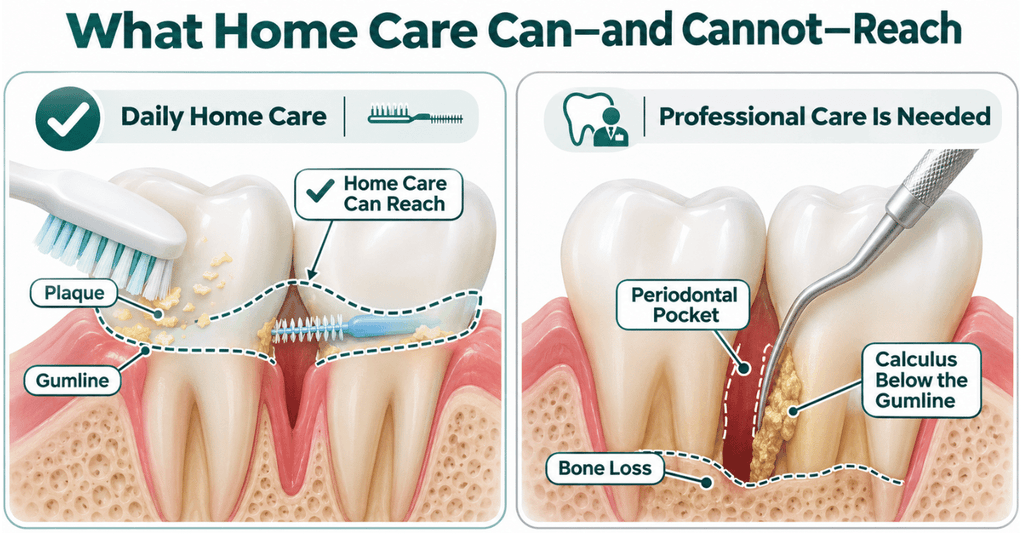
Periodontitis treatment at home can help control plaque and reduce gum inflammation, but it cannot treat the disease by itself. A toothbrush, interdental brush, or water flosser cannot reliably remove calculus and bacterial deposits attached to tooth roots deep inside periodontal pockets. Home care also cannot measure bone loss or restore support that has already been destroyed.
Home care and professional treatment work together to control periodontitis. Your daily routine slows plaque from building up again, while a dentist or dental hygienist cleans areas you cannot reach and checks whether the disease is stable. Current SDCEP periodontal guidance describes this as a partnership that combines self-care, risk-factor control, and treatment in the dental office.
How Dentists Confirm Periodontitis
Bleeding, swelling, and bad breath may suggest gum inflammation, but they do not prove that you have periodontitis. A dentist must look for loss of the tissues and bone that support your teeth. The assessment may include:
- Dental History: Your dentist asks when the symptoms began and whether you have received previous gum treatment.
- Medical History: Diabetes, medications, tobacco use, pregnancy, and other health factors can affect your gums or treatment plan.
- Plaque and Calculus Check: The dentist looks for soft plaque, hardened calculus, and dental work that makes cleaning difficult.
- Periodontal Measurements: A thin periodontal probe measures the spaces between your teeth and gums. The dentist also records bleeding and gum recession.
- Tooth Stability: Each tooth may be checked for movement, changes in position, and problems with the way your teeth meet.
- Dental X-Rays: X-rays help show the height and shape of the bone around your teeth. They can reveal bone loss that is not visible during a routine examination.
These findings help the dentist distinguish periodontitis from gingivitis, which causes gum inflammation without the same loss of tooth-supporting tissues.
Build an Effective Periodontitis Home-Care Routine
An effective periodontitis treatment at-home routine removes plaque every day without injuring your gums. Your ideal routine may depend on the location of your periodontal pockets, the spaces between your teeth, gum recession, hand control, and any crowns, bridges, implants, or dentures you have. Ask your dentist or hygienist to demonstrate the tools in your own mouth instead of relying only on package instructions.
Brush Gently Along the Gumline
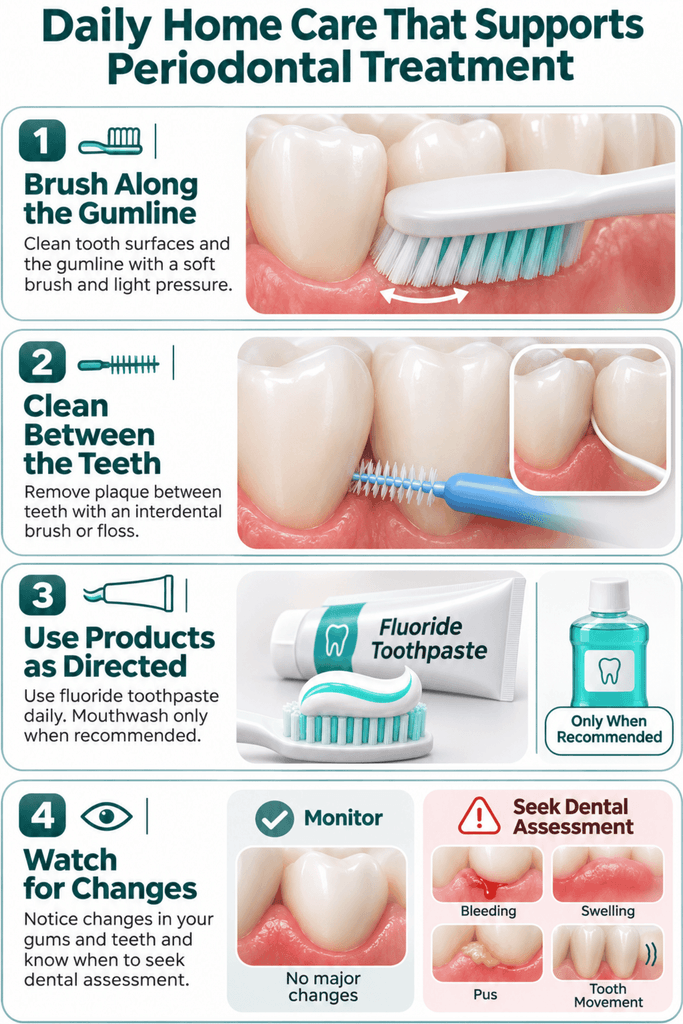
- Choose a Suitable Brush: Use a soft-bristled manual or powered toothbrush that can reach the back teeth comfortably. Replace the head when the bristles become worn or spread apart.
- Use Fluoride Toothpaste: Fluoride helps protect exposed roots and tooth surfaces from decay. Use a sensitivity toothpaste if your dentist recommends one for exposed or tender roots.
- Aim at the Gumline: Place the bristles where each tooth meets the gum. Use small, controlled movements instead of broad horizontal scrubbing.
- Clean Every Surface: Brush the outer, inner, and chewing surfaces of every tooth. Give extra attention to crowded teeth and areas around crowns, bridges, implants, or partial dentures.
- Use Light Pressure: Pressing harder does not remove deep calculus or clean periodontal pockets more effectively. Too much pressure may irritate the gums and contribute to tooth wear.
- Follow a Consistent Pattern: Start in the same area each time and move around your mouth in order. A routine pattern makes it less likely that you will miss the same teeth repeatedly.
Clean Between Your Teeth Every Day
A toothbrush cannot fully clean the surfaces between neighboring teeth. Interdental cleaning is an important part of home care during periodontitis treatment, but the most suitable tool depends on the size and shape of each space. A Cochrane review of home interdental-cleaning devices found that adding floss or interdental brushes to toothbrushing may reduce plaque or gingivitis, although much of the evidence was uncertain and short-term.
- Interdental Brushes: These small brushes are often useful when periodontitis or recession has created open spaces. The brush should fit snugly without needing force.
- Floss or Dental Tape: Floss may work better in contacts that are too tight for an interdental brush. Slide it through gently and curve it around each tooth instead of snapping it into the gum.
- Water Flossers: A water flosser can help some people clean around dental work or reach areas that are difficult to manage by hand. Ask your dental professional whether it suits your needs.
- Different Brush Sizes: One interdental brush may not fit every space. Your hygienist may recommend two or more sizes for different parts of your mouth.
- Gentle Technique: Do not push a large brush through a tight contact. Forcing it may bend the brush, injure the gum, or make cleaning uncomfortable.
Use Toothpaste and Mouthwash Safely
- Fluoride Toothpaste: Use it during regular brushing to protect the teeth and exposed roots from decay. Toothpaste does not remove calculus below the gums.
- Sensitivity Toothpaste: This may reduce sensitivity from exposed root surfaces. Improvement can take repeated use, and persistent pain still needs an examination.
- Antimicrobial Toothpaste: Some toothpastes contain ingredients that help control plaque or gingivitis. Choose one based on professional advice if you have sensitive tissues or extensive dental work.
- Chlorhexidine Mouthwash: A dentist may recommend it for a specific reason and a limited period. It can stain teeth, alter taste, and affect the mouth’s soft tissues, as explained in the European Federation of Periodontology’s guidance on mouthwash effects.
- Everyday Mouthwash: Mouthwash may freshen the mouth or provide fluoride, depending on the product, but it cannot replace brushing, interdental cleaning, or treatment below the gums.
- Product Timing: Some rinses should not be used immediately after fluoride toothpaste. Follow the label and any instructions from your dentist.
Respond to Bleeding Without Scrubbing Harder
Inflamed gums may bleed during brushing or interdental cleaning. Do not respond by scrubbing harder, but do not repeatedly avoid the area either. Use a gentle technique and make sure your brush or interdental cleaner is the correct size.
Arrange a dental assessment if the bleeding persists, increases, starts without cleaning, or occurs with recession, swelling, pus, bad breath, tooth movement, or pain. Bleeding may improve as plaque control improves, but only an examination can identify the cause.
Manage Factors That Can Keep Periodontitis Active
Periodontitis is not simply a sign that someone failed to brush well. Plaque starts the inflammatory process, but health conditions, tobacco exposure, tooth position, and other factors can affect how the disease develops and responds to treatment. The CDC overview of periodontal disease and risk factors identifies smoking and diabetes among the important factors associated with gum disease.
- Smoking and Tobacco: Tobacco raises the risk of periodontitis and can weaken the response to treatment. Smoking may also reduce visible bleeding, so gums can appear less inflamed than they are.
- Diabetes: Poorly controlled blood sugar can make periodontal inflammation harder to manage. Tell your dentist about your diabetes care and follow the plan provided by your medical team.
- Dry Mouth: Reduced saliva may make the mouth uncomfortable and allow plaque to collect more easily. Ask about dry-mouth care if the problem began after a medication change or health condition.
- Crowded Teeth: Overlapping or rotated teeth can create areas that are hard to reach. Small brushes, single-tufted brushes, or other tools may make these areas easier to clean.
- Dental Restorations: Rough edges, overhanging fillings, poorly fitting crowns, and some denture designs can trap plaque. A dentist may need to adjust or replace a problem restoration.
- Limited Hand Control: Arthritis, weakness, or reduced coordination can make detailed cleaning difficult. A powered brush, wider handle, floss holder, or help from a caregiver may improve access.
- Daily Consistency: An occasional long cleaning session cannot replace regular plaque removal. A manageable routine that you repeat is more useful than a complicated plan you cannot maintain.
Why Home Remedies Cannot Replace Periodontitis Treatment
Some home remedies may briefly ease soreness or improve how the mouth feels, but they cannot remove calculus below the gums or treat deep periodontal pockets. Other methods may irritate the tissues, damage tooth roots, or delay necessary care.
- Saltwater Rinses: A mild saltwater rinse may temporarily soothe irritated gums, but it cannot remove calculus or stop periodontitis.
- At-Home Tartar Scraping: Sharp tools can cut the gums, scratch tooth roots, and push deposits deeper. A dental professional should remove calculus below the gumline.
- Peroxide and Essential Oils: Concentrated peroxide, undiluted essential oils, and harsh homemade mixtures may burn or irritate oral tissues. Do not place them inside periodontal pockets.
- Concentrated Baking Soda: Properly formulated baking-soda toothpaste may be suitable for some people. However, rubbing loose powder into inflamed gums does not treat periodontitis and may cause irritation.
- Mouthwash Alone: A rinse cannot detach hardened calculus or reliably clean every part of a deep pocket. Use mouthwash only as an addition to brushing, interdental cleaning, and recommended professional care.
- Leftover Antibiotics: The wrong antibiotic, dose, or duration may cause side effects and contribute to antibiotic resistance. Take antibiotics only when prescribed for your specific condition.
What Professional Periodontitis Treatment Adds Beyond Home Care
Professional treatment reaches tooth-root surfaces beneath the gums that home tools cannot clean safely. It also provides information that symptoms cannot: which sites are bleeding, how deep the pockets are, whether bone support has changed, and which teeth need closer attention.
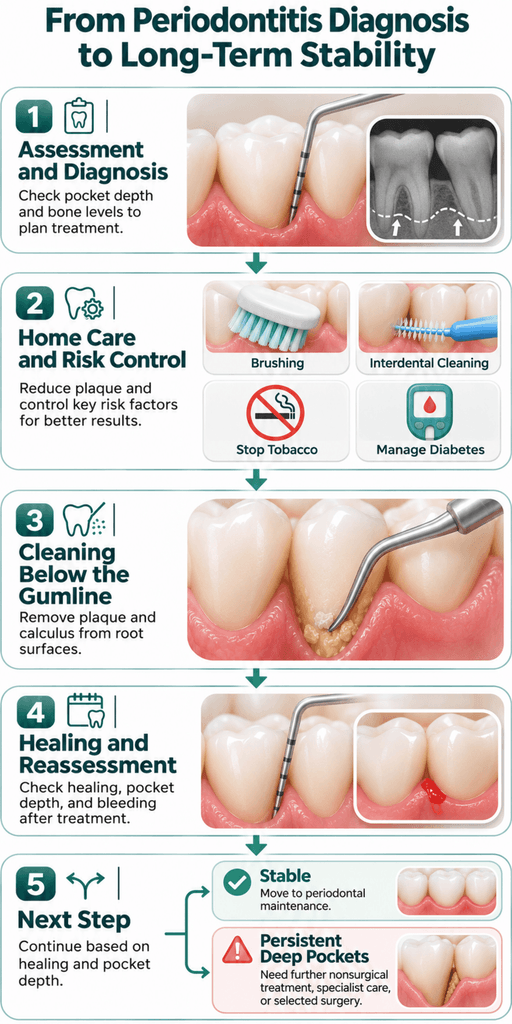
Treatment is planned according to the extent of disease, medical risks, tooth shape, bone loss, and response to earlier care. The EFP S3 clinical practice guideline for stages I–III periodontitis supports a stepwise plan that combines behavior change, risk control, cleaning above and below the gums, reassessment, and further treatment when needed.
Cleaning Below the Gumline
Scaling and root planing, also called subgingival instrumentation or professional mechanical plaque removal, removes plaque and calculus from tooth roots below the gumline. Local anesthetic may be used when areas are deep or sensitive.
- Initial Assessment: The dental team maps the affected areas and identifies sites that need treatment.
- Access Below the Gums: Fine manual or powered instruments are placed carefully inside the periodontal pocket.
- Deposit Removal: Plaque, calculus, and contaminated material are removed from the root surface.
- Home-Care Support: Your technique and cleaning tools are reviewed so the treated areas stay cleaner afterward.
- Healing Period: The gums are allowed time to respond before the dentist decides whether more treatment is needed.
Deep cleaning can reduce inflammation and pocket depth, but one visit does not guarantee that the disease will stop. It also cannot fully replace support that has already been lost.
Reassessment and Further Treatment
After initial care, the dentist rechecks plaque levels, bleeding, pocket depths, gum condition, and tooth stability. This step shows which areas have responded and which remain difficult to control.
- Good Response: If inflammation and pocketing improve, you may move into a personalized periodontal maintenance program.
- Remaining Deposits: Some areas may need additional nonsurgical cleaning, especially around complex roots or spaces where roots divide.
- Persistent Deep Pockets: Sites that remain deep or continue to bleed may require specialist assessment or periodontal surgery.
- Regenerative Treatment: Selected bone defects may be suitable for procedures intended to rebuild some lost support. Not every defect can be treated this way, and complete regrowth cannot be promised.
- Antibiotic Use: Systemic or locally placed antibiotics may be considered in selected cases. They are not routine substitutes for cleaning below the gums.
- Poor-Prognosis Teeth: A severely damaged tooth may sometimes need removal, but mobility alone does not determine the decision. The dentist considers bone support, function, infection, and the value of the tooth within the full treatment plan.
When to See a Dentist and When Care Is Urgent
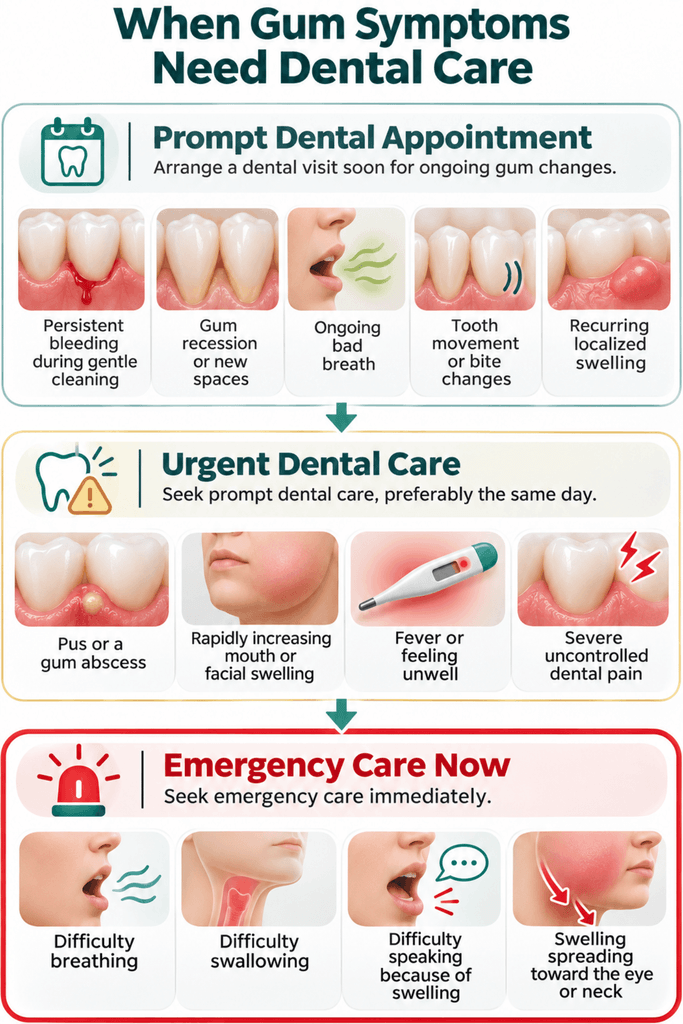
Do not wait for severe pain before arranging an examination. Periodontitis can progress quietly, and earlier assessment often provides more options. Use the following signs to judge how quickly to seek care.
Arrange a Prompt Dental Appointment
- Persistent Bleeding: Your gums continue to bleed during gentle brushing or interdental cleaning.
- Gum Recession: Teeth look longer, roots become visible, or new spaces appear between teeth.
- Ongoing Bad Breath: Bad breath or a bad taste remains despite regular cleaning.
- Tooth Movement: A tooth feels looser, changes position, or develops a new gap.
- Bite Changes: Your teeth no longer meet in the same way when you close your mouth.
- Recurring Swelling: A gum area repeatedly becomes puffy, tender, or uncomfortable.
- Known Periodontitis: You have missed maintenance visits or notice new symptoms after previous treatment.
Seek Urgent Dental or Emergency Care
- Pus or an Abscess: A painful swelling, pus, or a pimple-like bump on the gum needs prompt dental assessment.
- Rapidly Increasing Swelling: Swelling that is spreading across the face, jaw, mouth, or neck may indicate an active infection.
- Fever or Feeling Unwell: Fever, weakness, or swollen glands with a dental infection requires urgent advice.
- Severe Uncontrolled Pain: Pain that prevents sleep or normal activity and does not respond to appropriate over-the-counter pain relief needs urgent dental care.
- Breathing or Swallowing Difficulty: Go to emergency care if swelling makes it difficult to breathe, swallow, or speak. NHS guidance on emergency dental symptoms treats these as emergency warning signs.
How to Know Whether Your Plan Is Working
Less bleeding, swelling, tenderness, and bad breath can suggest that plaque control and treatment are helping. Cleaning may also become more comfortable. However, improvement at the surface does not prove that every periodontal pocket is stable.
A dentist must repeat relevant measurements and compare them with earlier findings. Do not judge periodontitis treatment at home only by pain, since the disease can remain active without causing much discomfort.
- Bleeding is Decreasing: Your gums bleed less often during gentle cleaning, although persistent sites still need assessment.
- Swelling is Settling: The gum edges appear less puffy and feel less tender.
- Breath is Improving: Bad breath or an unpleasant taste becomes less frequent.
- Cleaning Feels Easier: You can use the recommended tools without increasing soreness or injury.
- Plaque Control Improves: Fewer deposits are visible, and your dental team confirms better daily cleaning.
- Pocket Findings Improve: Reassessment shows less bleeding and healthier pocket measurements at treated sites.
- Teeth Remain Stable: There is no new movement, drifting, or change in the bite.
Keep Periodontitis Stable After Treatment
Periodontitis can become active again if plaque, risk factors, or difficult sites are not controlled. Long-term stability depends on daily home care and regular professional monitoring, even when the gums feel normal.
- Follow Your Daily Routine: Brush the gumline and clean between the teeth with the tools selected for your mouth.
- Attend Maintenance Visits: Your recall schedule should reflect your disease history, plaque control, smoking status, diabetes, and remaining pockets. It may be more frequent than an ordinary dental checkup.
- Review Your Technique: Ask for another demonstration if interdental brushes bend, cleaning hurts, or some areas remain difficult to reach.
- Control Tobacco Exposure: Avoid smoking and other tobacco products, and seek cessation support if needed.
- Manage Diabetes: Follow your medical care plan and keep both your dentist and medical clinician informed of important changes.
- Watch for Recurrence: Report renewed bleeding, swelling, pus, bad breath, tooth movement, or bite changes instead of waiting for the next planned visit.
- Maintain Dental Work: Have rough fillings, loose crowns, damaged dentures, and other plaque-trapping problems checked.
Frequently Asked Questions
Can Periodontitis Be Cured Permanently?
Periodontitis is usually described as controlled or stable rather than permanently cured. Treatment may stop active destruction, but lost support and a higher risk of future disease can remain. Daily plaque control and periodontal maintenance are therefore important even when the gums no longer bleed, and the mouth feels healthy.
Can Periodontitis Be Treated Without Surgery?
Yes, many cases begin with improved home care, risk-factor control, and nonsurgical cleaning below the gums. Surgery is considered when deep pockets, complex root areas, or certain bone defects do not respond well enough. The decision depends on your examination, response to initial treatment, and the value of each tooth.
Do I Need a Periodontist, or Can a General Dentist Treat Me?
A general dentist may diagnose and manage less complex periodontitis, sometimes with help from a dental hygienist. Referral to a periodontist may be appropriate when disease is advanced, bone loss is complex, teeth remain unstable, initial treatment has not worked well enough, or surgical and regenerative procedures are being considered.
Can Loose Teeth Become Firm Again After Periodontal Treatment?
Some teeth may feel firmer after inflammation decreases and the swollen tissues heal. However, mobility caused by major bone and attachment loss may remain. The result also depends on bite forces, tooth position, root shape, and disease control. A loose tooth needs an individual prognosis rather than an automatic decision to remove it.
Can Bone or Gum Tissue Lost to Periodontitis Grow Back?
Routine home care cannot regrow bone or periodontal attachment that has been destroyed. Selected defects may respond to professional regenerative surgery using grafts, membranes, or biologic materials. The amount of repair varies with the defect, tooth, smoking status, plaque control, and healing response, so complete restoration cannot be guaranteed.
How Long Does It Take for Gums to Improve After Periodontal Treatment?
There is no single timeline. Bleeding, swelling, or tenderness may improve before deeper tissues are ready for reassessment. Disease severity, home cleaning, smoking, diabetes, and the treatment performed all affect the response. Your dentist will choose an appropriate time to remeasure the gums rather than relying only on how they feel.
Can Antibiotics Treat Periodontitis Without Deep Cleaning?
No. Antibiotics cannot remove plaque and calculus attached to tooth roots or correct surfaces that trap bacteria. They may be added in selected cases, but routine periodontitis care depends on mechanical cleaning and effective plaque control. Taking antibiotics alone may reduce symptoms temporarily without controlling the source of the problem.
Can You Have Periodontitis Without Pain?
Yes. Periodontitis may cause little or no pain, even while supporting tissues are being damaged. Bleeding, gum recession, bad breath, new spaces, tooth movement, or changes in your bite may be the first clues. Regular periodontal measurements and dental X-rays can detect problems that symptoms alone may miss.
The Bottom Line on Periodontitis Treatment at Home
Periodontitis treatment at home is necessary for controlling plaque and supporting healthier gums, but it cannot replace diagnosis, professional cleaning below the gums, or follow-up care. Home methods also cannot reliably remove deep calculus or show whether bone loss is progressing.
Improve your daily brushing and interdental cleaning now, but arrange a dental examination if you suspect periodontitis or already have a diagnosis. The strongest plan combines consistent home care with treatment and maintenance tailored to your gums.
