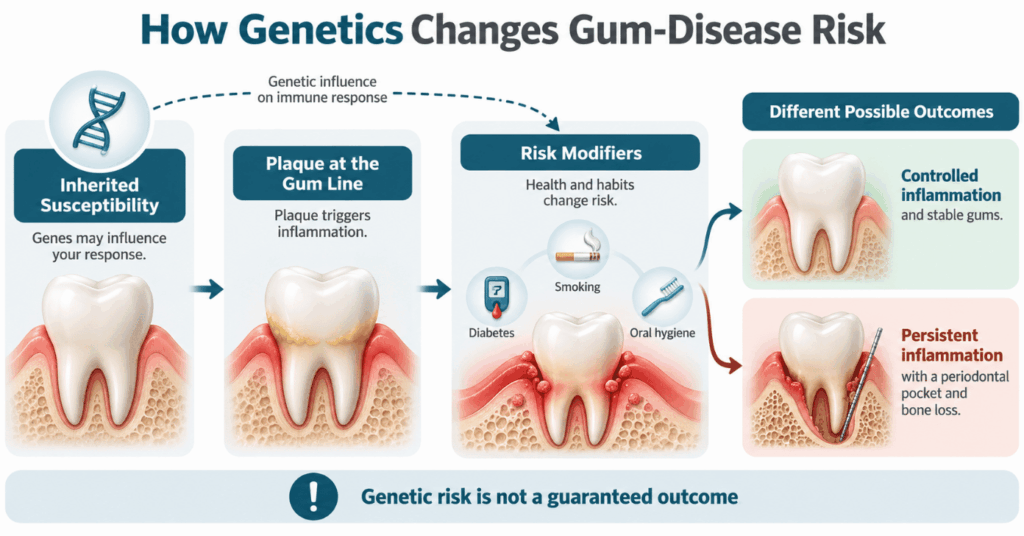
If your parents or grandparents lost teeth to gum problems, you may wonder, “Is gum disease hereditary?” Genetics can raise your chance of developing periodontitis, but you do not inherit a guaranteed outcome. Gum disease begins when plaque bacteria trigger inflammation, and your genes may affect how strongly your body responds.
Family history is only one part of the picture. Smoking, diabetes, plaque buildup, certain medicines, age, and daily oral care can also change your risk. That means healthy habits and regular dental visits still matter, even when several relatives have had bleeding gums, bone loss, or loose teeth.
Knowing your family history can help your dentist decide how closely to watch your gums. It is especially worth mentioning if relatives developed severe gum disease at a young age or lost teeth because of it. Understanding what genetics can influence and what you can control is the first step toward protecting your gums before lasting damage occurs.
Is Gum Disease Hereditary? The Short Answer
Yes, gum disease can be partly hereditary, especially the advanced form called periodontitis. You may inherit genetic factors that increase your susceptibility, but you do not inherit a certain outcome. Having affected parents does not mean you will develop periodontitis or lose teeth.
Dental plaque starts the disease process. Your immune response, general health, smoking status, oral hygiene, and dental care then influence whether inflammation remains mild or causes destruction of the periodontal tissues. A systematic review of periodontitis heritability found that genetic factors help explain differences in periodontitis risk across populations, particularly for more severe disease.
What You May Actually Inherit
You do not inherit plaque or periodontitis itself. You may inherit biological traits that change how your body reacts to harmful bacteria around the gum line. Researchers have studied many genetic variants, but no single common gene can reliably predict who will develop ordinary periodontal disease.
Inherited traits may affect:
- Immune Response: Some people may produce a stronger or less well-controlled inflammatory response to dental plaque.
- Inflammatory Signals: Genetic differences may influence the chemical signals that direct white blood cells and other immune defenses.
- Tissue Breakdown: Certain biological pathways may make the connective tissue, periodontal ligament, or supporting bone more vulnerable during long-term inflammation.
- Healing Response: Genes may influence how periodontal tissue repairs itself after inflammation or treatment, although general health and plaque control also matter.
- Disease Progression: Genetic susceptibility may help explain why periodontal damage advances faster in some people than in others.
These traits create a predisposition, not a diagnosis. A dental examination is still needed to determine whether disease is present.
Genetic Susceptibility Is Not the Same as Inheriting a Disease
A susceptibility means your chance of developing a condition may be higher under certain circumstances. A hereditary tendency does not mean you were born with active gum disease or that future tooth loss is unavoidable.
Imagine two siblings who share part of the same genetic background. One smokes, has poorly controlled diabetes, and rarely receives dental care. The other does not smoke, controls plaque well, and attends regular examinations. Their gum health can become very different even though periodontal disease runs in their family.
Why Some People Develop More Damage Than Others
Two people can have similar amounts of plaque but experience different levels of inflammation and tissue loss. Genetics may contribute to that difference, but so can smoking, diabetes, stress, medicines, age, oral hygiene, and the types of bacteria within the plaque. Dentists therefore assess the whole risk profile rather than treating genetic predisposition as the only explanation.
Are Gingivitis and Periodontitis Equally Hereditary?
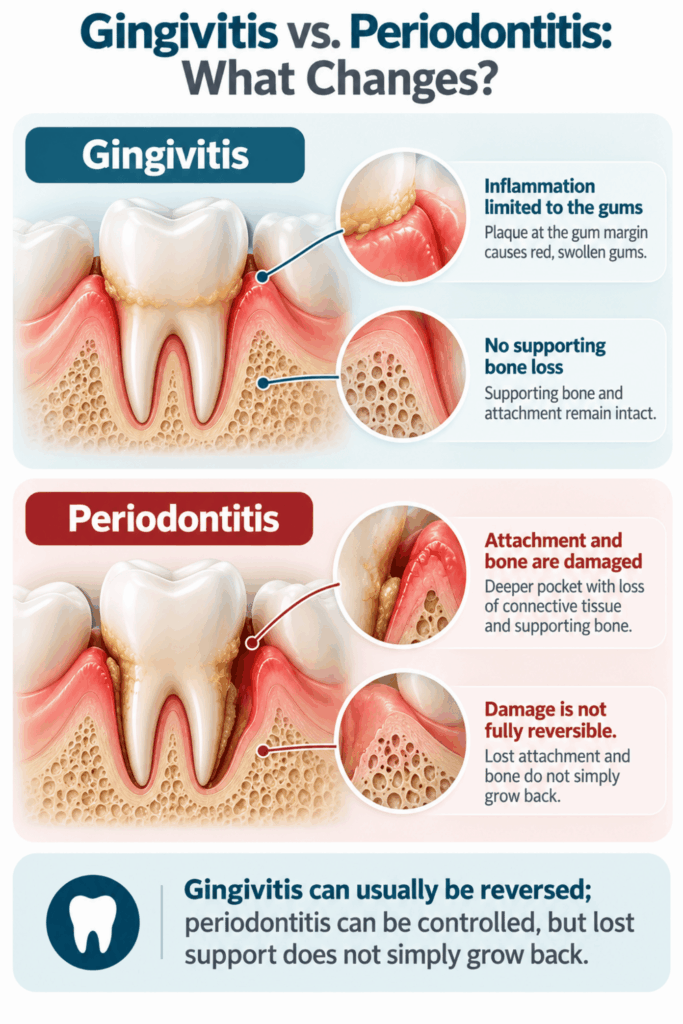
No. The evidence for a genetic component is stronger for periodontitis, particularly severe periodontitis, than for ordinary plaque-related gingivitis. Gingivitis affects the gums, while periodontitis causes loss of the attachment and bone supporting the teeth.
| Feature | Gingivitis | Periodontitis |
|---|---|---|
| Affected Tissues | Mainly the gum tissue around the teeth | Gums, periodontal ligament, and supporting bone |
| Typical Changes | Redness, swelling, tenderness, and bleeding | Gum recession, periodontal pockets, attachment loss, bone loss, and possible tooth mobility |
| Reversibility | Usually reversible when plaque and inflammation are controlled | Existing attachment and bone loss are generally not fully reversible, although treatment can control disease |
| Genetic Influence | Evidence is weaker and less consistent | Genetic susceptibility is better supported, especially in more severe disease |
| Usual Care | Better plaque removal, professional cleaning when needed, and control of local risk factors | Professional periodontal treatment followed by long-term maintenance and daily plaque control |
Older dental records may use terms such as chronic periodontitis or aggressive periodontitis. The current classification of periodontal and peri-implant diseases generally groups these under “periodontitis” and describes each case by stage, grade, and extent. Stage reflects severity and treatment complexity, while grade helps describe likely progression.
Why Gum Disease Often Runs in Families
A family pattern of gum disease may have a hereditary component, but families also share habits, health risks, and living conditions. It is rarely possible to separate these influences by looking at family history alone.
Factors shared within a family may include:
- Genetic Susceptibility: Relatives may share variants that affect inflammatory and immune responses.
- Brushing and Flossing Habits: Children often learn oral hygiene routines from the adults around them.
- Tobacco Exposure: Smoking or using other tobacco products may be common within a household.
- Dietary Habits: Families may share patterns that influence diabetes risk, inflammation, and plaque control.
- Health Conditions: Conditions such as type 2 diabetes can occur in several relatives because of both genetic and lifestyle factors.
- Dental-Care Patterns: Family beliefs, cost, access to care, or fear of treatment may affect how early problems are found.
- Oral Bacteria: Bacteria can pass between people through saliva, but exposure alone does not mean another person will develop gum disease.
A family pattern is therefore a useful signal, not proof that periodontal disease is purely genetic.
How Much Does Family History Affect Your Risk?
Family history can raise concern, especially when close relatives had severe periodontal disease, rapid bone loss, or tooth loss at a young age. It cannot tell you exactly whether you will develop the condition or how serious it may become.
Research has estimated that genetic factors may account for up to about one-third of the variation in periodontitis across a population. This does not mean that one-third of an individual person’s disease is caused by genes. Heritability describes differences within groups of people under particular study conditions; it does not provide a personal percentage or predict an individual outcome.
What this means for you: tell your dentist if a parent, sibling, or grandparent had severe periodontal problems. Your family history may justify closer attention to your gums, but current examination findings and modifiable risk factors remain more useful for planning care.
Other Factors That Shape Your Gum-Disease Risk
Periodontitis is a multifactorial form of gum disease, so hereditary susceptibility is only one part of the risk. Genetics may influence susceptibility, but plaque bacteria and several health or lifestyle factors help determine whether disease begins or progresses. The American Academy of Periodontology’s overview of gum-disease risk factors includes genetics alongside smoking, age, stress, medicines, and other health conditions.
Factors you may be able to change include:
- Dental Plaque: Brushing and interdental cleaning help remove bacteria and food debris before the biofilm becomes more established.
- Smoking and Tobacco Use: A smoker has a greater risk of periodontitis, disease progression, tooth loss, and a less favorable response to periodontal treatment.
- Diabetes Control: Poorly controlled diabetes can increase inflammation and make periodontal disease harder to control.
- Daily Oral Hygiene: Incomplete cleaning around the gum line allows plaque to remain in contact with the tissues.
- Dental Attendance: Regular examinations can detect bleeding, pocketing, and bone loss before you notice major changes.
- Diet and General Health: A balanced diet and appropriate medical care support healing and diabetes management, although diet alone cannot treat periodontitis.
Factors that may require closer monitoring include:
- Age: Periodontitis becomes more common with age because damage and exposure to risk factors can accumulate over time.
- Hormonal Changes: Puberty, pregnancy, and other hormonal changes can alter how the gums respond to plaque.
- Stress: Long-term stress may affect immune function and make consistent self-care more difficult.
- Medicines: Some medicines contribute to dry mouth or gum enlargement. Do not stop a prescribed medicine without speaking with the prescriber.
- Other Diseases and Conditions: Immune disorders and certain systemic conditions may change periodontal risk or treatment needs.
Signs of Gum Disease to Watch For
Early gum disease may cause mild changes or no pain. Some people do not notice periodontitis until gum recession, bone loss, or tooth movement has already occurred. Symptoms cannot confirm or rule out the condition, but they can show that an examination is needed.
Common Early Signs
- Bleeding Gums: Bleeding during brushing or interdental cleaning often signals inflammation, although brushing injury and other conditions can also cause it.
- Red or Darkened Gums: Inflamed gum tissue may look redder or darker than usual.
- Swelling or Puffiness: The gum margin may appear enlarged, smooth, or swollen.
- Tenderness: Gums may feel sore during brushing, flossing, or eating.
- Persistent Bad Breath: Ongoing odor or a bad taste can accompany plaque buildup and gum inflammation.
- Plaque or Tartar Buildup: Visible deposits near the gum line suggest areas that are not being cleaned effectively.
Signs That Need a Prompt Dental Visit
Arrange a dental assessment if you notice:
- Gum Recession: Teeth appear longer, or root surfaces become visible.
- Pus at the Gum Line: Pus, a painful gum bump, or a bad taste may indicate an infection.
- Changing Spaces: New gaps develop between teeth, or food begins trapping in unfamiliar places.
- Loose or Shifting Teeth: Adult teeth move, tilt, or feel less stable.
- Pain When Chewing: Biting discomfort may come from periodontal disease or another dental problem.
- A Changed Bite: The upper and lower teeth no longer meet in the usual way.
- Persistent Bleeding or Swelling: Symptoms continue despite careful cleaning or repeatedly return.
Severe facial or neck swelling, fever with worsening swelling, or difficulty swallowing or breathing requires urgent assessment. These findings can indicate a spreading infection rather than routine chronic gum disease.
What to Tell Your Dentist About Your Family History
“Bad gums” can mean anything from occasional gingivitis to severe periodontitis. More specific details help your dentist judge whether your family history may be relevant.
Consider asking close relatives:
- What Was the Diagnosis? Ask whether a dentist used the words gingivitis, periodontitis, periodontal disease, bone loss, or gum infection.
- How Old Were You? Disease that became severe at a younger age may deserve closer attention.
- Did You Lose Supporting Bone? Bone loss on dental X-rays is more specific than bleeding alone.
- Did You Need Periodontal Treatment? Ask about deep cleaning, gum surgery, bone grafting, or visits to a periodontist.
- Why Were Teeth Removed? Tooth loss may result from gum disease, cavities, fractures, injuries, or failed dental work.
- How Quickly Did It Progress? Rapid changes may be more meaningful than mild problems that developed over many years.
Share what you learn at your next dental visit. You do not need a complete family medical record; even a few details may help place your own findings in context.
How Dentists Check for Gum Disease
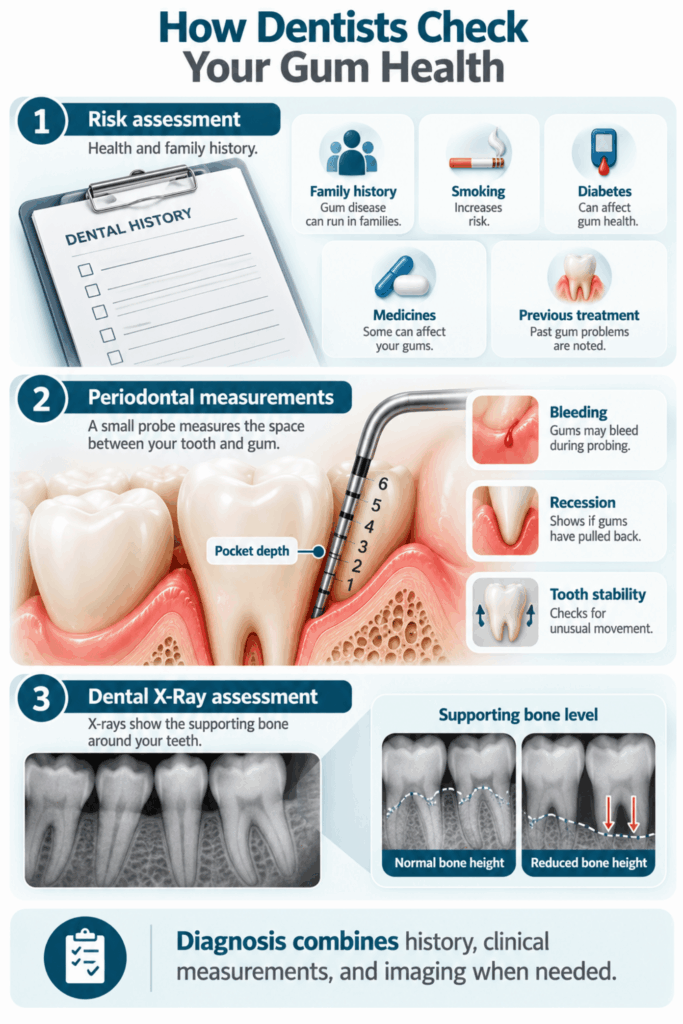
A dentist diagnoses periodontal disease from your history, examination, and—when needed—dental X-rays. A hereditary risk or family history of gum disease does not confirm that you have the condition. The National Institute of Dental and Craniofacial Research overview of periodontal disease describes the common risk factors, symptoms, examination, and treatment of gum disease.
A periodontal evaluation may include:
- Reviewing Your History: The dental team asks about symptoms, previous treatment, smoking, diabetes, medicines, oral hygiene, and family history.
- Looking at the Gums: The dentist checks color, shape, swelling, recession, plaque, tartar, and areas that bleed.
- Measuring Around the Teeth: A slim periodontal probe measures the space between each tooth and gum. Deeper readings may indicate periodontal pockets, but measurements must be interpreted with other findings.
- Checking Attachment and Recession: These measurements help show whether the tissues supporting the teeth have been lost.
- Assessing Tooth Stability: The dentist may check for loose teeth, shifting, bite changes, or problems involving the roots.
- Taking X-Rays When Appropriate: Dental X-rays can show the level and pattern of supporting bone, but they are ordered according to clinical need.
- Classifying the Condition: If periodontitis is present, its stage, grade, and extent help guide treatment and follow-up.
Can a Genetic Test Predict Gum Disease?
No genetic test can tell with certainty whether you will develop common gum disease. Available tests may look for selected genetic variants involved in inflammatory pathways, but periodontitis involves many genes combined with plaque, smoking, diabetes, age, and other influences.
A 2025 review of genetic testing in periodontitis reported that clinical integration remains limited. Current tests do not replace periodontal probing, X-rays when indicated, medical and family history, or an assessment of modifiable risk factors. A dentist or periodontist may consider additional testing in selected situations, but routine genetic screening is not needed for most patients.
How to Lower Your Risk When Gum Disease Runs in the Family
You cannot change your hereditary susceptibility to gum disease, but you can reduce several factors that contribute to inflammation and periodontal damage. If you already have periodontitis, these steps support professional treatment; they do not remove hardened tartar below the gum line or rebuild lost supporting tissues.
- Brush Twice a Day: Use fluoride toothpaste and a soft-bristled toothbrush. Aim the bristles toward the gum line and clean gently rather than scrubbing hard.
- Clean Between Your Teeth Daily: Floss, interdental brushes, or another dentist-recommended device can remove plaque where an ordinary toothbrush cannot reach. The best method depends on the size of the spaces and your ability to use it consistently.
- Do Not Ignore Bleeding: Newly inflamed gums may bleed when cleaning begins, but persistent or heavy bleeding needs dental assessment. Stopping all cleaning usually allows more plaque to remain.
- Avoid Smoking and Tobacco: Quitting reduces an important risk factor for periodontitis and supports healing after treatment. Smoking may also hide bleeding by reducing visible blood flow in the gums, so a lack of bleeding does not always mean the tissues are healthy.
- Manage Diabetes With Your Medical Team: If you have diabetes, follow your medical plan and tell your dentist. Better blood sugar control and periodontal care support each other, although neither replaces the other.
- Attend Professional Cleanings and Examinations: A dental professional can remove tartar that brushing and flossing cannot remove. Your visit schedule should be based on current disease, past treatment, plaque control, smoking, diabetes, and other risks, not family history alone.
- Know Your Normal: Pay attention to bleeding, recession, swelling, bad breath, tooth movement, and changes in your bite. Report changes rather than waiting for pain.
- Share Your Family History: Tell your dentist if close relatives had severe disease, rapid progression, periodontal surgery, or early tooth loss.
- Follow Through With Periodontal Treatment: If disease is found, treating gum disease early can limit further destruction. Depending on the case, care may include improved home cleaning, professional scaling and root planing, control of risk factors, surgery, or maintenance therapy.
- Support General Health: Eat a varied diet, stay physically active as your healthcare team recommends, and have dry mouth or medicine-related gum changes assessed rather than trying to manage them alone.
When a Periodontist May Be Helpful
A periodontist is a dentist with advanced training in preventing, diagnosing, and treating diseases of the gums and other supporting tissues. Having a hereditary risk of gum disease does not automatically mean you need a specialist.
Your general dentist may recommend a periodontal evaluation when there is:
- Significant Bone Loss: X-rays or clinical measurements show loss of support around one or more teeth.
- Deep or Persistent Pockets: Deep areas remain difficult to clean or continue bleeding after initial care.
- Rapid Progression: Gum attachment or bone appears to be deteriorating faster than expected.
- Early Severe Disease: Major periodontal destruction appears at a relatively young age.
- Loose or Shifting Teeth: Tooth stability or the bite has started to change.
- Complex Gum Recession: Exposed roots create sensitivity, esthetic concerns, or cleaning problems.
- A Poor Response to Treatment: Inflammation or tissue breakdown continues despite appropriate care and improved plaque control.
- Complex Health Risks: Diabetes, smoking, immune problems, or other factors make treatment planning more difficult.
Common Questions About Hereditary Gum Disease
Can Gum Disease Be Inherited From Either Parent?
Genetic susceptibility can come from your mother’s side, your father’s side, or both. Periodontitis usually does not follow a simple inheritance pattern controlled by one gene. Many genetic variants may have small effects, and those effects interact with plaque, smoking, diabetes, oral hygiene, and dental care.
Can Gum Disease Skip a Generation?
It may appear to skip a generation because relatives can inherit different combinations of risk variants and have different health habits or exposures. Gum disease is not passed down in a simple pattern like some single-gene disorders. An unaffected parent can still have a child who develops periodontitis, and an affected parent can have children with healthy gums.
Can Parents Pass Gum-Disease Bacteria to Their Children?
Some oral bacteria can move between people through saliva, but gum disease itself is not automatically passed from parent to child. Developing disease also depends on plaque buildup, immune response, oral hygiene, health conditions, and other risk factors. Normal family contact should not cause fear; consistent oral care and routine dental visits matter more.
Are Receding Gums Hereditary?
Gum recession can be influenced by inherited features, including naturally thin gum tissue and tooth or jaw position. However, periodontal disease, forceful brushing, tooth movement, tobacco use, and other local factors can also expose the roots. A dentist must identify the cause before recommending monitoring, changes in brushing, periodontal treatment, or gum grafting.
Should My Siblings Be Checked If I Develop Severe Gum Disease Young?
Yes, it is reasonable to tell siblings when severe or rapidly progressing periodontitis is diagnosed at a young age. They do not necessarily have the disease, but they can share the family history with their dentist and receive an individual assessment. Genetic testing is not a substitute for examining the gums and supporting bone.
Does Early Tooth Loss in My Family Always Mean Gum Disease?
No. Teeth may be lost because of periodontitis, deep decay, fractures, injuries, failed root canal treatment, or other problems. Ask which teeth were lost, why they were removed, and how old the person was. Confirmed periodontal bone loss or treatment by a periodontist is more informative than the phrase “weak teeth.”
The Main Point About Genes and Gum Health
Genes can influence your susceptibility to periodontal disease, but they do not determine your future by themselves. Plaque control, tobacco use, diabetes management, professional dental care, and early treatment can all change the path of the disease.
If gum disease runs in your family, share that history with your dentist and watch for changes such as bleeding, recession, persistent swelling, or loose teeth. The goal is not to fear your genetic risk; it is to recognize it early and act on the factors you can control.
