If your breath still smells unpleasant soon after brushing, you may wonder: does gingivitis cause bad breath? Yes, it can. Plaque bacteria can collect along the gumline, irritate the gums, and release foul-smelling compounds. The odor may be more noticeable when your gums also look red or swollen or bleed during brushing and flossing.
Bad breath does not prove that you have gingivitis. A coated tongue, dry mouth, tooth decay, smoking, certain foods, tonsil stones, and other health problems can also affect breath. The pattern matters: gum-related odor often occurs with ongoing gum changes rather than after one strong-smelling meal. A dentist must examine your mouth to identify the cause.
The good news is that gingivitis is the earliest, reversible stage of gum disease. Careful brushing, cleaning between the teeth, and professional cleaning when plaque has hardened into tartar can help the gums recover. Knowing why the odor happens and which other signs to check can help you choose the right next step without trying to mask the problem.
Does Gingivitis Cause Bad Breath?
Yes, gingivitis can cause bad breath. Plaque buildup along the gum line contains bacteria that irritate the gum tissues and produce unpleasant odors. Bad breath is also listed among the common symptoms in the American Dental Association’s overview of gingivitis symptoms and care.
However, not everyone with gingivitis notices an odor, and persistent bad breath does not confirm gum disease by itself. It becomes more suggestive when it occurs with red, swollen, tender, or bleeding gums. A dental examination is still needed because several other oral health issues can affect your breath.
Why Gingivitis Can Make Your Breath Smell
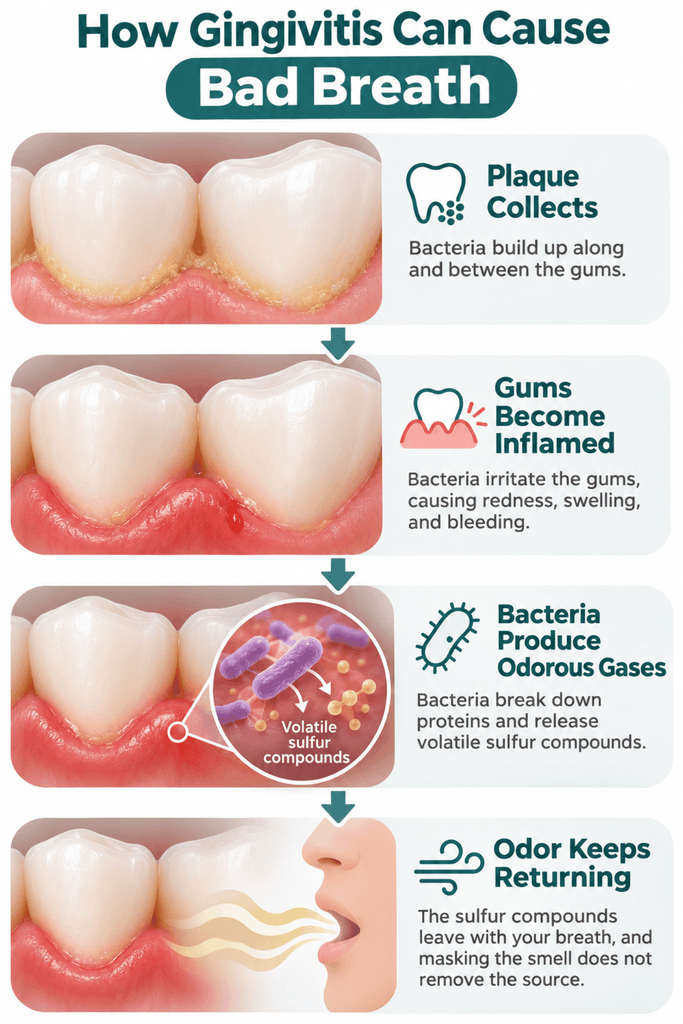
Most cases of gingivitis are caused by plaque collecting around the teeth and gums. The connection between gum disease and bad breath usually develops through four steps:
- Plaque Accumulates: Plaque is a sticky film containing bacteria, saliva, and food particles. Poor oral hygiene allows it to remain around the gum line and between the teeth.
- The Gums Become Inflamed: Bacteria in the mouth irritate the gum tissues. This inflammation of the gums may cause redness, swelling, tenderness, and bleeding.
- Bacteria Produce Odorous Gases: Oral bacteria break down proteins from food particles, saliva, damaged cells, and small amounts of blood. This process releases volatile sulfur compounds, which can smell like sulfur or rotten eggs.
- The Odor Continues While the Source Remains: Unlike temporary bad breath after eating garlic or onions, bad breath caused by ongoing plaque buildup may return soon after brushing. It may continue until plaque, tartar, and gum inflammation are properly managed.
A clinical study examining volatile sulfur compounds in people with gingivitis and periodontitis found a strong association between periodontal disease and measurable oral malodor. This does not mean that everyone with gingivitis will develop chronic bad breath, but it supports the biological connection.
How to Tell Whether Gingivitis Is Causing Your Bad Breath
Consider what is happening to your gums, not only how your breath smells. Gum disease and bad breath often appear together, but no smell or single symptom can identify the cause with certainty. A dentist can examine your teeth and gums and check for other possible sources.
Gum Signs That Support Gingivitis as a Cause
Gingivitis is the early stage of gum disease. It may cause mild changes at first, and some people have a case of gingivitis without pain.
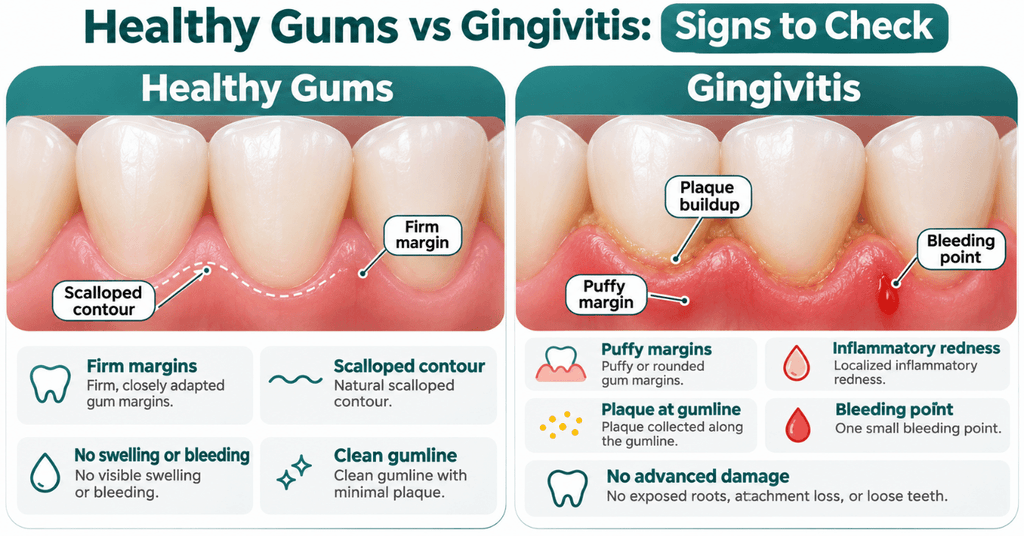
Common signs of gingivitis include:
- Red or Darker Gums: Healthy gums usually look firm and evenly colored. Gingivitis may make them appear redder or darker than usual.
- Swollen Gums: Gum swelling may make the tissues look puffy or rounded around the teeth.
- Bleeding Gums: The gums may bleed during brushing, flossing, or eating firm foods. Regular bleeding is a sign your gums need professional assessment.
- Gum Tenderness: Inflamed gums may feel sore when you brush, floss, or touch them, although gingivitis is often painless.
- Visible Plaque or Tartar: Soft plaque may collect near the gum line. When plaque hardens into tartar, regular brushing cannot remove it.
- Persistent Bad Taste: Gingivitis and other gum problems may cause a bad taste in your mouth along with ongoing bad breath.
Having several of these signs makes gingivitis more likely, but it does not rule out tooth decay, dry mouth, an infection, or another condition.
Why Breath Odor Alone Cannot Diagnose Gingivitis
Some people have gingivitis without noticeable bad breath. Others have persistent bad breath even though their gums are healthy. The tongue, saliva flow, teeth, dental restorations, diet, tobacco use, and throat can all affect odor.
It is also difficult to judge your own breath because your sense of smell can become used to it. Mouthwash or mints may temporarily create fresher breath, but they can hide the odor without treating the underlying cause.
Gingivitis or Periodontitis: Why the Difference Matters
Gingivitis and periodontitis are both forms of periodontal disease, but they do not cause the same level of damage. Current periodontal classification guidance distinguishing gingivitis from periodontitis defines gingivitis as inflammation without the attachment and bone loss found in periodontitis.
| Feature | Gingivitis | Periodontitis |
|---|---|---|
| Tissues Affected | Mainly the gums around the teeth | Gums, periodontal ligament, and supporting bone |
| Common Signs | Redness, swelling, tenderness, and bleeding | Gum recession, deeper pockets, shifting or loose teeth, and possible pus |
| Bone or Attachment Loss | Not present | Present |
| Bad Breath | May occur | May be more persistent, especially when deep periodontal pockets are present |
| Reversibility | Gum inflammation can usually be reversed when caught early | Lost attachment and bone cannot be fully restored by routine care |
| Treatment | Improved plaque control and professional cleaning when needed | Professional periodontal treatment and long-term maintenance |
Bad breath alone cannot tell you whether gum disease has reached periodontitis. Receding gums, deeper pockets, loose teeth, or changes in your bite require a periodontal examination. Left untreated, periodontitis can become a cause of tooth loss.
Other Common Causes of Bad Breath
Gingivitis is only one possible cause of bad breath. Several problems may occur together, such as gum inflammation combined with a coated tongue or dry mouth.
Causes Inside the Mouth
Most bad breath begins somewhere in the mouth. Common causes include:
- Tongue Coating: The rough surface of the tongue can hold bacteria, dead cells, and food particles, especially toward the back.
- Dry Mouth: Saliva cleans the mouth and limits bacterial buildup. Dehydration, mouth breathing, medications, smoking, and some health conditions can reduce saliva.
- Tooth Decay: A cavity may trap bacteria and food, creating an unpleasant smell or taste.
- Dental Infection: An abscess or infection of the gums or tooth can cause pain, swelling, pus, and a foul taste. This requires professional treatment.
- Dentures and Appliances: Dentures, retainers, and removable appliances may collect plaque and food if they are not cleaned properly.
- Trapped Food: Food can become lodged between crowded teeth, around dental work, or beneath an appliance.
- Tobacco: Smoking and other tobacco products produce odor, dry the mouth, damage the gums, and increase susceptibility to gum disease.
- Food and Drinks: Garlic, onions, coffee, alcohol, and certain spices can cause temporary odor even when gum health is good.
Causes Beyond the Mouth
Tonsil stones, tonsillitis, postnasal drainage, and some sinus problems may affect breath. Acid reflux can also contribute in certain cases. These conditions often cause other symptoms, such as throat discomfort, nasal congestion, coughing, or a sour taste.
Less commonly, persistent odor may be related to another medical condition. The NHS overview of common bad breath causes recommends dental assessment when bad breath does not improve with self-care, especially when it occurs with painful, swollen, or bleeding gums. If a dentist finds no oral cause, medical assessment may be appropriate.
How a Dentist Finds the Cause of Persistent Bad Breath
A dentist does more than check whether your breath smells unpleasant. The goal is to locate the source and determine whether gingivitis, periodontitis, or another oral health problem is involved.
- Review Your History: The dentist asks when the odor began, whether it lasts all day, and whether it improves after eating, drinking, or cleaning your mouth. Medications, dry-mouth symptoms, tobacco use, diet, and oral hygiene habits are also relevant.
- Examine Your Teeth and Gums: The dentist looks for plaque, tartar, bleeding gums, gum swelling, cavities, faulty restorations, trapped food, and dental infections.
- Assess Your Periodontal Health: A periodontal probe measures the spaces around the teeth and checks for bleeding. X-rays may be needed when bone loss or another hidden dental problem is suspected.
- Check Other Oral Sources: The dentist may examine the tongue, saliva, dentures, appliances, and other oral tissues. Some clinics or specialists use instruments that measure sulfur-containing gases, although these tests are not required for every patient.
- Consider Medical Referral: If the mouth appears healthy, the dentist may recommend evaluation by a physician or another healthcare professional for throat, sinus, digestive, or medical causes.
How to Improve Bad Breath Caused by Gingivitis
Lasting improvement depends on removing plaque and controlling gum inflammation. Mints, sprays, and cosmetic rinses can cover the smell briefly, but they do not treat the gum disease causing it.
Remove Plaque Without Hurting Your Gums
Bleeding gums do not usually mean you should stop cleaning. Instead, use gentle technique and avoid scrubbing hard enough to damage the gums.
- Brush Twice Daily: Brush for about two minutes twice a day with fluoride toothpaste and a soft-bristled toothbrush. Clean gently where the teeth and gums meet.
- Clean Between Your Teeth: Use floss, interdental brushes, or another suitable interdental cleaner once a day. A toothbrush cannot fully clean these spaces.
- Clean Your Tongue: Gently brush or scrape the tongue once daily, focusing on areas with visible coating. Avoid pressing hard enough to cause pain or bleeding.
- Support Saliva Flow: Drink water regularly. If dry mouth contributes to the odor, sugar-free gum can stimulate saliva when chewing gum is safe and comfortable for you.
Do not try to remove tartar with sharp instruments. Home scraping can damage the gums, scratch tooth surfaces, or push deposits below the gum line.
Know What Mouthwash Can and Cannot Do
Cosmetic mouthwash may mask bad breath for a short time. Therapeutic rinses contain active ingredients that may help control bacteria, plaque, gingivitis, or odor, but they work best as an addition to regular brushing and interdental cleaning.
The American Dental Association’s guidance on mouthwash and oral malodor explains that mouthwash cannot replace mechanical plaque removal. Some medicated products, including chlorhexidine rinses, may stain the teeth or tongue and alter taste. Use prescription rinses only as directed, and check product instructions before giving mouthwash to a child.
Get Professional Cleaning When Tartar Is Present
Plaque can be removed at home while it is still soft. Once it hardens into tartar, a dentist or dental hygienist must remove it with professional instruments. This is why careful home care may not be enough after tartar has formed.
For gingivitis without attachment or bone loss, professional cleaning and improved oral hygiene may be sufficient. If the examination finds periodontitis, treatment options may include cleaning below the gum line through scaling and root planing, followed by periodontal maintenance. The choice depends on the diagnosis rather than the presence of bad breath alone.
A systematic review of professional cleaning and periodontal treatment for oral halitosis found that professional tooth cleaning or nonsurgical periodontal treatment combined with oral hygiene instruction reduced measures of oral malodor.
How Long Does Gingivitis-Related Bad Breath Take to Improve?
There is no single timeline. Some people notice fresher breath as plaque control improves, while others continue to have odor because tartar, tongue coating, dry mouth, decay, or another source remains. Gum inflammation also needs time to settle after the cause is controlled.
Improvement depends on the amount of plaque and tartar, the condition of the gum tissues, the treatment received, and how consistently you clean your mouth. If bad breath does not go away even after brushing, interdental cleaning, tongue cleaning, and professional care when needed, ask your dentist to look for another cause.
When Bad Breath and Gum Symptoms Need Dental Care
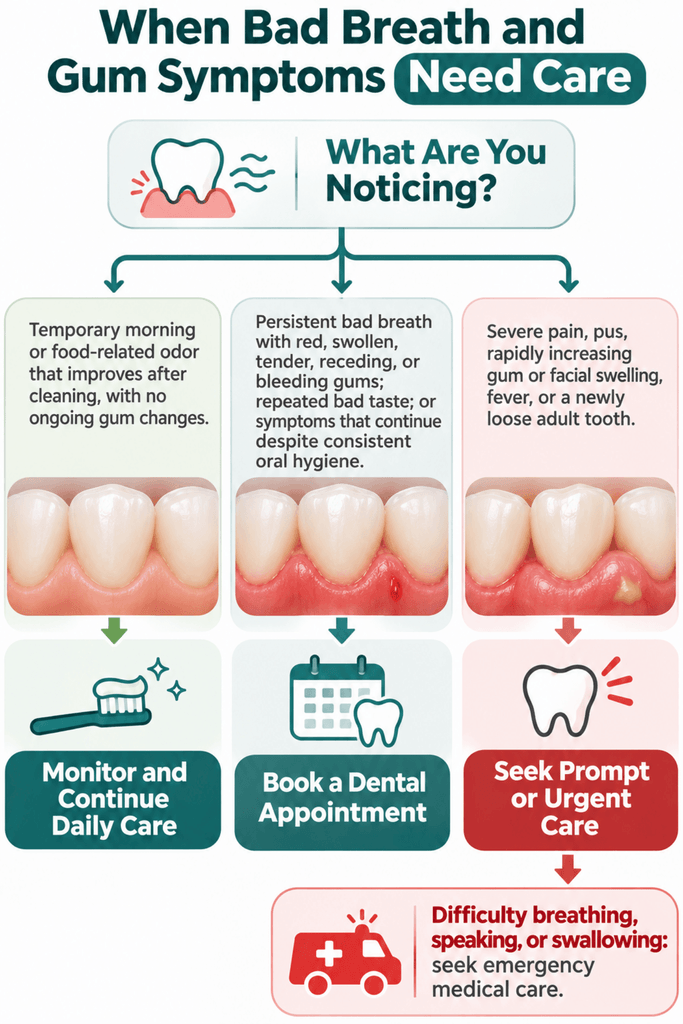
An occasional odor after waking or eating strong-smelling food is usually not urgent. Ongoing bad breath combined with gum changes deserves a dental examination, while pain, pus, or rapidly increasing swelling may require faster care.
Book a Dental Appointment
Arrange a routine dental examination if you notice:
- Ongoing Bad Breath: The odor returns quickly or continues despite regular brushing, interdental cleaning, and tongue cleaning.
- Repeated Gum Bleeding: Your gums frequently bleed when you brush, floss, or eat firm foods.
- Red or Swollen Gums: Gum swelling, tenderness, or inflammation continues rather than settling.
- Gum Recession: The gums recede, the teeth look longer, or new spaces develop between them.
- Persistent Bad Taste: A bad taste keeps returning or seems to come from one area.
- Tooth Symptoms: You have toothache, sensitivity, a damaged restoration, or food repeatedly catching around one tooth.
- Loose or Shifting Teeth: An adult tooth feels mobile, or your bite begins to change.
Seek Prompt or Urgent Care
Contact a dentist promptly if you have:
- Severe Pain: Strong or increasing tooth or gum pain may indicate an infection rather than uncomplicated gingivitis.
- Pus or Drainage: Pus, a pimple-like swelling on the gum, or a sudden foul taste may indicate an abscess.
- Rapidly Increasing Swelling: Spreading swelling of the gum, face, or jaw needs urgent dental assessment.
- Fever or Illness: Fever, swollen neck glands, or feeling unwell with dental pain can indicate a spreading infection.
- A Newly Loose Adult Tooth: Sudden mobility may result from trauma, advanced gum disease, or infection.
Difficulty breathing, speaking, or swallowing with dental swelling is an emergency and requires immediate medical care. NHS guidance likewise identifies breathing or swallowing difficulty and extensive mouth swelling as emergency signs.
How to Keep Gingivitis and Bad Breath From Returning
Gingivitis can return when plaque begins collecting again. A consistent routine supports healthy gums, fresher breath, and better oral health.
- Brush Consistently: Brush twice a day with fluoride toothpaste and a soft-bristled brush.
- Clean Between the Teeth: Remove plaque from spaces that a toothbrush cannot reach using floss or an appropriate interdental cleaner.
- Clean the Tongue: Gently remove visible tongue coating once a day.
- Attend Dental Visits: Follow the examination and cleaning schedule recommended for your gum health and risk factors.
- Manage Dry Mouth: Drink enough water and discuss ongoing dryness with your dentist or physician. Sugar-free gum may help stimulate saliva for some people.
- Clean Dental Appliances: Brush dentures, retainers, and removable appliances as directed. Clean the tissues beneath them as well.
- Avoid Tobacco: Stopping smoking or other tobacco use helps protect the teeth and gums and can prevent bad breath from returning.
- Use Mouthwash as an Addition: A suitable rinse may support oral hygiene, but it should not replace brushing, interdental cleaning, or necessary dental cleanings.
Frequently Asked Questions About Gingivitis and Bad Breath
What Does Gingivitis Breath Smell Like?
Gingivitis does not produce one unique or diagnostic smell. People may describe the odor as stale, unpleasant, or sulfur-like because bacteria can release sulfur-containing gases. However, a coated tongue, dry mouth, decay, and dental infections can produce similar odors. A dentist cannot diagnose gingivitis from the smell alone.
Can Gingivitis Cause Bad Breath Without Bleeding Gums?
Yes. Gingivitis may be mild, localized, or difficult to notice, and the gums do not always bleed during routine brushing. Bad breath without bleeding may also come from the tongue, dry mouth, cavities, food traps, or throat problems. Persistent odor should be assessed rather than assumed to be a symptom of gingivitis.
Can Gingivitis Cause Bad Breath Even if I Brush Twice a Day?
It can. Brushing twice daily may still leave plaque between the teeth, beneath tartar, or along areas that are difficult to reach. Tongue bacteria and dry mouth may also contribute. If the odor continues, a dentist can check your technique, gum health, tartar levels, and other possible oral causes.
Can Gingivitis Around One Tooth Cause Bad Breath?
Localized gum inflammation can contribute to odor or a bad taste, especially when plaque and food collect around one tooth. However, decay, a faulty filling or crown, tartar, or a dental abscess can cause similar symptoms. Odor from one area deserves a dental examination, particularly when pain, swelling, or drainage is present.
Can Bad Breath Continue After Gingivitis Improves?
Yes. The remaining odor may come from tongue coating, dry mouth, tooth decay, tonsil stones, tobacco, or another dental or medical problem. Tartar or deeper periodontal disease may also remain if improvement was judged only by appearance. Ask your dentist to reassess chronic bad breath instead of repeatedly covering it with mouthwash.
Does Gingivitis Make Morning Breath Worse?
Gingivitis may add to morning odor, but reduced saliva during sleep is a common reason for morning breath. Plaque and tongue bacteria become more active when the mouth is dry. Odor that fades after cleaning and eating is different from persistent bad breath that continues during the day with inflamed or bleeding gums.
Can Children Have Bad Breath From Gingivitis?
Yes. Plaque-related gingivitis can affect children and may cause red, swollen, or bleeding gums with unpleasant breath. However, mouth breathing, dry mouth, cavities, food debris, a coated tongue, and throat problems are also common in children. Ongoing odor or sore, bleeding gums should be checked by a dentist.
Bottom Line: Treat the Cause, Not Just the Odor
Gingivitis can cause bad breath, especially when the odor appears with red, swollen, tender, or bleeding gums. These may be early signs of gum disease caused by plaque buildup, so focus on gentle brushing, daily interdental cleaning, tongue cleaning, and professional cleanings when tartar is present.
Arrange a dental examination if the odor does not improve, keeps returning, or occurs with gum recession, pain, pus, or loose teeth. Treating the underlying gum problem is more effective than repeatedly masking the smell with mints or mouthwash.
