An ache behind your last molar can make eating, brushing, or falling asleep harder than usual. If you’re wondering how to soothe wisdom tooth pain, gentle cleaning, warm saltwater rinses, and an over-the-counter pain reliever that is safe for you may help while you arrange dental care. These steps can ease discomfort, but they do not treat every cause of pain.
A sore wisdom tooth does not always need to come out. The next step depends on what is causing the pain and whether the tooth can stay healthy. A dental exam can help explain why the area hurts and which treatment fits the problem.
You may need help getting through a meal, settling down for bed, or choosing between remedies you have seen online. Start with gentle care and check that any medicine suits your health needs. Knowing what to try and when to stop relying on home care can help you choose your next step.
How to Soothe Wisdom Tooth Pain at Home
You can soothe wisdom tooth pain with gentle cleaning, a warm saltwater rinse, a wrapped cold compress, and a suitable over-the-counter pain reliever. These measures offer temporary relief while you arrange dental care. They cannot repair a cavity, change a tooth’s position, or reliably clear an infection.
The steps below apply to a wisdom tooth that is still in place. If you have already had wisdom tooth extraction, follow your surgeon’s aftercare instructions instead. Trouble breathing or swallowing, or rapidly spreading swelling, needs emergency care rather than another home remedy.
- Gently clean the accessible area around the wisdom tooth to remove loose food.
- Rinse with warm salt water, then spit it out.
- Hold a wrapped cold compress against your cheek if it feels soothing.
- Consider an appropriate pain reliever after checking its label and your health precautions.
- Choose soft foods and arrange an appointment if pain persists, returns, or worsens.
Clean Around the Tooth Without Hurting the Gum
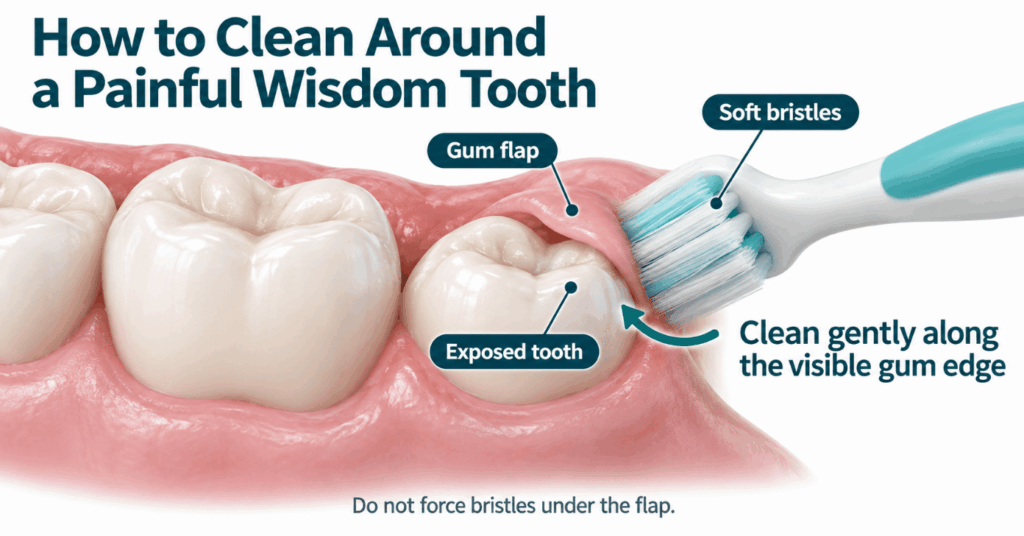
Gentle cleaning can help when food and plaque collect around a partly erupted tooth. Avoiding the area completely may allow more buildup, but scrubbing tender tissue can add irritation.
- Choose a Small Brush: Use a soft toothbrush with a small head to reach the back of your mouth. A single-tuft brush may help clean accessible corners.
- Use Light Pressure: Brush the visible tooth surfaces and along the gum edge with small movements. Do not force the bristles beneath a painful gum flap.
- Remove Only Loose Food: Let brushing and gentle rinsing loosen accessible debris. Do not dig with toothpicks, fingernails, or sharp objects.
- Avoid Forceful Irrigation: Do not aim a high-pressure water flosser beneath swollen tissue. Ask your dentist to demonstrate any special cleaning method you need.
- Know When to Stop: If pain or limited mouth opening prevents useful cleaning, seek dental help rather than pushing harder.
Use a Warm Saltwater Rinse
A mild saltwater rinse may soothe irritated gum tissue and help wash away loose debris. Make it comfortable to use rather than very salty or hot.
- Dissolve half a teaspoon of salt in a cup of warm water.
- Take a small mouthful and gently move it around the affected area.
- Spit it out without swallowing.
- Repeat a few times during the day, especially after meals, if it feels comfortable.
This rinse does not sterilize your mouth or cure a dental abscess. Stop if it irritates the area, and do not make the mixture stronger in an attempt to get faster relief.
Apply a Wrapped Cold Compress
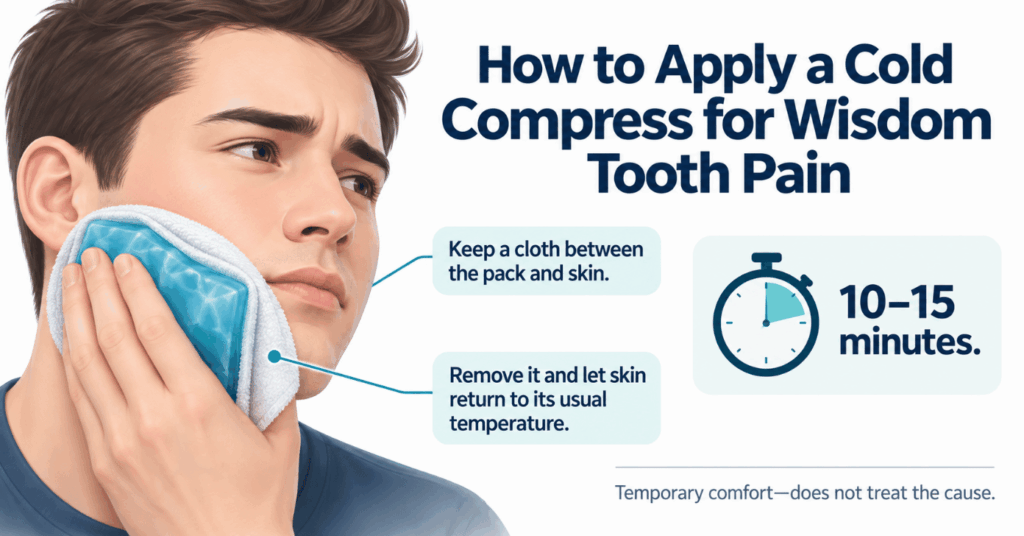
A cold compress against the outside of your cheek may temporarily soothe pain around a wisdom tooth and help reduce swelling. Wrap an ice pack in a thin towel and hold it against the affected side for about 10–15 minutes, then remove it and let the skin return to its usual temperature. Cold should feel soothing, not painful.
- Protect Your Skin: Keep a cloth between the ice pack and your face.
- Take Breaks: Do not leave the pack in place continuously or fall asleep with it on.
- Keep Ice Off the Tooth: Direct contact can trigger sensitivity and injure soft tissue.
- Stop if Uncomfortable: Remove the pack if your skin burns, becomes unusually pale, or feels excessively numb.
Which Pain Relievers Can Help With Wisdom Tooth Pain?
Nonopioid medicines can often help relieve wisdom tooth pain while you wait for treatment. The right choice depends on your age, health conditions, allergies, and other medicines. Pain relief should make symptoms more manageable; it does not confirm that the underlying problem has healed.
Ibuprofen and Acetaminophen: Choosing an Appropriate Option
Ibuprofen is a nonsteroidal anti-inflammatory drug, or NSAID. It can reduce pain and inflammation, while acetaminophen relieves pain but has little anti-inflammatory effect. The American Dental Association’s guidance on medicines for acute dental pain supports NSAIDs, alone or with acetaminophen when appropriate, as first-line options for temporary toothache management.
Acetaminophen may be an option when an NSAID is unsuitable. A dentist or pharmacist can also advise whether combining the two is appropriate for you. Follow the age-specific directions, dose intervals, and daily limit on your particular product; different strengths and combination products have different instructions. Do not copy a prescription-strength schedule from someone else or take extra doses because the tooth still hurts.
Check Health Conditions and Avoid Duplicate Ingredients
Over-the-counter medicines still require care. Before choosing one to soothe wisdom tooth pain, check both the active ingredients and warnings, particularly if you take regular medication.
- Stomach or Kidney Problems: Ask before using ibuprofen if you have kidney disease, a stomach ulcer, previous digestive bleeding, or significant dehydration.
- Heart Conditions: Heart disease, a previous stroke, or poorly controlled blood pressure may affect whether an NSAID is suitable.
- Blood Thinners: Check with a pharmacist or prescriber before adding an NSAID. Do not stop prescribed blood thinners or low-dose aspirin on your own.
- Pregnancy: Consult your maternity clinician before taking pain medicine. Avoid ibuprofen at around 20 weeks of pregnancy or later unless specifically directed.
- Liver Problems: Ask before using acetaminophen if you have liver disease or regularly drink substantial amounts of alcohol.
- Medication Allergies: Avoid medicines that previously caused a reaction, including NSAIDs that triggered wheezing or an asthma attack.
- Duplicate Ingredients: Do not combine ibuprofen with naproxen or another NSAID unless instructed. Check cold, flu, sleep, and combination pain products for hidden acetaminophen or ibuprofen.
The National Library of Medicine’s ibuprofen precautions explain these interactions and health considerations in more detail.
Do Numbing Gels Help Wisdom Tooth Pain?
An oral gel containing benzocaine may briefly numb the surface of a sore gum. It may do little for pain arising deep inside a tooth, and repeated application does not treat the cause. Use only a product labeled for oral use, follow its age and frequency limits, and ask a pharmacist if you are unsure whether it suits you.
Benzocaine can rarely cause methemoglobinemia, a serious condition that reduces the blood’s ability to carry oxygen. The FDA’s benzocaine safety warnings advise immediate medical attention for symptoms such as blue or gray lips or skin, shortness of breath, dizziness, or a rapid heartbeat after use. Avoid benzocaine if you have had a relevant local-anesthetic allergy, and never use it for teething or in children under 2.
What to Eat and Drink When Chewing Hurts
Soft foods can make eating easier while the area is tender. You do not need to avoid all solid food, but choose textures that require less chewing and temperatures that do not trigger pain.
- Soft Protein: Try scrambled eggs, yogurt, soft fish, or well-cooked beans.
- Easy-to-Chew Meals: Oatmeal, mashed vegetables, soft pasta, and lukewarm soup may be comfortable.
- Smaller Bites: Chew on the other side when possible, without repeatedly testing the painful tooth.
- Comfortable Drinks: Sip water regularly. Choose room-temperature drinks if hot or cold liquids trigger sensitivity.
- Fewer Irritants: Avoid sharp chips, hard crusts, sticky sweets, or spicy foods if they scrape, lodge around, or sting the gum.
Let symptoms guide your choices. A cold drink may feel soothing to one person but trigger a sharp ache in someone with a cavity. If you cannot drink enough because of pain or difficulty opening your mouth, seek prompt care.
How to Manage Wisdom Tooth Pain at Night
To soothe wisdom tooth pain at night, prepare before settling into bed rather than repeatedly trying new remedies once the pain builds. Nighttime discomfort does not identify the cause, but pain that keeps waking you deserves dental attention.
- Clean Before Bed: Gently remove loose food and use a mild saltwater rinse if it helps.
- Check Medication Timing: If you use a suitable pain reliever, follow the label and record when you took it. Do not take an early extra dose to get through the night.
- Find a Comfortable Position: Avoid pressing the sore cheek into your pillow. If a slightly raised head feels better, use that position without expecting it to treat the tooth.
- Use Cold While Awake: Try a wrapped cold compress before bed, then remove it before sleeping.
- Avoid Objects in Your Mouth: Do not sleep with a cotton ball, clove, tea bag, or other loose item against the tooth.
If appropriate pain relief still leaves you unable to sleep, contact an urgent dental service. Taking more medicine than directed adds risk without reliably controlling the problem.
What Should You Avoid Putting on a Painful Wisdom Tooth?
Some home remedies for wisdom teeth pain can irritate or burn tissue that is already sore. “Natural” does not establish safety, and a brief numbing sensation does not mean a remedy has treated an infection.
- Aspirin Against the Gum: Swallow medicines only as their label directs. Holding aspirin against a tooth or gum can cause a chemical burn.
- Undiluted Clove Oil: Concentrated clove oil can injure oral tissue. Avoid DIY instructions to soak a cotton ball in it and leave it against the gum; any formulated dental product should be used only as labeled.
- Peppermint and Other Essential Oils: Do not apply concentrated oils or swallow them for toothache. Reliable evidence for treating wisdom tooth pain with these home preparations is limited.
- Raw Garlic Paste: Garlic can burn the lining of the mouth. Published reports include a case of an oral chemical burn after garlic was applied for toothache.
- Harsh Rinses: Avoid household disinfectants, concentrated peroxide, and rubbing alcohol. Stop any oral rinse that causes significant burning.
- Cutting or Draining the Area: Never pierce a swelling or cut a gum flap yourself. This can damage tissue and does not safely address the source.
If a remedy causes burning, remove it, gently rinse your mouth with water, and stop using it. Contact a dentist if soreness, peeling, or an ulcer develops.
Why Does Your Wisdom Tooth Hurt?
Wisdom teeth can cause pain in the surrounding gum, inside the tooth, or in nearby supporting tissues. A tooth may also be difficult to clean because it is partly covered or positioned at an angle. Identifying the source matters because a gum rinse will not repair decay, and pain medicine cannot make an impacted tooth erupt normally.
Eruption Soreness, Trapped Food, and an Inflamed Gum Flap
As a wisdom tooth begins to erupt, the nearby gum may feel tender. If part of the crown remains covered, food and plaque can collect beneath the flap. Inflammation around this partly erupted tooth is called pericoronitis, and infection may also develop.
The upper tooth may bite onto the swollen flap and add further irritation. This can make chewing painful even when the wisdom tooth itself has no cavity. Do not assume that worsening pain is simply what happens when wisdom teeth push through; persistent soreness needs an examination.
Decay, Gum Disease, and Other Sources of Pain
Even fully erupted wisdom teeth can develop cavities or gum disease. Decay may inflame the pulp, the tissue containing nerves and blood vessels inside the tooth, and infection can develop around the root. Pain near a wisdom tooth can also come from surrounding teeth or the jaw.
- Temperature Sensitivity: Pain after hot, cold, or sweet foods may come from exposed sensitive tooth tissue or decay.
- Pain With Biting: A cavity, crack, inflamed supporting tissue, or sore gum may make chewing hurt.
- A Deep Throb: Spontaneous throbbing pain can occur with inflammation inside a tooth, but the sensation alone cannot confirm the cause.
- Nearby Pain: A second molar, jaw joint, or chewing muscle can produce discomfort that seems to come from the wisdom tooth.
Is It Mild Eruption Soreness or a Problem That Needs Care?
| Feature | May Fit Mild Local Irritation | More Concerning Finding |
|---|---|---|
| Pain pattern | Limited tenderness that is easing | Persistent, worsening, or recurring pain |
| Gum appearance | Slight localized tenderness | Increasing swelling, pus, or pronounced inflammation |
| Eating and cleaning | Mild discomfort, but both remain possible | Pain interferes with eating or cleaning |
| Mouth opening | Normal movement | New or increasing difficulty opening |
| General health | You otherwise feel well | Fever, chills, or feeling unwell |
| Response to home care | Symptoms gradually improve | Relief is brief or appropriate measures do not help |
These patterns help you decide when to seek care; they cannot diagnose eruption pain or infection. A tooth can also have decay or gum disease without severe symptoms, so an apparently mild episode does not replace a dental check.
How Long Can Wisdom Tooth Pain Last?
There is no dependable number of days that wisdom tooth pain should last. Minor irritation may settle, while decay, an inflamed gum flap, or another untreated problem may continue or flare repeatedly. You should not have to endure ongoing pain for weeks on the assumption that the tooth is still growing.
Temporary relief also tells you little about whether the cause has resolved. For example, pain may ease after cleaning but return when food collects again. If symptoms are not clearly improving, keep returning, or require repeated medication, arrange an assessment rather than waiting for a predicted eruption timeline.
When Should You See a Dentist for Wisdom Tooth Pain?
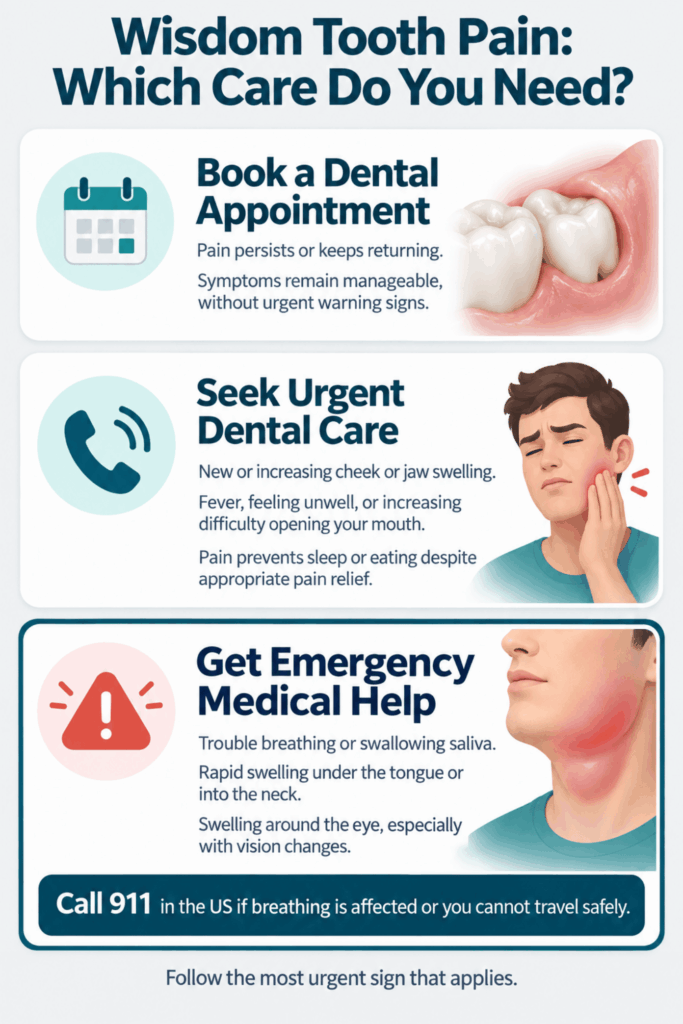
See a dentist when pain persists, returns, or affects normal activities, and seek more urgent help when swelling or other symptoms develop. If your usual office is closed, check its recorded message for emergency arrangements or contact a local urgent dental service. Describe your symptoms and any medicines you have taken so the team can judge how soon you need to be seen.
Signs That Need a Prompt Dental Appointment
- Persistent or Repeated Pain: Arrange an appointment if soreness is not improving or keeps coming back, even if you can control it temporarily.
- Pain That Disrupts Daily Life: Request urgent assessment if appropriate pain relief does not let you sleep, eat, or function.
- New or Increasing Swelling: Contact a dentist the same day for cheek or jaw swelling, particularly if it is spreading.
- Fever or Feeling Unwell: Seek same-day assessment when dental pain occurs with fever, chills, or a marked change in how you feel.
- Pus or an Ongoing Bad Taste: Contact your dentist promptly; drainage does not prove that an infection has cleared.
- Reduced Mouth Opening: New or worsening difficulty opening your mouth needs urgent assessment, especially with swelling or fever.
These priorities reflect the distinction between manageable symptoms and conditions needing urgent attention in NHS England’s clinical guidance on unscheduled dental care.
Signs That Need Emergency Medical Care
- Breathing or Swallowing Difficulty: Get emergency help if swelling affects breathing, speaking, or swallowing saliva.
- Neck or Under-Tongue Swelling: Rapidly increasing swelling in these areas requires immediate assessment.
- Swelling Around the Eye: Seek emergency care, particularly if you also have eye pain or a change in vision.
- Rapid Deterioration: Severe weakness, confusion, or rapidly spreading swelling with illness needs emergency medical attention.
Go to an emergency department or call 911 in the US if breathing is affected or you cannot travel safely. Do not wait for a routine dental appointment or another dose of pain medicine.
How a Dentist Finds and Treats the Cause
Your dentist will ask when the pain began, what triggers it, and whether you have swelling, a bad taste, or trouble opening your mouth. They will examine the wisdom tooth, nearby teeth, gum tissue, and bite. X-rays may help reveal decay, root problems, or the position of impacted wisdom teeth; advanced scans are reserved for situations where the extra information is needed.
Cleaning the Area and Treating the Tooth or Gum
Treatment aims to remove the source of pain rather than simply numb it. What helps depends on whether the problem lies around the crown, inside the tooth, or in the tissues supporting it.
- Cleaning Beneath a Gum Flap: A dentist can gently flush and remove trapped debris from an area you cannot safely reach.
- Treating a Cavity: A filling may be possible when the tooth is accessible and there is enough healthy structure to restore it.
- Treating Deeper Tooth Damage: If the pulp is affected, the dentist will discuss whether root canal treatment or extraction is appropriate.
- Managing Gum Disease: Professional cleaning and a tailored home-care plan can address plaque and deposits around the tooth.
- Draining an Abscess: When pus has collected, drainage and treatment of the responsible tooth or gum may be needed.
If a rinse or other medication is recommended, ask how to use it and when to return if symptoms do not improve.
When Antibiotics Are Needed and When They Are Not
Antibiotics are not routine pain relievers and are not needed for every painful wisdom tooth. Local cleaning is usually the first treatment for pericoronitis; antibiotics may be needed when illness extends beyond the local area, or swelling persists despite local treatment. This approach is supported by SDCEP prescribing guidance for acute periodontal conditions, including pericoronitis.
For a dental abscess, spreading infection or systemic illness may also require antibiotics alongside treatment of the source. Do not use leftover tablets or someone else’s prescription. If your dentist prescribes an antibiotic, take it exactly as directed and follow the review plan; repeated courses without treating the tooth can leave the underlying problem unresolved.
Can the Wisdom Tooth Stay, or Does It Need Removal?
A painful wisdom tooth does not automatically need extraction. Your dentist considers whether it can be restored, cleaned, and kept healthy, along with its position and effect on the neighboring second molar. Monitoring can be appropriate in selected cases, while removing a gum flap may help when the tooth has a suitable position and enough room; the flap or symptoms can recur.
Wisdom tooth removal may be recommended for repeated inflammation, unrepairable decay, or damage to nearby structures. The decision should weigh the benefits and risks of keeping or removing the tooth, consistent with AAOMS guidance on evaluating and managing impacted third molars. Your dentist may refer you to an oral surgeon when the position or surgical risks require specialist assessment.
What If the Wisdom Tooth Has Already Been Removed?
Pain after wisdom tooth extraction comes from a healing surgical site and needs a different care plan. Follow your surgeon’s instructions about cleaning, rinsing, eating, and medication rather than applying pre-extraction home remedies to the socket. Use the aftercare resource your dental team provides, and contact them if pain worsens after initially improving, swelling increases, or other concerning symptoms appear.
How to Reduce Repeat Wisdom Tooth Pain
Good daily care can reduce plaque buildup, but it cannot correct a tooth position that repeatedly traps food or injures the gum. Once the current episode has been assessed, ask your dentist what is realistic for keeping that particular tooth healthy.
- Reach the Back Surfaces: Brush twice daily with fluoride toothpaste, including the accessible surfaces behind the last molar.
- Clean Between Teeth: Use a suitable interdental aid as advised, without forcing it into sore tissue.
- Reduce Frequent Sugar Exposure: Limit repeated sugary snacks and drinks between meals, which can increase the risk of decay.
- Avoid Tobacco: Smoking can worsen oral health and make gum problems harder to manage.
- Keep Planned Reviews: Attend the checkups recommended for a retained or impacted tooth.
- Report Repeat Episodes: Tell your dentist if soreness, swelling, or a bad taste returns instead of repeatedly relying on home remedies.
Frequently Asked Questions
Can Wisdom Tooth Pain Spread to My Ear or Temple?
Yes. Wisdom tooth pain can be felt near the ear, while tension in nearby jaw muscles may contribute to temple discomfort. Pain felt away from its source is called referred pain. However, ear infections, jaw joint problems, and headaches can cause similar symptoms. Persistent pain, hearing changes, or ear discharge needs assessment rather than assuming the wisdom tooth is responsible.
Can a Dentist Remove an Infected Wisdom Tooth, or Must the Infection Clear First?
A dentist can sometimes remove an infected wisdom tooth without waiting for the infection to clear. The decision depends on infection severity, mouth opening, and whether the area can be numbed effectively. Some patients need initial treatment or specialist care before extraction. Antibiotics are not automatically required beforehand, and you should not delay assessment while waiting for symptoms to settle.
If Only One Wisdom Tooth Hurts, Do All Four Need to Be Removed?
No. Pain in one wisdom tooth does not automatically mean all four need removal. Your dentist assesses each tooth’s position, health, cleanability, and likely future problems. Removing several together may avoid separate procedures and recovery periods, but it also creates more surgical sites. Ask why removal or monitoring is recommended for each tooth before deciding.
Where Can I Get Help for Wisdom Tooth Pain Without Dental Insurance?
In the US, try community health centers with dental services, dental school clinics, or practices offering payment arrangements. Ask about urgent appointments, examination and X-ray costs, and eligibility for income-based fees. Availability varies, so call before visiting. These options may help you access treatment rather than relying on home remedies to soothe wisdom tooth pain indefinitely.
The Bottom Line on How to Soothe Wisdom Tooth Pain
Gentle cleaning, a mild saltwater rinse, a wrapped cold compress, and suitable pain medicine can help soothe wisdom tooth pain temporarily. Avoid concentrated oils, aspirin against the gum, and attempts to drain or cut the area. No home remedy can guarantee instant relief or replace treatment of the cause.
If discomfort is improving, continue gentle care and keep any planned appointment. If it persists, returns, or worsens, visit your dentist to find out why. The goal is to make you comfortable while choosing care that helps prevent the same problem from returning.
