Pain and swelling behind your last molar can make chewing, swallowing, or even opening your mouth uncomfortable. Pericoronitis pain relief often starts with gently cleaning the area, rinsing with warm salt water, and using an appropriate over-the-counter pain medicine if it is safe for you. These steps may ease symptoms, but they do not always remove the trapped debris or inflamed gum causing the problem.
Pericoronitis usually develops around a partly erupted wisdom tooth, where a flap of gum can collect food and bacteria. Pain may settle after home care, yet it can return if the area stays hard to clean. A dentist can check whether the gum needs professional cleaning and whether the tooth is likely to keep causing trouble.
What matters most is how severe your symptoms are and whether they are getting worse. Mild soreness is different from spreading swelling, fever, or trouble swallowing or breathing. Knowing which steps are safe, what to avoid, and when to get dental care can help you control the pain without delaying treatment that may be needed.
How to Get Pericoronitis Pain Relief Right Now
Pericoronitis pain relief begins by reducing irritation and keeping the affected area as clean as possible. These steps can ease pain and discomfort, but they may not remove food trapped under the gum or correct the position of the wisdom tooth.
The HSE pericoronitis treatment guideline recommends local cleaning measures first, along with warm saltwater or an appropriate antiseptic rinse.
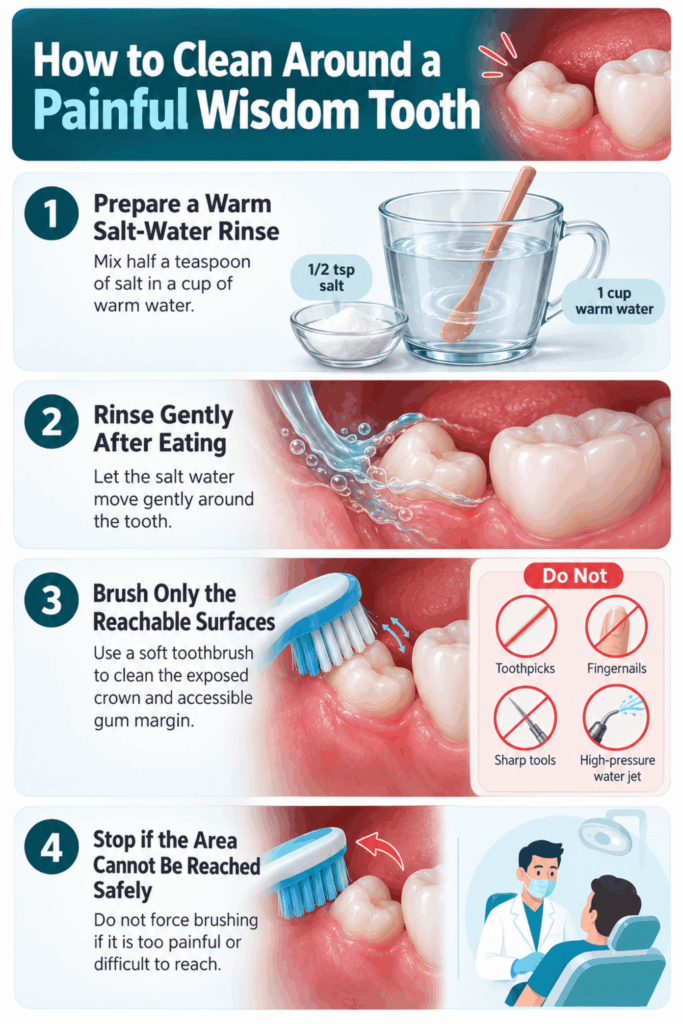
- Rinse With Warm Salt Water: Mix about half a teaspoon of salt into a cup of warm water. Gently move it around the painful area, then spit it out. Avoid vigorous swishing if the gum is very tender.
- Remove Reachable Food Debris: Use a soft toothbrush to clean the visible part of the partially erupted wisdom tooth. Do not push bristles or sharp objects beneath the gum flap.
- Use Suitable Pain Relief: An over-the-counter painkiller such as ibuprofen or acetaminophen may help when it is safe for you. Follow the product label and check for medical conditions or medicines that could make it unsuitable.
- Protect the Painful Side: Choose soft foods and chew on the opposite side. Avoid hard, crunchy, spicy, or very hot foods that may irritate the inflamed gum tissue.
- Arrange Dental Care When Needed: Contact a dentist if the pain does not begin to improve, keeps returning, or becomes more severe. Seek care sooner if you develop swelling, pus, fever, a bad taste, or difficulty opening your mouth.
Why Pericoronitis Causes So Much Pain
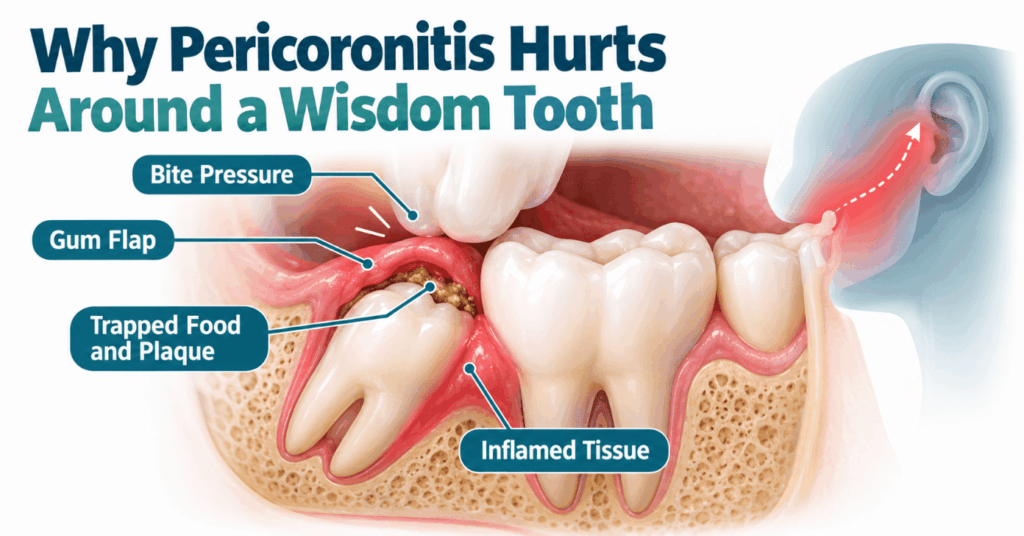
Pericoronitis is inflammation of the gum tissue around an impacted or partially erupted tooth, usually a lower wisdom tooth. A flap of gum may cover part of the crown as the third molar emerges. Food particles, plaque, and bacteria can collect in the small space beneath this flap, where normal oral hygiene is difficult.
The swollen tissue can also be pinched between the upper and lower teeth when you bite. This repeated pressure may cause significant pain even before a severe infection develops. Because nerves in the back of the mouth serve nearby areas, wisdom tooth pain may also seem to spread toward the jaw, ear, or throat. Jaw stiffness may develop when inflammation affects the surrounding tissues and muscles.
Could the Pain Be From Something Else?
Pain near the last molar does not always mean pericoronitis. A wisdom tooth may not be visible enough for you to identify the cause, and several dental issues can create similar symptoms.
| Possible Cause | Typical Pain Pattern | Other Possible Clues |
|---|---|---|
| Pericoronitis | Tenderness around a partly erupted back tooth | Swollen gum flap, trapped food, bad taste, bad breath, or pain when biting |
| Wisdom tooth decay | Pain from the tooth itself, sometimes triggered by sweet, hot, or cold foods | A visible cavity may be present, but decay can also be hidden |
| Dental abscess | Constant, throbbing, or severe pain | Pus, facial swelling, fever, a bad taste, or marked tenderness |
| Gum injury or trapped food | Localized soreness that begins after eating or brushing | A visible food particle, small cut, or irritated gum edge |
| Jaw-joint or muscle pain | Dull pain near the ear, jaw angle, or temple | Clicking, muscle tenderness, clenching, or pain that changes with jaw movement |
These patterns provide clues, not a diagnosis. A dentist may examine the tooth, check the surrounding gum, test nearby teeth, and take a dental X-ray to evaluate impaction, decay, infection, and the position of the wisdom teeth.
How to Clean Around the Gum Flap Without Making It Worse
Gentle cleaning can reduce bacterial growth and remove loose food particles. Aggressive cleaning may injure the swollen gum, increase bleeding, and push debris deeper into the affected area.
- Wash Your Hands: Clean your hands before touching anything that will go near your mouth.
- Rinse After Eating: Use warm saltwater to loosen food and soothe the gum. Move the water gently around the area instead of swishing forcefully.
- Brush the Exposed Tooth: Use a soft, small-headed toothbrush. Clean the visible tooth surface and gum margin with light strokes.
- Avoid Forcing Tools Under the Gum: Do not insert toothpicks, fingernails, sharp instruments, or toothbrush bristles beneath the flap. Avoid using a high-pressure oral irrigator on painful tissue.
- Know When to Stop: If you cannot reach the trapped material without causing pain or bleeding, let a dental professional clean the area. Professional irrigation can reach spaces that home cleaning cannot safely access.
Continue brushing and flossing the rest of your mouth. Good oral hygiene lowers the amount of plaque present, even when the painful site needs a gentler approach.
How to Use Over-the-Counter Pain Medicine Safely
Nonprescription medicine may provide temporary relief from pericoronitis pain while you arrange dental care. It cannot remove trapped debris, drain an abscess, or provide a permanent solution when impaction keeps the area difficult to clean.
The American Dental Association’s acute dental pain guidance supports nonsteroidal anti-inflammatory drugs, alone or with acetaminophen, as effective options for temporary toothache relief in adults and adolescents aged 12 or older when dental care is not immediately available.
When an Anti-Inflammatory Pain Reliever May Help
A nonsteroidal anti-inflammatory drug, or NSAID, such as ibuprofen, may relieve pain due to inflamed gum tissue. It can reduce inflammation as well as pain, but it is not safe for everyone. Use only the dose and schedule on the product label unless a healthcare professional gives different instructions.
- Avoid Duplicate NSAIDs: Do not combine ibuprofen with another NSAID, such as naproxen, unless a clinician specifically advises it.
- Take It as Directed: Taking more than the recommended amount does not make the medicine work better and can cause serious harm.
- Check Your Other Medicines: Some cold, flu, headache, and prescription products contain an NSAID or interact with one.
- Use It for Short-Term Relief: Pain medicine should not replace dental assessment when symptoms persist, return, or become worse.
When Acetaminophen May Be an Option
Acetaminophen may be considered when an NSAID is unsuitable, or it may be used with an NSAID when the product directions and a healthcare professional confirm that the combination is safe. It reduces pain but does not directly reduce inflammation.
- Read Every Label: Acetaminophen is included in many cold, flu, sleep, and prescription pain products.
- Count the Total Amount: Taking several products containing acetaminophen can lead to an accidental overdose.
- Consider Liver Health: Ask a physician or pharmacist before using it if you have liver disease, regularly drink alcohol, or take medicines that affect the liver.
Who Should Check Before Taking Pain Medicine
Speak with a dentist, physician, or pharmacist before choosing a painkiller if any of the following applies:
- Pregnancy or Breastfeeding: The safest medicine can depend on the stage of pregnancy, other health conditions, and the reason for treatment.
- Stomach Problems: NSAIDs may be unsuitable if you have a history of stomach ulcers or gastrointestinal bleeding.
- Kidney, Liver, or Heart Disease: These conditions can affect which medicine is safe and how it should be used.
- Blood-Thinning Medicine: NSAIDs may increase bleeding risk or interact with anticoagulants and antiplatelet medicines.
- Medication Allergy or Asthma Sensitivity: Avoid any product that previously caused swelling, wheezing, hives, or another allergic reaction.
- Other Prescription Medicines: A pharmacist can check for duplication and possible drug interactions.
Home Remedies and Habits That May Make the Pain Worse
Some popular toothache remedies can irritate the gum or delay necessary dental treatment.
- Aspirin Placed on the Gum: Aspirin should be swallowed only when medically appropriate and used according to its label. Holding it against the gum can cause a chemical burn.
- Sharp or Forceful Cleaning: Probing beneath the gum flap can cause bleeding, damage the tissue, or push debris farther into the pocket.
- Squeezing a Swollen Area: Pressing on the gum may increase pain and does not safely treat a pocket of pus or a dental abscess.
- Undiluted Oils or Chemicals: Concentrated clove oil, peroxide, alcohol, and other substances can burn or irritate oral tissue.
- Hot Compresses on Facial Swelling: Heat may make some types of swelling feel worse. A wrapped cold pack against the outside of the cheek is usually a gentler option for short periods.
- Leftover Antibiotics: The medicine may be inappropriate, expired, or unable to address the cause of the pain. An incomplete course also contributes to poor antibiotic use.
- Ignoring Pain Because Medicine Masks It: Reduced pain does not prove that inflammation or infection has resolved.
How Long Should Pericoronitis Pain Relief Take?
Home measures may begin to reduce mild discomfort, but there is no single healing time that applies to everyone. The response depends on how much debris is trapped, whether infection is present, whether the upper tooth keeps biting the gum flap, and whether the emerging wisdom tooth has enough space.
Use the direction of change as your guide:
- After Initial Self-Care: Rinsing, gentle cleaning, and suitable pain medicine may provide temporary relief. The area may still feel tender when touched or during chewing.
- Over the Next Day or Two: Pain and swelling should not continue to build. Arrange a dental examination if there is no clear improvement or you still need frequent pain medicine to function.
- After Symptoms Settle: Pain can return if the same gum pocket continues trapping food. Repeated episodes suggest that the underlying wisdom tooth issue has not been resolved.
- At Any Time: Do not wait for a timeline to pass if you develop fever, spreading swelling, pus, a persistent bad taste, increasing jaw stiffness, or difficulty swallowing.
When a Dentist Can Provide Longer-Lasting Relief From Pericoronitis Pain
Professional dental treatment may provide longer-lasting relief by addressing the cause of pericoronitis pain, not only the symptoms. The dentist may check the gum flap, nearby teeth, your bite, and the position of the third molar. An X-ray can show whether the wisdom tooth is blocked by the jawbone, misaligned, decayed, or pressing toward another tooth.
The findings help the dentist decide whether cleaning, monitoring, gum treatment, or tooth removal is most likely to provide long-term relief.
Cleaning and Irrigating the Area
A dentist can gently flush beneath the gum flap and remove food, plaque, and discharge that home cleaning cannot reach. This process is called irrigation and debridement. The dentist may also check whether the opposing upper tooth is biting the swollen gum and causing severe pain each time you close your mouth.
Preventing Repeated Episodes
A first mild episode does not automatically mean the wisdom tooth must be removed. Keeping the wisdom tooth and monitoring it may be reasonable if it can continue erupting into a healthy position and the area can be kept clean.
If the tooth remains impacted, repeated inflammation is more likely. The NICE recommendations on wisdom tooth removal state that a first episode of pericoronitis is not normally an indication for surgery unless it is particularly severe, while repeated episodes may support extraction.
Depending on the cause, the dentist or oral surgeon may discuss:
- Continued Monitoring: This may suit a tooth that is still emerging and has enough room to reach a cleanable position.
- Gum-Flap Treatment: Removing or reshaping the gum flap may improve access when the tooth has a favorable position. The tissue can sometimes grow back if the underlying impaction remains.
- Wisdom Tooth Removal: Extraction may provide a permanent solution when repeated pericoronitis, tooth decay, misalignment, or another disease affects the tooth.
When Antibiotics May Be Needed
Antibiotics are not an automatic treatment for wisdom tooth pain or localized pericoronitis. A dentist may prescribe them when there is spreading infection, fever or malaise, swollen lymph nodes, cellulitis, or significant difficulty opening the mouth. Local cleaning and definitive treatment remain important because medicine alone does not remove the stagnant area beneath the gum.
Key Point: Pain by itself does not prove that antibiotics are necessary. The dentist considers local findings, systemic symptoms, swelling, and whether the infection is spreading.
When Pericoronitis Pain Needs Urgent Care
Most localized cases of pericoronitis need dental care to address the cause and provide pain relief rather than hospital treatment. However, worsening symptoms may indicate that inflammation or infection is extending beyond the gum around the wisdom tooth.
Contact a Dentist Promptly
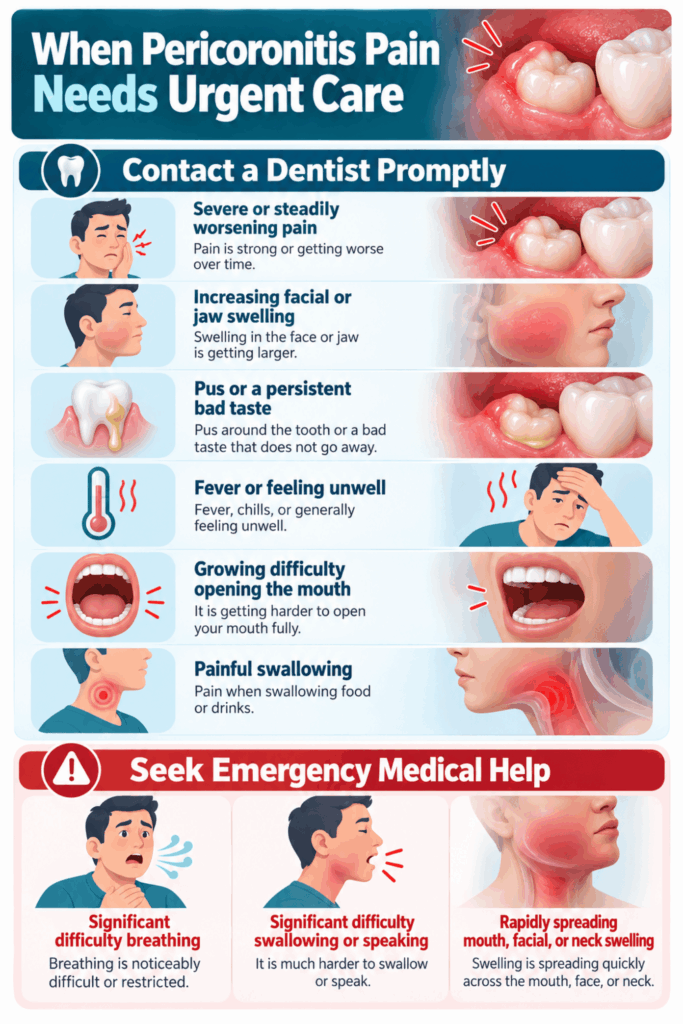
Request prompt professional dental care if you notice:
- Worsening or Severe Pain: The pain becomes difficult to control, disturbs sleep, or continues to increase.
- Increasing Facial or Jaw Swelling: Swelling extends beyond the small area of gum covering the tooth.
- Pus or a Persistent Bad Taste: Discharge may indicate a localized infection or abscess.
- Fever or Feeling Unwell: These may be systemic symptoms rather than a local gum problem alone.
- Growing Difficulty Opening Your Mouth: Increasing jaw stiffness, called trismus, can occur as nearby tissues become involved.
- Painful Swallowing: This requires prompt assessment, especially when it accompanies swelling or fever.
Seek Emergency Help for Breathing or Swallowing Problems
Seek emergency medical help if swelling is spreading rapidly into the mouth, face, jaw, or neck, or if you have significant difficulty breathing, speaking, or swallowing. The NHS emergency guidance for serious dental infection identifies major mouth swelling and difficulty breathing, speaking, swallowing, or opening the mouth as reasons for emergency assessment.
How to Reduce the Chance of Another Painful Flare-Up
Keeping the area clean can reduce trapped food and bacterial growth, but home care cannot correct every form of impaction. Follow the dental plan based on the tooth’s position and the health of the surrounding gum and adjacent molar.
- Brush the Back Tooth Daily: Use a small, soft toothbrush to reach the exposed surfaces without injuring the gum flap.
- Rinse After Meals: Saltwater rinses can loosen food particles before they remain trapped beneath the gum.
- Do Not Wait for Severe Pain: A dental examination during a quieter period may be easier than waiting for another acute episode.
- Attend Recommended Reviews: Your dentist can monitor eruption, decay, gum health, and changes in the surrounding jawbone.
- Follow Through With Definitive Treatment: If the wisdom tooth cannot erupt or be cleaned properly, gum treatment or extraction may be necessary to prevent repeated inflammation.
- Maintain Good Oral Hygiene: Regular brushing, interdental cleaning, and dental checkups support oral health throughout the mouth, not only around the wisdom tooth.
Frequently Asked Questions
Can a Wisdom Tooth Be Removed During an Active Pericoronitis Flare?
Sometimes. A dentist or oral surgeon considers the severity of infection, facial swelling, jaw stiffness, tooth position, and how safely the area can be anesthetized and accessed. Some teeth can be removed during an active episode, while other cases need local cleaning or control of spreading infection before extraction.
Can I Use a Numbing Gel for Pericoronitis Pain?
An oral numbing gel may provide brief surface relief, but it will not clean beneath the gum flap or treat infection. Follow the product label and avoid applying more than directed. The FDA warning about oral benzocaine products describes a rare but serious blood-oxygen complication and the symptoms requiring immediate care.
What Can I Eat When Pericoronitis Makes Chewing Painful?
Choose soft, mild foods such as yogurt, scrambled eggs, soup that is not hot, mashed vegetables, oatmeal, or soft fish. Chew on the other side and avoid nuts, seeds, chips, spicy foods, and sticky foods that can irritate the gum or become trapped beneath it. Rinse gently after eating.
How Is Pericoronitis Pain Managed During Pregnancy?
Pregnant patients should ask their dentist, obstetric professional, or pharmacist which pain medicine is appropriate. Do not postpone necessary care solely because of pregnancy. The American Dental Association’s guidance on dental care during pregnancy states that diagnostic and emergency dental treatment can be provided during pregnancy when needed.
Why Do I Still Have Pain After the Wisdom Tooth Was Removed?
Pericoronitis cannot continue around a tooth that is no longer present, but the extraction site can remain sore while it heals. New, worsening, or severe pain may have another cause, such as infection, food trapped in the socket, or dry socket. Contact the treating dentist if pain increases instead of gradually improving.
Can Smoking or Vaping Make Pericoronitis Pain Worse?
Smoke, vapor, heat, and chemicals can irritate already inflamed gum tissue. Nicotine may also interfere with blood flow and healing, which becomes especially important after gum treatment or wisdom tooth removal. Avoid smoking or vaping while the area is painful, and follow your dentist’s instructions if you have a procedure.
Is Pericoronitis Contagious?
No. Pericoronitis does not spread from one person to another through kissing, food, or shared utensils. Oral bacteria contribute to the inflammation, but the main problem is the hard-to-clean space around an impacted or partially erupted tooth. Another person cannot “catch” that tooth position or gum flap from you.
The Bottom Line on Pericoronitis Pain Relief
Gentle cleaning, warm saltwater rinses, soft foods, and suitable over-the-counter medicine can provide temporary pericoronitis pain relief. They may not correct impaction, remove deeply trapped debris, or stop an opposing tooth from injuring the swollen gum.
See a dentist if the pain persists, becomes severe, or keeps returning. Get urgent help for spreading swelling, fever, increasing difficulty opening your mouth, or pus, and seek emergency care if swelling affects your breathing or swallowing.
