Seeing blood in the sink after brushing can be unsettling. Bleeding from gums when brushing is not something to ignore, but it does not always mean a serious problem. It often happens when plaque irritates the gumline, although brushing too hard and other health factors can also play a role.
Do not assume you should stop cleaning the bleeding area. Avoiding it can leave more plaque behind and allow inflammation to continue. The better response is to use a soft-bristled toothbrush, clean gently and thoroughly, and pay attention to how often the bleeding happens or whether other gum changes appear.
Bleeding that keeps returning deserves a dental check, especially if the gums are swollen, painful, receding, or bleeding without brushing. A dentist can identify the cause and recommend the right care instead of relying on guesswork. First, it helps to understand why healthy-looking gums may bleed when a toothbrush touches them.
Why Bleeding From Gums When Brushing Happens
Bleeding from gums when brushing usually means the toothbrush has touched tissue that is already irritated or inflamed. Plaque buildup at the gumline is the most common cause of bleeding gums, but tartar, gum disease, a local dental problem, or certain health factors may also contribute. The National Institute of Dental and Craniofacial Research’s overview of periodontal disease explains how plaque-related inflammation can progress from gingivitis to damage around the teeth.
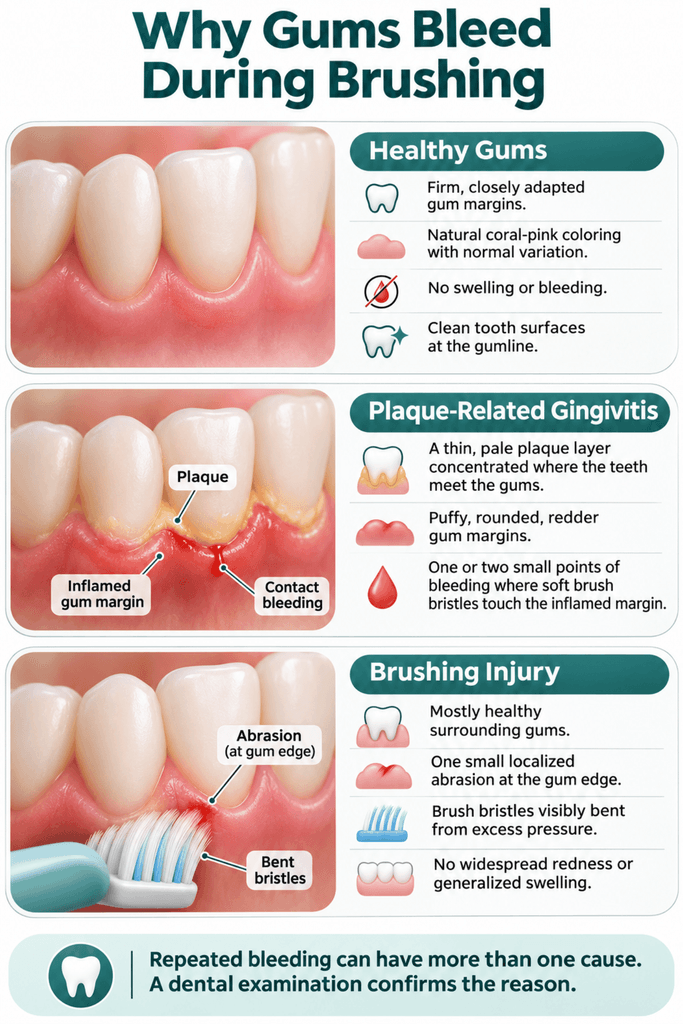
Brushing can also cause bleeding when you press too hard or use firm, worn bristles. The location and pattern offer useful clues: trauma may affect one spot, while gum inflammation often appears along several areas of the gumline. However, appearance alone cannot confirm the cause.
Plaque Buildup and Gingivitis
Plaque is a sticky layer of bacteria that forms on teeth throughout the day. When it stays near the gum line, the gums may become inflamed. This early stage of gum disease is called gingivitis.
Common changes include:
- Bleeding During Cleaning: Inflamed gums may bleed when you brush or floss, even with light pressure.
- Red or Swollen Gums: Healthy gums are usually firm. Gingivitis can make them look puffy, smooth, or darker red than usual.
- Gum Tenderness: Some people notice soreness, but gingivitis can also develop without pain.
- Persistent Bad Breath: Bacteria and plaque around the teeth and gums may contribute to bad breath or an unpleasant taste.
- Tartar Formation: Plaque that is not removed can harden into tartar, also called calculus. A dentist or dental hygienist must remove tartar during a professional dental cleaning.
Gingivitis can often be reversed with early care, but if left untreated, it may progress to periodontitis and damage the tissues and bone supporting the teeth. Professional cleaning, effective daily brushing, and interdental cleaning are usually central to care.
Brushing Too Hard or Using Firm Bristles
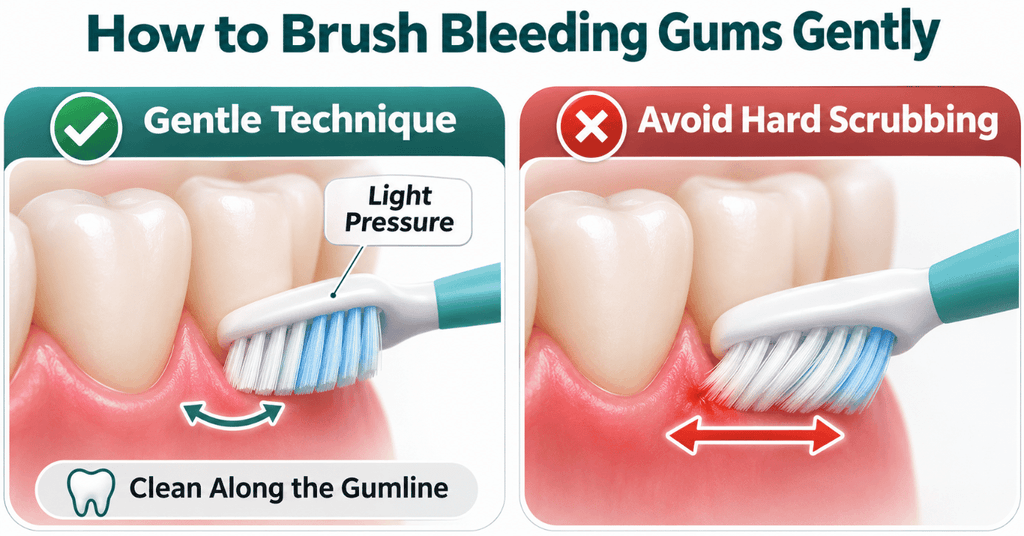
Hard scrubbing can scrape or irritate the thin edge of gum tissue. You may notice bleeding in the same area after brushing, along with tenderness or a small abrasion. Frayed bristles, a sudden change in technique, or pressing an electric toothbrush firmly against the gums may have the same effect.
Use a soft-bristled brush and let the bristles do the cleaning. Small, controlled movements are more effective than forceful back-and-forth scrubbing. The American Dental Association’s toothbrush recommendations support brushing for two minutes twice a day with soft bristles.
Starting or Restarting Interdental Cleaning
If you have just started flossing after a long break, inflamed gums may bleed when plaque is disturbed. Continue cleaning between the teeth once a day, but guide the floss gently along each tooth instead of snapping it into the gums. Bleeding should begin to settle as the inflammation improves; repeated or worsening bleeding needs a dental check. The ADA’s guidance on floss and interdental cleaners explains why daily cleaning between teeth matters.
Other Dental Causes
Not every case of gum bleeding is simple gingivitis. A problem affecting one tooth, a dental restoration, or deeper supporting tissues may cause similar symptoms.
- Tartar Buildup: Hardened deposits create a rough surface that holds more plaque and keeps the nearby gums inflamed.
- Periodontitis: If gum disease advances, the gums can pull away from the teeth and form deeper pockets. Bone and tissue support may be lost over time, sometimes leading to loose teeth and eventual tooth loss.
- Trapped Food: Food caught below the gumline or between tightly spaced teeth can irritate one small area.
- Dental Appliances or Restorations: A rough filling, poorly fitting denture, crown edge, orthodontic appliance, or other dental work may trap plaque or rub against the gums.
- Tooth or Gum Infection: Localized swelling, pain, pus, a bad taste, or pain when biting may point to an infection that needs prompt treatment.
Bleeding that repeatedly comes from the same spot should be examined, especially if careful cleaning does not improve it.
Medications and General Health Factors
Dental causes are more common, but medicines and health conditions can affect how easily the gums bleed or how well they heal.
- Pregnancy-Related Changes: Hormonal changes can make the gums more sensitive to plaque. Bleeding does not mean dental care should be delayed; prevention and necessary dental treatment are considered safe during pregnancy.
- Blood-Thinning Medicines: Anticoagulant and antiplatelet medicines can make bleeding easier to notice or harder to stop. Do not change or stop a prescription without guidance from the clinician who prescribed it. The ADA’s guidance on anticoagulant and antiplatelet medicines explains how dental teams manage these medicines safely.
- Diabetes: Poorly controlled diabetes is linked with a greater risk of gum disease and may make healing more difficult.
- Nutritional Problems: Severe vitamin deficiencies can contribute to gum changes, but they are not the usual explanation for isolated bleeding during brushing.
- Bleeding Disorders: Frequent nosebleeds, unexplained bruising, bleeding elsewhere, or gum bleeding without contact may require medical assessment.
Tell your dentist about your medicines, supplements, pregnancy, medical conditions, and any recent health changes. These details help separate a dental problem from one that may need medical care.
Is Bleeding From Gums When Brushing Normal?
Healthy gums should not regularly bleed during gentle brushing. One small spot after accidental injury may settle, but repeated, widespread, or spontaneous gum bleeding deserves attention.
| Bleeding Pattern | What It May Suggest | What to Do |
|---|---|---|
| A small spot after hard brushing | Minor surface irritation or brushing trauma | Switch to soft bristles, reduce pressure, and monitor the area |
| Bleeding along several parts of the gumline | Plaque-related inflammation or gingivitis | Improve daily cleaning and arrange a dental check if it continues |
| Bleeding from the same tooth or restoration | Trapped plaque, a rough edge, local infection, or another nearby problem | Have the specific area examined |
| Bleeding every time you brush or floss | Ongoing inflammation, tartar, or gum disease | Schedule a dental appointment |
| Bleeding without brushing | More significant inflammation, injury, medicine effects, or a health problem | Contact a dentist or healthcare professional |
| Heavy bleeding that will not stop | Significant injury or a possible medical problem | Seek urgent care |
The amount of blood does not always show how advanced a problem is. Smoking, certain medicines, and individual tissue responses can change how much the gums bleed. Frequency, location, other symptoms, and a professional examination give a more useful picture.
What to Do When Your Gums Bleed While Brushing
A small amount of bleeding during brushing usually does not require panic, but it should change how you care for and monitor your gums.
- Rinse Gently: Spit out the toothpaste and blood. Avoid forceful rinsing or repeatedly touching the area to see whether it still bleeds.
- Continue Gentle Cleaning: Use a soft-bristled toothbrush and light pressure. Clean the teeth and along the gumline rather than avoiding the area completely.
- Check Your Technique: Hold the bristles at an angle toward the gumline and use small, controlled movements. Do not scrub horizontally with heavy pressure.
- Clean Between Your Teeth: Use floss, an interdental brush, or another tool recommended for your teeth. Move it gently so it does not cut into the gum.
- Watch the Pattern: Note whether bleeding affects one spot or several areas, happens every day, or occurs without brushing. Also look for swelling, recession, pain, pus, bad breath, or loose teeth.
- Arrange Professional Care When Needed: Schedule an appointment if the bleeding keeps returning, does not improve with gentle daily care, or appears with other gum changes.
Should You Keep Brushing Bleeding Gums?
In most cases, yes. Stopping brushing allows more plaque to remain at the gumline, which can make inflammation worse. Use gentle pressure, a soft brush, and careful movements rather than skipping the bleeding area.
The advice changes if there is a visible cut, recent oral surgery, or a specific instruction from your dentist. If brushing produces sharp pain, fresh injury, or bleeding that is difficult to control, stop irritating that spot and seek professional advice.
What Should You Avoid?
Protect irritated gums while still removing plaque effectively.
- Do Not Scrub Harder: Extra pressure does not clean better and may injure the gums or contribute to recession.
- Do Not Stop All Cleaning: Avoiding the gumline can leave the main source of inflammation in place.
- Do Not Snap Floss: Guide it between the teeth, curve it around one tooth, and move it gently below the gum edge.
- Do Not Scrape Away Tartar Yourself: Household tools and dental picks can cut the gums, damage enamel, or push deposits farther below the gumline.
- Do Not Keep Testing the Area: Repeatedly pressing, brushing, or picking at one spot can restart bleeding.
- Do Not Depend on Mouthwash Alone: A rinse may support a care plan, but it cannot remove tartar or replace brushing, interdental cleaning, and professional treatment.
- Do Not Use Strong Antiseptics Without Guidance: Some products can irritate oral tissues or have side effects when used incorrectly.
How Long Should Bleeding Gums Take to Improve?
The timeline depends on the cause. A small brushing injury may settle quickly once you reduce pressure. Plaque-related inflammation often takes several days of effective, gentle cleaning to show noticeable improvement, and full improvement may take longer.
Look for a steady reduction in how often and how much your gums bleed. Schedule a dental appointment if there is no clear improvement after about one to two weeks, or sooner if the bleeding is frequent, worsening, spontaneous, or accompanied by swelling, pain, pus, recession, or loose teeth. Do not wait for a set deadline when symptoms concern you.
When to See a Dentist About Bleeding Gums
Recurring bleeding is a good reason to schedule a dental checkup, even when it does not hurt. Gum disease can progress with few obvious symptoms, and early care is usually simpler than treatment after supporting tissue has been damaged.
Schedule a dental appointment if:
- Bleeding Keeps Returning: Your gums bleed during routine brushing or flossing on several days.
- The Gums Look Inflamed: You notice redness, swelling, tenderness, or a shiny, puffy appearance.
- One Area Continues to Bleed: The same tooth, crown, bridge, or implant is repeatedly affected.
- You Have Persistent Bad Breath: Bad breath or a bad taste continues despite regular oral hygiene.
- Your Gums Are Receding: Teeth look longer, or the roots have become more visible or sensitive.
Ask for a prompt dental appointment if:
- There Is Pus or Marked Swelling: These changes may suggest an infection.
- Chewing Hurts: Pain when biting can come from a tooth, gum, or supporting-tissue problem.
- A Tooth Feels Loose: Adult teeth should not become newly mobile without evaluation.
- Symptoms Are Worsening Quickly: Rapid change may require earlier assessment.
- You Have a Health Risk: Pregnancy, diabetes, immune-system problems, bleeding disorders, or blood-thinning medicines may affect the care plan.
When Bleeding May Need Urgent Help
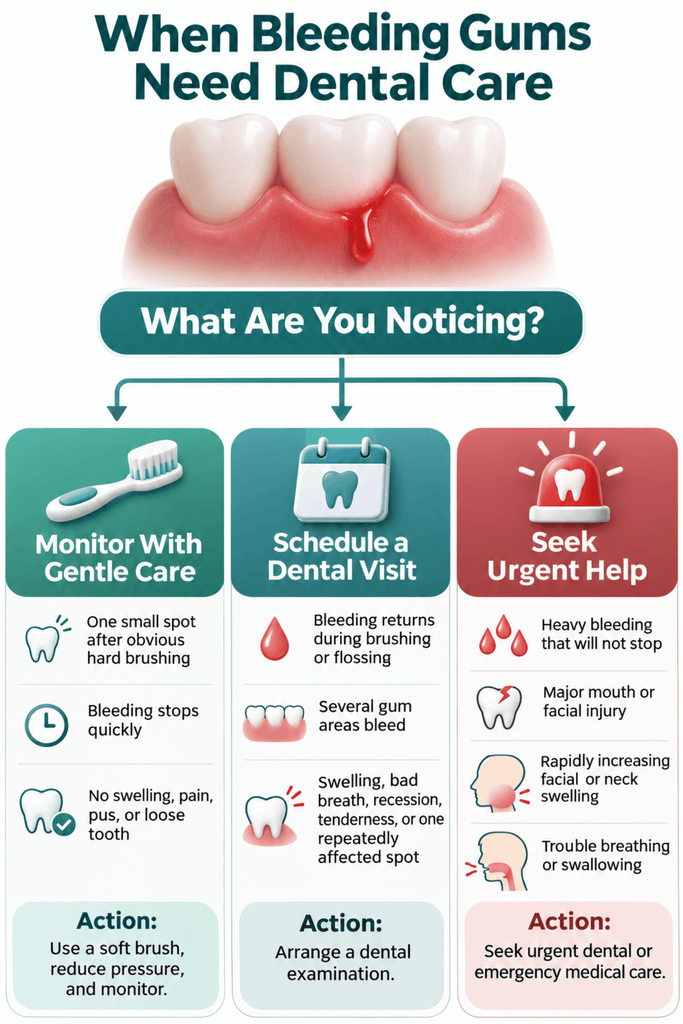
Heavy mouth bleeding, major injury, or swelling that affects breathing or swallowing is not routine gum bleeding.
Seek urgent dental or medical help for:
- Bleeding That Will Not Stop: Apply gentle pressure with clean gauze. Seek urgent care if bleeding remains heavy or uncontrolled.
- Major Mouth or Facial Trauma: An injury may damage teeth, bone, or deeper tissues even when the outside looks minor.
- Severe or Rapidly Increasing Swelling: Swelling around the mouth, jaw, face, or neck can signal a spreading infection.
- Trouble Breathing or Swallowing: Call 911 or your local emergency number.
- Bleeding With Other Unusual Symptoms: Gum bleeding combined with unexplained bruising, repeated nosebleeds, blood in urine or stool, faintness, or marked weakness needs medical evaluation.
MedlinePlus guidance on recognizing a medical emergency lists uncontrolled bleeding and breathing problems among signs that require immediate help.
How a Dentist Finds the Cause
A dentist looks beyond the presence of blood. The goal is to identify where the bleeding starts, what is irritating the tissue, and whether the bone and other structures supporting the teeth remain healthy.
- Review Your Symptoms: The dentist will ask when the bleeding began, how often it occurs, whether it affects one area, and whether you have pain, swelling, bad breath, or loose teeth.
- Discuss Your Health History: Bring a current list of medicines and supplements. Mention pregnancy, diabetes, tobacco use, recent illness, easy bruising, and other bleeding symptoms.
- Examine the Teeth and Gums: The dentist or dental hygienist will look for plaque, tartar, gum redness, recession, dental decay, infection, and problems with restorations or appliances.
- Measure the Gum Pockets: A small periodontal probe measures the spaces between the teeth and gums and checks how the tissue responds to gentle contact.
- Use X-Rays When Appropriate: Dental X-rays may show bone loss, hidden tartar, infection, or another problem that cannot be seen during a visual examination.
If the dental findings do not fully explain the bleeding, the dentist may recommend that you speak with your physician. Medical testing is based on your symptoms and health history rather than ordered for every person with bleeding gums.
How Bleeding Gums Are Treated
Treatment targets the cause, not the blood itself. Better brushing may be enough when bleeding gums result from excess pressure, but plaque, tartar, infection, or deeper gum disease needs a different approach.
A dentist may combine professional cleaning with personalized home-care instruction and follow-up. If medicine or a health condition contributes to the bleeding, dental and medical professionals may coordinate care.
Treatment for Gingivitis
Gingivitis care aims to remove plaque and tartar and make daily cleaning more effective. The exact plan depends on how much inflammation and buildup are present.
- Professional Dental Cleanings: A dentist or dental hygienist removes plaque and tartar from areas that a toothbrush and floss cannot clean.
- Brushing Instruction: Small changes in brush angle, pressure, and timing can improve plaque removal without harming the gums.
- Daily Interdental Cleaning: Floss or another correctly sized interdental cleaner removes plaque between teeth.
- Risk-Factor Control: Tobacco cessation and better diabetes control can support gum health.
- Follow-Up: The dental team checks whether bleeding and swelling are improving and whether deeper periodontal care is needed.
Treatment for Periodontitis or Infection
Periodontitis affects the tissues and bone that hold teeth in place. Treatment may include cleaning below the gumline, often called scaling and root planing, followed by reassessment and long-term periodontal maintenance. Some cases need additional procedures or referral to a periodontist.
The European Federation of Periodontology’s guideline for stages I–III periodontitis uses a stepwise approach based on the patient’s diagnosis and response to care. A localized infection may instead require treatment of the affected tooth or gum area; antibiotics are not an automatic treatment for every case of bleeding.
Care for Medication- or Health-Related Bleeding
Tell both your dentist and physician about bleeding that may be related to medicine or a medical condition. They can decide whether testing, treatment changes, or added precautions are needed. Never stop an anticoagulant, antiplatelet medicine, or other prescription on your own, because the reason you take it may carry a greater health risk than the gum bleeding.
How to Help Prevent Gum Bleeding
Prevention focuses on controlling plaque without injuring the gums. A consistent routine matters more than aggressive cleaning.
- Brush Twice Daily: Brush your teeth twice a day for about two minutes using fluoride toothpaste, a soft-bristled toothbrush, and gentle pressure.
- Clean Between Teeth Daily: Choose floss, an interdental brush, or another tool that fits safely between your teeth.
- Replace Worn Brushes: Change the brush or powered-brush head when the bristles become bent or frayed.
- Keep Regular Dental Visits: Your dentist can recommend a checkup and cleaning schedule based on your gum health and risk factors.
- Avoid Tobacco: Smoking increases the risk and severity of gum disease and can reduce healing after treatment.
- Manage Health Conditions: Follow your medical care plan for diabetes and other conditions that may affect oral health.
- Report New Bleeding: Tell your dentist if gum bleeding begins after a new medicine, during pregnancy, or around recent dental work.
Common Questions About Bleeding Gums
Why Do My Gums Bleed Even Though I Brush Every Day?
Daily brushing helps only when the bristles reach the gumline and all tooth surfaces with the right pressure. Plaque may remain between teeth, behind the back teeth, or around crowded areas. Tartar, ineffective technique, gum disease, medicines, and health factors can also cause bleeding despite daily brushing.
Why Does the Gum Around One Tooth Bleed?
Bleeding around one tooth may come from trapped food, localized plaque, a rough filling or crown edge, brushing injury, decay near the gumline, or infection. Clean the area gently, but do not dig beneath the gum. If the same spot continues to bleed, have a dentist examine it.
Can Gums Bleed Without Hurting?
Yes. Gingivitis and even more advanced gum disease may cause little or no pain. Bleeding, redness, swelling, recession, or persistent bad breath can therefore matter even when the teeth and gums feel comfortable. Arrange a checkup if painless bleeding keeps returning.
Is Gum Bleeding Normal After a Dental Cleaning?
Gums that were already inflamed may feel tender or bleed slightly after a cleaning, especially when tartar was removed from below the gumline. The bleeding should lessen rather than become heavier. Contact the dental office if it continues, worsens, or appears with increasing pain, swelling, fever, or uncontrolled bleeding.
Why Do My Gums Bleed Around a Crown, Bridge, or Implant?
Plaque and food can collect around restoration edges or beneath a bridge. An overhanging edge, loose crown, poor fit, or inflammation around an implant can also cause localized bleeding. Because implants and restored teeth need healthy supporting tissue, repeated bleeding around them should be checked rather than managed with harder brushing.
What Does Bleeding From a Child’s Gums While Brushing Mean?
Plaque-related inflammation and rough brushing are common possibilities. Erupting teeth or a small mouth injury may also make one area sensitive. Use a child-sized soft brush and gentle pressure. Arrange a dental visit if bleeding returns, the gums are painful or swollen, or the child has fever, facial swelling, or trouble eating.
Can Gums Bleed More After Quitting Smoking?
They can. Smoking may reduce visible redness and bleeding by changing the gum tissue’s blood-vessel and inflammatory responses. After quitting, bleeding may become more noticeable for a time as those responses recover. This does not mean quitting harmed your gums, but it may reveal inflammation that needs care.
The Bottom Line
Bleeding when brushing often points to plaque-related gum inflammation, but excess pressure, tartar, dental problems, medicines, and health conditions can also contribute. Keep cleaning gently with a soft brush and clean between your teeth instead of ignoring the bleeding area.
Schedule a dental appointment if the bleeding persists, keeps returning, occurs without brushing, or comes with swelling, recession, bad breath, pain, pus, or loose teeth. Seek urgent help for uncontrolled bleeding, major trauma, severe swelling, or difficulty breathing or swallowing.
