Tooth decay, often called rotten teeth, is one of the most common dental problems affecting both children and adults. It begins quietly; bacteria in your mouth break down sugars from food and produce acids that wear away your tooth enamel. Over time, this leads to cavities, pain, and even tooth loss if left untreated.
Rotten teeth don’t happen overnight. The decay process progresses in stages, starting with minor enamel demineralization and potentially ending with an infected pulp or abscess. Whether it’s a baby tooth or a permanent tooth, neglecting proper dental care allows plaque and bacteria to damage deeper layers of the tooth. Recognizing early signs of tooth decay, like sensitivity, discoloration, or bad breath, can help you prevent serious complications.
In this post, we’ll explain what causes rotten teeth, how to identify the symptoms early, available dental treatments, and the best prevention tips to keep your smile healthy and strong.
What Are Rotten Teeth?
Rotten teeth refer to teeth that have undergone severe decay due to the destruction of tooth enamel and deeper layers by bacterial acids. This decay happens when food particles and sugar remain on the teeth, feeding harmful bacteria that produce acid. Over time, these acids erode the enamel, spread into the dentin, and may eventually reach the tooth’s pulp. Rotten teeth are not just a cosmetic issue; they can cause significant pain, infection, and tooth loss if left untreated. They represent the advanced stage of dental decay, where much of the natural tooth structure has been destroyed.
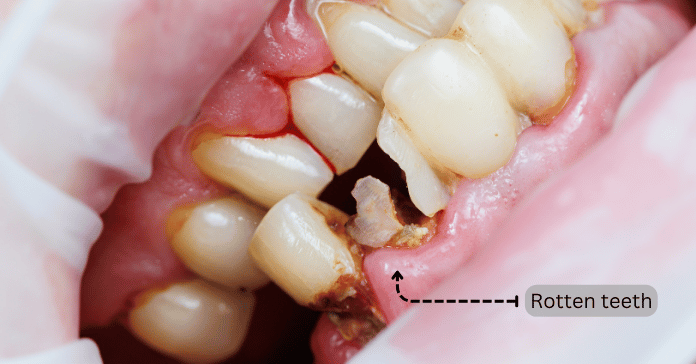
Stages of Tooth Decay
Tooth decay progresses through several stages, beginning with the demineralization of enamel and advancing to pulp infection and possible tooth loss. In the early stage, minerals are lost from the enamel due to acid attacks. As decay deepens, it penetrates the dentin, leading to cavities and tooth sensitivity. Without dental treatment, bacteria reach the pulp, the center of the tooth containing nerves and blood vessels, causing infection, abscess formation, and severe tooth pain. If untreated, the decay can spread to the surrounding teeth and even lead to systemic infections.
Early Stage of Tooth Decay
The earliest stage of decay shows up as white spots or mild discoloration on the enamel surface. You may also notice mild sensitivity to cold foods or sweets. At this point, the damage can be reversed with proper dental care. Fluoride treatment can help remineralize weakened enamel and restore lost minerals. If your enamel is weakened but not yet damaged, simple lifestyle changes can help reverse tooth decay and restore your smile’s natural strength. Regular brushing, flossing, and using fluoride toothpaste at least twice daily can prevent this early stage from progressing.
Advanced Decay and Infection
As decay advances beyond the enamel and dentin, the tooth becomes increasingly painful and sensitive. When bacteria reach the pulp, inflammation and infection occur, often leading to a severe toothache or a tooth abscess. Pain while chewing or visible dark spots on your back teeth may be early signs of cavities in molars that need prompt dental evaluation.
In this stage, over-the-counter pain relievers only provide temporary relief. Without root canal treatment or tooh extraction, the infection may spread to surrounding tissues, causing swelling, gum pain, and even bone damage. Immediate dental intervention is necessary to save the tooth and protect overall oral health.
Causes of Rotten Teeth
Rotten teeth develop over time due to a combination of poor hygiene, unhealthy diet, and neglect. The most common causes include:
- Poor Oral Hygiene: Infrequent brushing and flossing allow plaque to collect around the teeth and gums, leading to acid buildup and decay.
- Sugary and Starchy Diet: Frequent consumption of sweets, soda, and snacks provides fuel for bacteria that cause tooth decay.
- Dry Mouth: Reduced saliva flow limits the mouth’s natural ability to neutralize acids and wash away bacteria.
- Bacterial Plaque: The sticky film on your teeth contains bacteria that attack enamel and cause tooth rot.
- Lack of Fluoride: Without fluoride, whether from toothpaste or drinking water, the teeth lose the ability to remineralize and resist decay.
- Neglecting Dental Visits: Skipping professional cleanings allows minor decay to worsen into severe dental caries or tooth infection.
Symptoms of Rotten Teeth
Rotten teeth often show several warning signs. Early detection helps prevent the need for major dental treatment. Common symptoms include:
- Tooth Sensitivity: Pain when eating hot, cold, or sweet foods.
- Dark Spots or Holes: Visible discoloration or cavities in the enamel or dentin.
- Bad Breath (Halitosis): If you notice a persistent foul odor coming from your mouth, it could be due to a tooth decay smell caused by bacteria breaking down tooth enamel.
- Pain While Chewing: Discomfort or pressure when biting down on food.
- Gum Swelling or Redness: Inflammation around the affected tooth.
- Tooth Pain or Throbbing: A constant or sharp ache that worsens at night.
- Loose or Damaged Teeth: In severe decay, teeth may become weak and mobile.
When to See a Dentist?
You should visit a dentist as soon as you notice pain, sensitivity, or visible signs of tooth decay. Early diagnosis allows your dentist to restore the tooth before the damage becomes irreversible. Delaying treatment can result in infection, abscess formation, and eventual tooth loss. Regular dental checkups every six months help catch problems early and keep your oral health in top condition.
How to Fix Rotten Teeth?
Treatment for rotten teeth depends on how far the decay has progressed. Dentists evaluate the damage and recommend appropriate procedures to restore or replace the affected tooth.
- Fluoride Treatment: Strengthens weakened enamel in the earliest stage of decay.
- Dental Fillings: Used to remove decayed portions and restore tooth structure.
- Dental Crowns: Protects a tooth that has lost a significant amount of structure.
- Root Canal Treatment: Removes infected pulp and treat tooth abscess to save the natural tooth.
- Tooth Extraction: Necessary if the tooth cannot be restored due to severe rot.
Early intervention not only saves your tooth but also prevents pain, infection, and future dental complications. If you’re feeling sharp pain or sensitivity when eating, you might need quick hole in tooth pain relief, such as over-the-counter pain relievers, before your dentist can treat the cavity properly.
Dental Fillings and Crowns
For moderate decay, the dentist removes decayed areas and fills the cavity with composite resin or amalgam material. When a large portion of the tooth is damaged, a dental crown may be placed to restore strength, shape, and appearance. Crowns act as a protective cover, allowing the tooth to function normally and preventing further decay.

Root Canal Treatment for Severe Decay
When bacteria reach the pulp, a root canal treatment becomes necessary. The dentist removes the infected pulp tissue, disinfects the root canal, and seals it to stop the infection from spreading. Afterward, a crown is usually placed over the treated tooth for added protection. This procedure relieves pain, saves the natural tooth, and avoids the need for extraction.
Tooth Extraction and Replacement Options
In cases of severe decay where restoration is not possible, tooth extraction is required. After removal, your dentist may recommend dental implants, bridges, or dentures to replace the missing tooth. These options help restore your ability to chew properly and maintain the alignment of surrounding teeth, preserving both function and appearance.
Rotten Teeth in Children
Baby bottle tooth decay is a common problem among young children. It occurs when a child’s teeth are frequently exposed to sugary liquids, such as milk or juice, especially during sleep. This leads to rapid decay of the primary teeth, often affecting the front teeth first. Parents should clean their baby’s gums with a soft cloth after feeding, avoid putting a child to bed with a bottle, and schedule regular dental visits to protect their child’s oral health.
Can Rotten Teeth Be Fixed Naturally?
While no natural method can reverse advanced decay, good oral hygiene and fluoride use can remineralize early enamel lesions. Brushing your teeth at least twice daily, flossing to remove food debris, and using fluoride toothpaste or mouthwash help prevent decay from progressing. However, once a cavity forms, only a dentist can repair the damage effectively.
The Connection Between Rotten Teeth and Overall Health
Untreated tooth decay doesn’t just harm your mouth, it can affect your entire body. Bacteria from infected or rotten teeth may spread through the bloodstream, increasing the risk of gum disease, heart disease, and other systemic infections. Chronic dental infections can also weaken your immune system. Maintaining dental hygiene supports both oral and overall health.
How to Prevent Tooth Decay and Rotten Teeth
Good habits and consistent care are key to preventing rotten teeth. Follow these tips to protect your smile and dental health:
- Brush and Floss Daily: Clean your teeth at least twice a day with fluoride toothpaste and floss once daily.
- Limit Sugary Foods and Drinks: Reduce the frequency of sugar intake to cut off bacteria’s food source.
- Use Fluoride Products: Choose fluoride toothpaste or get professional fluoride treatments from your dentist.
- Regular Dental Visits: Schedule checkups every six months for cleaning and early detection of decay.
- Drink Plenty of Water: Helps wash away food particles and maintain saliva flow.
- Consider Dental Sealants: Sealants protect the chewing surfaces of back teeth from bacteria and decay.
By maintaining proper dental hygiene, eating a balanced diet, and visiting your dentist regularly, you can prevent tooth rot, preserve healthy teeth and gums, and enjoy lifelong oral health.
Conclusion
Rotten teeth are a clear sign that tooth decay has gone beyond the surface, damaging deeper layers of your tooth and threatening your oral health. Understanding the symptoms of tooth decay, such as sensitivity, dark spots, or pain while chewing, allows you to catch tooth problems early and prevent severe infection. Remember that tooth decay is caused by bacteria feeding on sugars, gradually wearing away at the tooth and affecting the deeper layers of your teeth. The goal of treatment is to stop decay, restore tooth structure, and keep your natural teeth healthy and functional.
Neglecting proper care allows decay to spread within the tooth, leading to an infected tooth, pulp inflammation, or even tooth loss. Whether it’s through fluoride treatment, fillings, or root canal therapy, timely dental intervention can save your tooth and protect your smile. Routine teeth cleaning, limiting sugar intake, and using fluoride toothpaste strengthen enamel and remineralize the tooth before damage worsens.
Prevention is always better than cure. Maintaining good dental hygiene, visiting your dentist regularly, and following a balanced diet help keep your teeth strong and cavity-free. If you notice any signs or symptoms of decay, don’t delay; schedule a dental check-up. Taking early action today ensures a healthy mouth, a confident smile, and long-lasting protection against rotten teeth.
