Do your gums bleed when you brush, look slightly red, or feel puffy around the teeth? These changes may point to early-stage gingivitis, the mildest form of gum disease. It usually develops when plaque stays along the gumline and irritates the tissue. At this point, the inflammation is often reversible because the bone and fibers supporting the teeth have not been damaged.
Early gingivitis may cause little or no pain, so it is easy to dismiss. Better daily plaque removal can help, but hardened tartar cannot be brushed away and may require a professional cleaning. A dentist can also check whether the bleeding comes from gingivitis or another condition.
The important step is to act while the problem is limited to the gums. Knowing what normal and inflamed gums look like can help you notice changes sooner, improve your brushing and between-teeth cleaning, and decide when to book an examination. Start by understanding what dentists mean by “early” gingivitis and how it differs from periodontitis.
What Does Early Stage Gingivitis Mean?
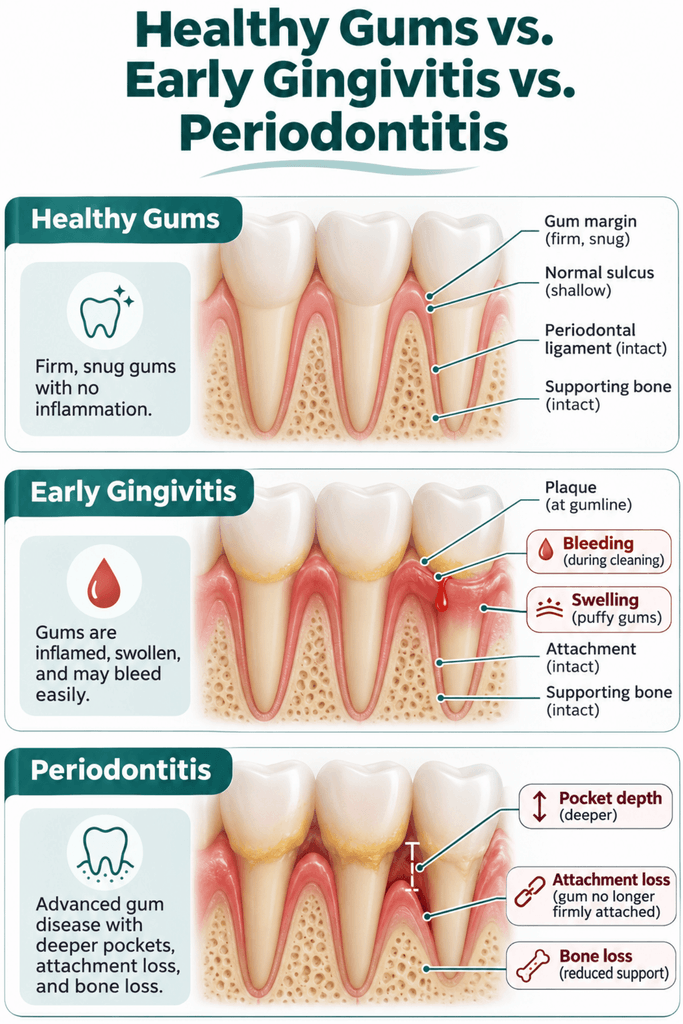
Early-stage gingivitis is mild inflammation limited to the gum tissue around your teeth. Gingivitis does not involve the attachment loss or bone loss seen in periodontitis. This makes gingivitis the earliest and only reversible stage of gum disease. The CDC’s overview of periodontal disease explains these important differences.
“Early stage gingivitis” is a common patient phrase, not a formal disease stage. It should not be confused with Stage I periodontitis, which already involves some loss of the tissues supporting the teeth. A dental examination is the most reliable way to tell them apart.
What Does Early Stage Gingivitis Look and Feel Like?
Early-stage gingivitis can be easy to miss because it often causes little or no pain. Healthy gums may be pink, brown, or naturally dark, depending on your normal pigmentation. Changes in their usual appearance and behavior matter more than one specific color.
Common signs of gingivitis include:
- Bleeding During Cleaning: Your gums may bleed when brushing or flossing, even when you use gentle pressure.
- Redder Gum Margins: The edges around your teeth may look redder or darker than usual.
- Mild Swelling: The gumline may appear puffy, rounded, or enlarged instead of firm and closely fitted around each tooth.
- Tenderness: Your gums may feel mildly sore when touched or cleaned, although many cases remain painless.
- Changed Gum Shape: The small triangles of gum between neighboring teeth may look swollen or less defined.
- Persistent Bad Breath: Plaque and bacteria around the gumline can contribute to an unpleasant smell or taste.
These signs cannot confirm gingivitis on their own. Bleeding, swelling, or redness may also result from brushing injuries, hormonal changes, medication effects, dental infections, or other oral conditions.
What Causes Early Gingivitis?
Plaque is the main cause of common gingivitis. It is a sticky film containing bacteria that constantly forms on the teeth. When plaque remains around the gumline, the body reacts with inflammation, causing the gums to become swollen and more likely to bleed.
Daily oral hygiene can remove soft plaque. However, certain local and health-related factors can make plaque harder to remove or increase the gums’ response to it.
Plaque and Tartar Around the Gumline
Plaque can collect where the teeth meet the gums and in areas that a toothbrush cannot easily reach. If it stays there, bacterial products irritate the gum tissue. Early signs may begin around one tooth before appearing in other parts of the mouth.
Over time, minerals in saliva can harden plaque into tartar, also called dental calculus. Tartar has a rough surface that allows more plaque to collect, but it cannot be removed through brushing or flossing at home. A dentist or dental hygienist must remove it with professional instruments.
Factors That Can Increase Gum Inflammation
Plaque remains the main trigger in most cases, but several factors can increase the risk of gingivitis or make it harder to control:
- Smoking or Tobacco Use: Tobacco changes how the gums respond to plaque and can hide bleeding by reducing blood flow.
- Diabetes: Poorly controlled blood glucose can increase gum inflammation and make periodontal disease harder to manage.
- Hormonal Changes: Puberty, pregnancy, and other hormonal changes may make gum tissue more sensitive to plaque.
- Dry Mouth: Reduced saliva allows plaque and food debris to remain around the teeth more easily.
- Crowded Teeth: Overlapping or rotated teeth may create areas that are difficult to brush and floss.
- Dental Restorations: Rough edges or overhanging fillings can trap plaque close to the gums.
- Certain Medications: Some medicines can cause dry mouth or gum enlargement. Do not stop a prescribed medicine without speaking with the prescribing clinician.
- Inconsistent Oral Care: Missing areas during brushing or rarely cleaning between the teeth gives plaque more time to build up.
Having one of these factors does not mean that you will develop gum disease. It means that your oral care and regular dental assessments may need more attention.
How Dentists Diagnose Early Stage Gingivitis
A dentist or dental hygienist diagnoses gingivitis by examining the gums, teeth, and supporting tissues. The goal is to confirm inflammation and check that there is no attachment or bone loss from periodontitis.
The examination may include:
- Reviewing Your History: The dentist asks when bleeding or swelling began and whether you smoke, have diabetes, are pregnant, or take medications that affect the mouth.
- Examining the Gums: They look for redness, swelling, bleeding, changes in gum shape, recession, and other signs and symptoms.
- Measuring Around the Teeth: A small periodontal probe measures the spaces between the teeth and gums and checks for bleeding.
- Checking Plaque and Tartar: The dentist identifies where deposits are present and whether crowded teeth, dental work, or another local problem is trapping plaque.
- Assessing the Supporting Tissues: Tooth movement, gum attachment, and other findings help the dentist rule out more advanced periodontal disease.
- Taking X-Rays When Needed: Gingivitis affects soft gum tissue and is not usually visible on an X-ray. However, X-rays may be used when bone loss or another dental problem is suspected.
Under the current classification, gingivitis is diagnosed when at least 10% of examined sites bleed during probing, probing depths remain 3 millimeters or less, and there is no attachment or bone loss caused by periodontitis. The SDCEP clinical guidance for diagnosing gingivitis provides further details.
Can Early Stage Gingivitis Be Reversed?
Yes. Early-stage gingivitis is usually reversible because the inflammation has not destroyed the bone or attachment fibers supporting the teeth. Consistent plaque removal allows the gum tissue to heal and become firmer, less swollen, and less likely to bleed.
Reversal is not the same as a permanent cure. Gingivitis can return if plaque builds up again. Home care may be enough when the problem involves removable plaque, but tartar, difficult-to-clean dental work, or persistent inflammation may require professional dental care.
How to Reverse Early Stage Gingivitis Safely
Gingivitis treatment focuses on removing plaque, correcting factors that trap it, and maintaining good oral hygiene. Home care and professional cleaning often work together; neither mouthwash nor home remedies can make up for plaque left around and between the teeth.
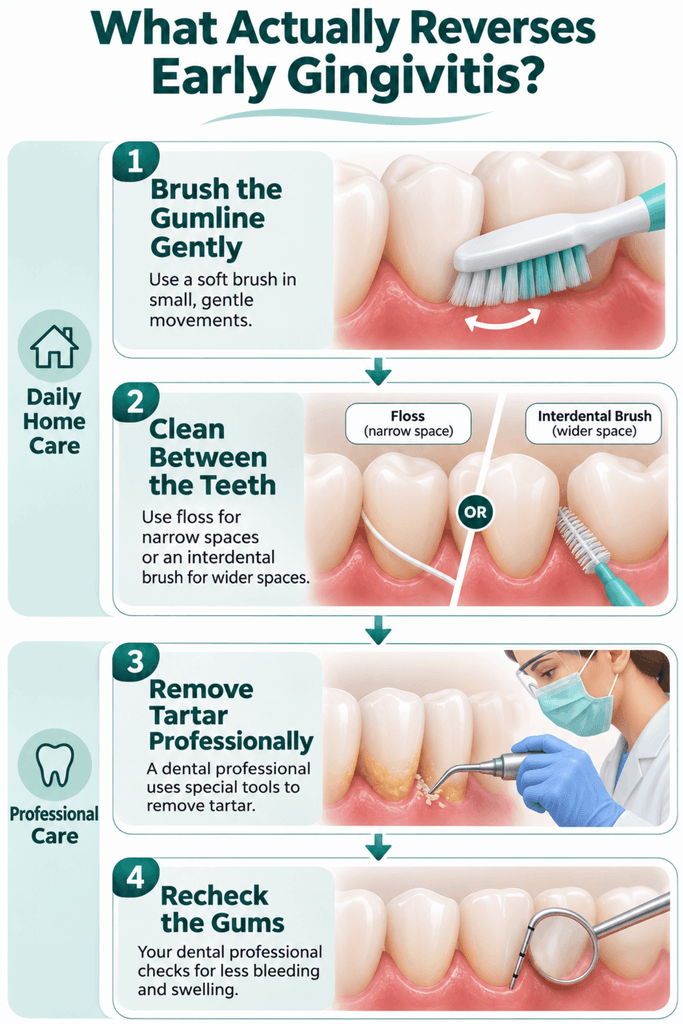
Brush the Gumline Gently
Brush your teeth twice a day for about two minutes using fluoride toothpaste and a soft-bristled toothbrush. The goal is to clean the gumline without scrubbing or injuring the tissue.
- Hold the bristles at a slight angle toward the area where the teeth and gums meet.
- Use gentle, small movements rather than hard side-to-side scrubbing.
- Clean the outside, inside, and chewing surfaces of every tooth.
- Pay extra attention to areas that bleed, but reduce the pressure if brushing hurts.
- Replace the toothbrush or brush head when the bristles become bent or worn.
Do not stop brushing simply because inflamed gums bleed. Avoiding the area allows more plaque to remain and may prolong the inflammation. Heavy pressure is not more effective and may irritate the gums.
Clean Between the Teeth Every Day
A toothbrush cannot fully remove plaque from the spaces between teeth. Clean these areas once a day with a tool that fits your mouth and that you can use correctly.
- Dental Floss: Floss can work well in tight contacts. Curve it around the side of each tooth instead of snapping it into the gums.
- Interdental Brushes: These small brushes can clean wider spaces and may be easier to use around dental work or braces. The brush should fit without forcing the wire against the tooth.
- Water Flossers: A water flosser may help people who struggle with string floss, although it does not replace toothbrushing.
- Floss Holders or Picks: These may improve access for people with limited hand movement. Use them gently to avoid cutting the gum tissue.
A dentist or dental hygienist may recommend different tools for different areas of your mouth. Mild bleeding can occur when you first begin cleaning an inflamed area, but the bleeding should improve as the gum health improves.
Use Mouthwash as an Addition, Not a Replacement
Some therapeutic mouthwashes can help reduce plaque and gingivitis when used with brushing and interdental cleaning. Cosmetic rinses may only freshen the breath and may not treat the cause of gum inflammation.
The American Dental Association’s evidence review of therapeutic mouthrinses states that mouthwash does not replace mechanical plaque removal. Some medicated products, particularly chlorhexidine, can also cause staining, altered taste, or increased tartar buildup. Use prescription rinses only as directed by a dental professional.
Get a Professional Cleaning When Tartar Is Present
A routine dental cleaning removes plaque and tartar from tooth surfaces and areas near the gumline. The dentist or dental hygienist may also show you which areas you are missing and help you improve your brushing or flossing technique.
Early gingivitis does not automatically require deep cleaning, antibiotics, or periodontal surgery. Those treatments are intended for specific findings and more advanced disease. Never try to scrape tartar from your teeth with sharp home tools because you could damage the gums, enamel, or dental work.
How Long Does Early Stage Gingivitis Take to Improve?
Bleeding, redness, and swelling may begin to improve within several days to a few weeks after plaque is controlled and tartar is professionally removed when necessary. The exact time varies, so a fixed recovery date cannot be guaranteed.
During recovery, look for gradual changes:
- Less Bleeding: The gums should bleed less often during gentle brushing and interdental cleaning.
- Reduced Swelling: Puffy gum margins should begin to look firmer and fit more closely around the teeth.
- Less Tenderness: Mild soreness should decrease as inflammation settles.
- Improved Breath: Bad breath related to plaque may improve with more effective cleaning.
- Easier Cleaning: As swelling decreases, cleaning around the gumline may become more comfortable.
If your symptoms do not improve after consistent oral care, arrange a dental examination. Tartar, an ineffective cleaning technique, a rough restoration, medication effects, periodontitis, or another condition may be involved.
Early Stage Gingivitis vs. Periodontitis
Gingivitis and periodontitis are related, but they do not cause the same level of damage.
| Feature | Early Stage Gingivitis | Periodontitis |
|---|---|---|
| Tissues Affected | Gum tissue around the teeth | Gums, periodontal ligament, and supporting bone |
| Common Signs | Bleeding, redness, mild swelling, tenderness, or bad breath | Bleeding, deeper pockets, chewing discomfort, recession, shifting or loose teeth, and eventually tooth loss |
| Attachment Loss | No attachment loss caused by periodontitis | Attachment loss is present |
| Bone Loss | No periodontal bone loss | Bone loss is present |
| Reversibility | Usually reversible with effective plaque control and professional care when needed | Lost attachment and bone cannot simply be reversed, although treatment can control the disease |
| Usual Care | Improved home cleaning and removal of plaque and tartar | Professional periodontal treatment followed by ongoing maintenance |
Gingivitis does not always progress to periodontitis, but untreated inflammation increases concern about future disease. Symptoms alone cannot show whether bone loss has occurred. A periodontal examination is needed to make that distinction.
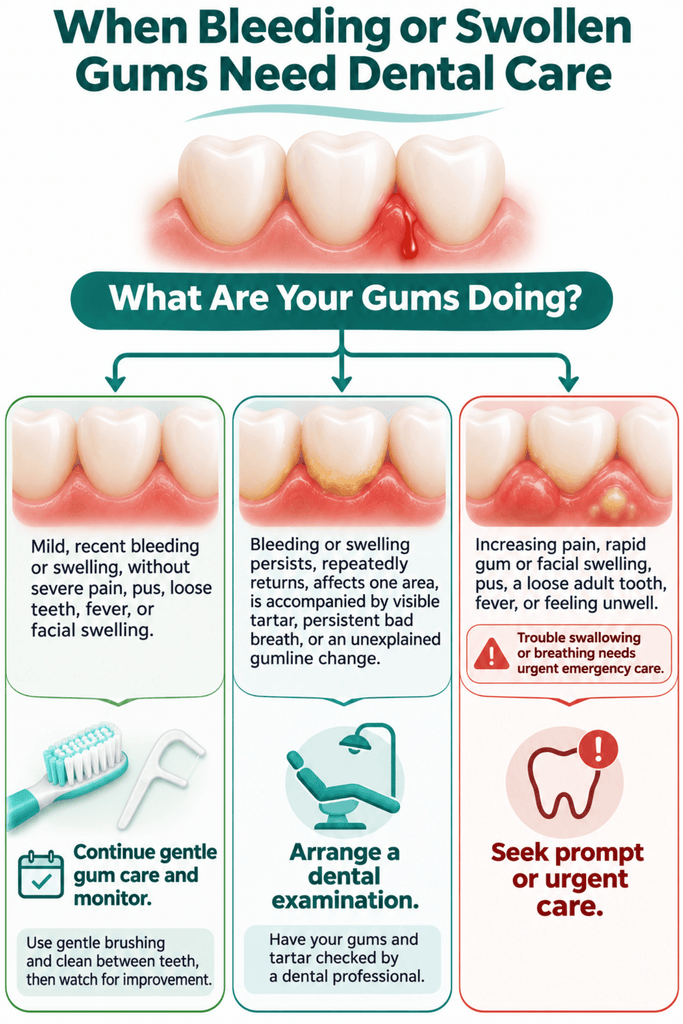
When Bleeding or Swollen Gums Need Dental Care
Mild bleeding caused by early inflammation is not usually an emergency, but it should not be ignored. A dental visit can identify the cause, remove tartar, and check for problems that home care cannot correct.
Arrange a Dental Examination
Book an examination if you notice any of the following:
- Persistent Bleeding: Your gums continue to bleed despite consistent, gentle brushing and daily interdental cleaning.
- Visible Tartar: You see or feel hard deposits that do not come away with normal cleaning.
- Recurring Inflammation: The gums improve and then repeatedly become red, swollen, or tender.
- Changes Around One Tooth: One area remains swollen, painful, or difficult to clean.
- Persistent Bad Breath: The problem continues despite good oral care.
- Gum Recession: A tooth appears longer, or the gumline has moved.
- Important Risk Factors: You smoke, have diabetes, take medicines that affect the gums, or have another condition that may influence gum health.
- Uncertainty About the Cause: You cannot tell whether the changes are gingivitis, an injury, or another dental problem.
Seek Prompt Dental Care
Contact a dentist promptly if you develop:
- Severe or Increasing Pain: Strong or throbbing pain is not typical of simple early gingivitis.
- Marked Swelling: Rapidly increasing gum or facial swelling needs professional assessment.
- Pus or a Gum Bump: These findings may indicate a localized dental or gum infection.
- Loose Adult Teeth: Tooth movement may be associated with injury or loss of supporting tissue.
- A Nonhealing Ulcer: An ulcer or red or white patch that does not heal should be examined.
- Fever or Feeling Unwell: General illness with oral swelling may suggest a spreading infection.
- Trouble Swallowing or Breathing: Seek urgent emergency care rather than waiting for a routine dental appointment.
These signs do not automatically mean that you have advanced gum disease. They can result from several conditions, but they need timely assessment.
How to Prevent Gingivitis From Returning
Healthy gums depend on consistent care after the visible inflammation improves. A few repeatable habits are more useful than occasional aggressive cleaning.
- Brush Twice a Day: Use fluoride toothpaste and clean carefully where each tooth meets the gumline.
- Clean Between Teeth Daily: Use floss, interdental brushes, or another suitable tool to remove plaque a toothbrush cannot reach.
- Attend Regular Dental Visits: Your dentist may recommend checkups and cleanings based on your plaque levels, tartar buildup, medical history, and previous gum problems.
- Avoid Tobacco: Stopping smoking or tobacco use can improve treatment response and reduce the risk of periodontal disease.
- Manage Diabetes: Work with your medical team to control blood glucose and tell your dentist about changes in your health.
- Review Your Medicines: Ask your dentist or prescribing clinician about medicines that cause dry mouth or gum enlargement. Do not stop them on your own.
- Respond to Early Signs: Improve your cleaning and arrange an examination if bleeding or swelling returns or persists.
Frequently Asked Questions
Do Bleeding Gums Always Mean Gingivitis?
No. Gingivitis is a common cause, but gums can also bleed after aggressive brushing, flossing injuries, hormonal changes, or medication effects. Other dental and health conditions may contribute as well. Persistent or unexplained bleeding deserves a dental examination rather than a diagnosis based on one symptom.
Can Early Stage Gingivitis Affect Only One Tooth?
Yes. Localized gingivitis may develop where plaque or trapped food collects around one tooth. Crowding, a rough filling, or another cleaning difficulty may contribute. However, pain, a gum bump, pus, or swelling limited to one area can have another cause and should be examined if it persists.
Can Children and Teenagers Develop Early Gingivitis?
Yes. Plaque-related gingivitis can affect children and teenagers, and hormonal changes during puberty may increase the gums’ response to plaque. Younger children may need help cleaning effectively. The AAPD guidance on periodontal conditions in pediatric patients supports age-appropriate periodontal assessment and care.
Can Braces Cause Early Stage Gingivitis?
Braces do not directly cause gingivitis, but brackets and wires create extra areas where plaque and food can collect. Careful brushing around each bracket and daily cleaning under the wire can reduce this risk. Ask your orthodontist or dental hygienist to demonstrate suitable brushes and flossing aids.
Can Pregnancy Cause Early Stage Gingivitis?
Pregnancy does not create plaque, but hormonal changes can make gum tissue react more strongly to it. This may cause swelling, tenderness, or bleeding. Maintain gentle daily cleaning and tell your dentist that you are pregnant. The ADA’s oral-health guidance for pregnancy explains why preventive dental care remains important during pregnancy.
Is Teeth Whitening Safe With Early Stage Gingivitis?
Whitening products can irritate already inflamed gums, especially if bleaching gel touches the tissue. It is usually sensible to have bleeding or swelling assessed and controlled first. The ADA’s review of tooth-whitening safety recommends evaluating oral health, sensitivity, and existing dental work before bleaching.
Bottom Line
When caught early, gingivitis is usually reversible because the inflammation of the gums has not damaged the supporting bone or tissues. Consistent brushing and flossing at home can remove soft plaque, while hardened tartar requires professional cleaning.
To keep gums healthy, clean gently every day and watch whether bleeding and swelling improve. Gingivitis can progress if inflammation remains uncontrolled, so ask your dentist or dental hygienist for an examination if gingivitis symptoms persist, worsen, or keep returning.
