Do you see a dark spot on a wisdom tooth, or does the very back of your mouth hurt when you chew? Decay in wisdom teeth can cause these changes, but a stain or sore gum can look or feel similar. A dentist can check the tooth and confirm what is going on.
A cavity in a wisdom tooth does not always mean it must come out. A small cavity may be treatable if the tooth is easy to reach and clean. Removal may make more sense if the decay is too deep to repair, the tooth is partly trapped, or it puts the tooth next to it at risk. The right choice depends on an exam and, when needed, an X-ray.
Even if you have little pain, it is best to get a suspected cavity checked before it grows. Decay can develop where you cannot see it, especially between two back teeth. First, it helps to understand what decay means and why it can be easy to miss on a wisdom tooth.
What Is Decay in Wisdom Teeth?
Decay in wisdom teeth is the same tooth decay that can affect any other molar. Plaque, a sticky film of bacteria, collects on the tooth. When the bacteria use sugar from food and drinks, they make acids that weaken enamel, the tooth’s hard outer layer.
At first, the enamel may lose minerals without forming a hole. A dentist may be able to stop or reverse this early change. If the damage continues and a cavity forms, the missing tooth structure will not grow back. The National Institute of Dental and Craniofacial Research explains the difference between early decay and a cavity.
What Are the Signs of a Decayed Wisdom Tooth?
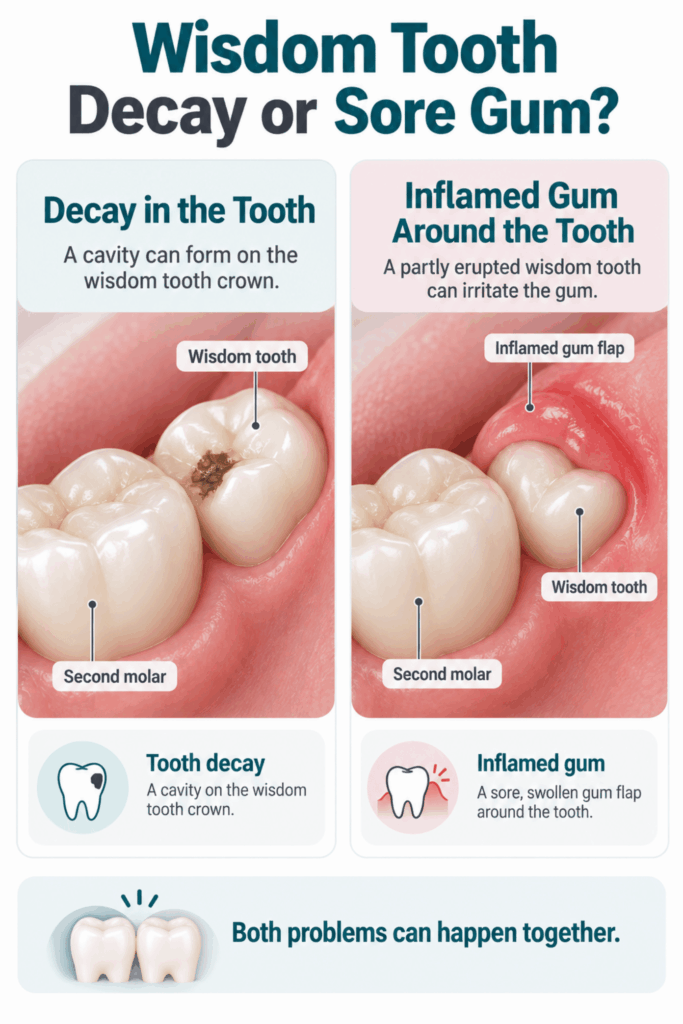
A decayed wisdom tooth may hurt, but it may cause no symptoms at first. You also cannot confirm a cavity from a dark spot alone: stains, trapped food, and problems with the nearby gum can look or feel similar.
Possible clues include:
- A Visible Hole or Rough Area: You may notice a change on the part of the wisdom tooth you can see, though a cavity between teeth may stay hidden.
- A Dark or Pale Spot: A change in color deserves a dental check, but its appearance alone does not show how deep any decay goes.
- Sensitivity: Cold, sweet, or hot foods may bother the tooth. Sensitivity can have other causes, too.
- Pain When Chewing: Biting on the back tooth may become uncomfortable, especially if the tooth is damaged or the surrounding area is inflamed.
- A Tooth That Chips or Breaks: A weakened part of a wisdom tooth may break, though a dentist must check why it happened.
Pain at the back of your mouth could come from the wisdom tooth, the molar in front of it, or the gum around a partly erupted tooth. A dental exam is the way to tell them apart.
Why Do Wisdom Teeth Get Cavities?
Wisdom teeth sit at the very back of the mouth. That location can make it hard to see whether your brush reaches every surface, especially the side facing your cheek and the space behind the second molar.
Several factors can make decay more likely:
- Hard-to-Reach Surfaces: A toothbrush or floss may miss plaque around a wisdom tooth, even when you clean the rest of your teeth well.
- Partial Eruption: A wisdom tooth that does not fully emerge can leave a pocket where food particles and plaque collect, raising the risk of cavities and gum disease.
- An Angled Position: An impacted wisdom tooth may lean toward the molar in front of it, making the space between them difficult to clean.
- Frequent Sugar Exposure: Sipping sweet drinks or snacking often gives plaque bacteria more chances to produce acid.
- Existing Cleaning Difficulties: Tender gums, a limited ability to open wide, or a tooth with an awkward shape can make daily oral hygiene harder.
A fully erupted, well-positioned wisdom tooth can still get a cavity. Its position matters, but so does how easily you can keep it clean over time.
Can Wisdom Tooth Decay Affect the Tooth Next to It?
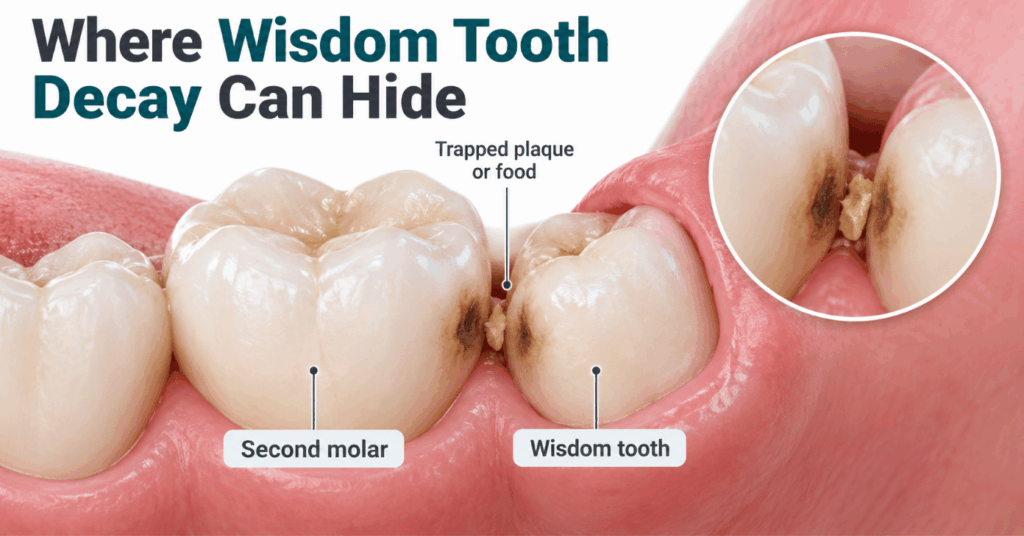
Yes. The second molar, the tooth directly in front of a wisdom tooth (third molar), can develop decay on its back surface. Food and plaque may collect in the narrow space between the two teeth, particularly when a lower wisdom tooth leans forward. A systematic review of decay in second molars beside impacted lower wisdom teeth found that the risk varies with the wisdom tooth’s position.
This does not mean every wisdom tooth will damage its neighbor. It does mean a dentist should examine both teeth. If you feel pain at the very back, the second molar could be the tooth that needs treatment, even when the wisdom tooth looks like the likely cause.
How Does a Dentist Diagnose Decay in a Wisdom Tooth?
A dentist checks more than the spot you can see. The goal is to find out whether decay is present, which tooth it affects, and whether the wisdom tooth can be treated and kept clean.
- Ask About Your Symptoms: The dentist will ask where the pain occurs, what triggers it, and whether you have noticed swelling, a broken edge, or food getting stuck.
- Examine the Teeth and Gums: They will look at the wisdom tooth, the second molar, and the gum around them. They may clean and dry a surface to see it better.
- Take an X-Ray When Needed: An X-ray may help show decay between teeth or reveal how a wisdom tooth is positioned. The dentist chooses the image based on the question they need to answer.
- Discuss What the Tooth Needs: The dentist will consider the depth of decay, the tooth’s position, the nearby molar, and whether a repair would be practical.
A photo taken at home cannot show everything between the teeth or below the gum. The American Dental Association’s guidance on examining teeth and using X-rays to detect decay explains why dentists use findings from more than one source.
What Are the Treatment Options for Decay in Wisdom Teeth?
Treatment depends on whether there is an early change in enamel or a formed cavity, how much sound tooth remains, and whether the wisdom tooth can be reached and kept clean. Decay does not automatically mean wisdom teeth removal, but a repair is not useful if the area will remain impossible to maintain.
Can Early Decay Be Stopped Before a Cavity Forms?
Sometimes. If the enamel has started to lose minerals but has not formed a cavity, a dentist may recommend fluoride and changes to cleaning or eating habits, then monitor the area. This requires a diagnosis: you cannot tell from a spot at home whether the surface is still intact. Once a hole has formed, brushing and fluoride toothpaste cannot rebuild the missing tooth structure.
When Can a Wisdom Tooth Be Filled?
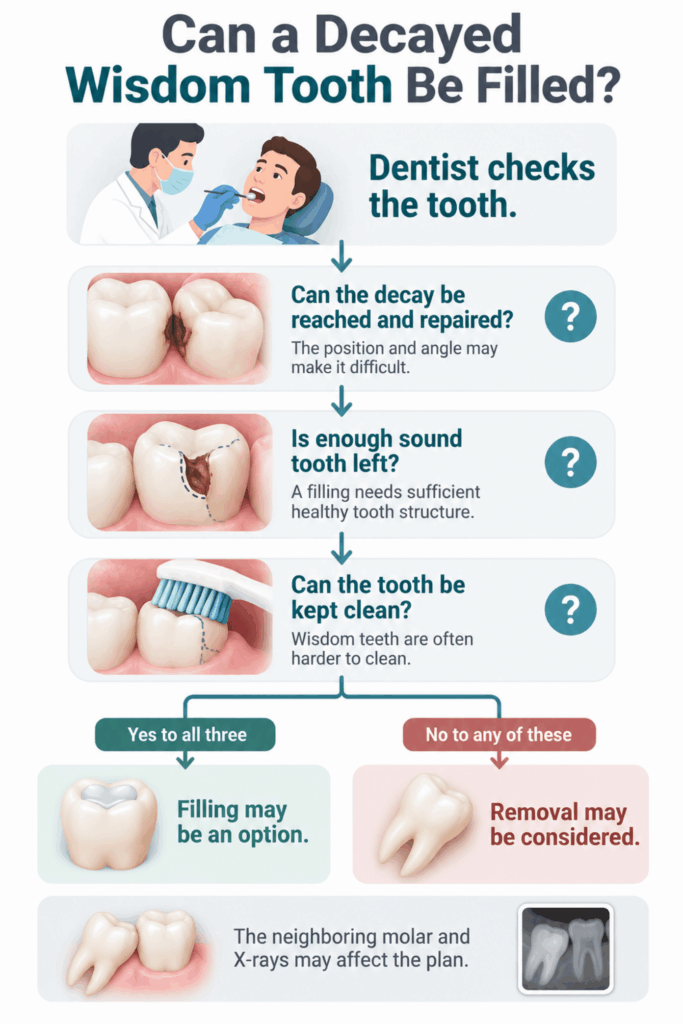
A filling may be an option when the cavity can be reached, enough healthy tooth remains, and the dentist can place a lasting repair. The tooth should also be positioned so you can clean it afterward. A small cavity on a fully erupted wisdom tooth may be straightforward to treat; a similar-sized cavity tucked beneath the gum may not be.
Is Root Canal Treatment Ever an Option?
Yes, in selected cases. If decay has reached the pulp—the soft tissue inside the tooth—root canal treatment may save a wisdom tooth that has a useful position and can be restored afterward. But wisdom teeth can be hard to reach and may have complex roots. The dentist must judge whether treatment and long-term upkeep make sense before recommending it.
When Does Removal Make More Sense?
Removal may make more sense when the decay cannot be repaired, the tooth is partly trapped, or it repeatedly collects food despite careful cleaning. Damage to the second molar can also affect the decision. Before recommending a difficult wisdom tooth extraction, a dentist or oral surgeon weighs those concerns against the risks of oral surgery, especially when a lower wisdom tooth lies close to a nerve. The NICE guidance on removal of impacted wisdom teeth with disease lists decay that cannot be restored among reasons to consider surgery.
How Do Dentists Choose Between Filling and Removal?
A dentist considers whether the tooth can be repaired and remain healthy after treatment. These are the main factors behind that decision:
| Factor | When Filling May Make Sense | When Removal May Make More Sense |
|---|---|---|
| Extent of Decay | Enough sound tooth remains for a reliable repair. | Decay or breakage leaves too little tooth to restore. |
| Tooth Position | The wisdom tooth has fully erupted and sits in a useful position. | The tooth is partly trapped or angled in a way that causes problems. |
| Access and Cleaning | The dentist can reach the cavity, and you can clean the repaired tooth. | The cavity is difficult to treat or the area remains difficult to clean. |
| Second Molar | The neighboring molar is healthy and the space between the teeth can be maintained. | The wisdom tooth’s position contributes to damage or a hard-to-clean area beside the second molar. |
| Removal Risks | Keeping a restorable tooth may be reasonable when extraction has added risks. | The problems caused by keeping the tooth outweigh the assessed risks of removal. |
The table cannot decide treatment on its own. Two people may have cavities of similar size but different tooth positions, nearby-tooth health, or extraction risks. Your dentist can explain which factors matter in your case.
What Can Happen If Wisdom Tooth Decay Is Left Untreated?
A formed cavity does not repair itself. It may grow deeper, make the tooth sensitive or painful, and eventually affect the pulp. If an infection develops, treatment may become more involved. There is no set timeline: a tooth with little pain today may still need care, while a sore area is not always caused by decay.
A hard-to-clean space beside a wisdom tooth may also put the second molar at risk. Having a suspected cavity checked gives the dentist a chance to see which tooth is affected and discuss options before the damage becomes harder to treat.
What Should You Do While Waiting for a Dental Visit?
Home care may ease discomfort and help limit plaque buildup, but it cannot fill a cavity. Schedule an appointment for a dental exam if you suspect decay, even if the tooth does not hurt.
- Clean Gently: Brush the visible wisdom tooth and nearby molar with fluoride toothpaste. Do not dig under a sore gum or force floss into a painful space.
- Notice What Triggers Pain: If a food or drink causes sensitivity, avoid that trigger until the tooth is checked. Try chewing on the other side if biting hurts.
- Keep the Area Free of Loose Food: Rinse gently with water after eating if food collects at the back of your mouth. Rinsing does not replace brushing.
- Tell the Dentist What Has Changed: Mention a new hole, a broken piece, swelling, or pain that is getting worse when you schedule your appointment.
When Should You Seek Prompt or Urgent Care?
A suspected cavity needs a dental assessment, but new signs of infection change how quickly you should seek help.
- Arrange a Dental Appointment: Book an exam for a dark area, possible hole, food trapping, or mild sensitivity, even if you can still chew normally.
- Seek Prompt Dental Advice: Contact a dentist promptly for worsening pain, swelling, pus, a bad taste with pain, fever, or feeling unwell.
- Get Emergency Care: Seek emergency medical help if swelling makes it hard to breathe or swallow, or if swelling in your mouth is rapidly worsening.
These signs do not tell you which tooth is responsible. They tell you when an exam should not wait. The NHS guidance on dental abscess symptoms and emergency signs describes the symptoms that need urgent attention.
What Happens After a Filling or Extraction?
After a filling, keep cleaning the wisdom tooth and the space beside the second molar. The dentist may want to check the area at future visits, particularly if access is tight. Tell them if biting feels uneven or pain persists rather than assuming the filling has settled.
After an extraction, follow the instructions your dentist or oral surgeon gives you for protecting the healing area, eating, and cleaning your mouth. The second molar may also need a separate check or treatment if decay was found there. Recovery advice depends on how the tooth was removed and your individual health.
How Can You Help Prevent More Decay Around Wisdom Teeth?
To protect your oral health, clean the wisdom tooth’s back surfaces and the space beside the second molar without hurting the gum. Ask your dentist or hygienist to show you the area if you are unsure where plaque collects.
- Brush Twice a Day: Use fluoride toothpaste and angle the brush so it reaches the far-back surfaces, not only the chewing surface.
- Clean Between the Molars: Floss or use an interdental cleaner that fits comfortably. Do not force it under gum tissue.
- Limit Frequent Sugary Snacks and Drinks: The frequency of sugar exposure matters because plaque bacteria produce acid each time.
- Keep Regular Dental Checkups: A dentist may find an early change or a hidden cavity before you notice symptoms.
- Speak Up if You Cannot Clean the Tooth: If food keeps getting trapped or you cannot reach a wisdom tooth, ask whether it can be maintained safely.
Common Questions About Decay in Wisdom Teeth
Can Antibiotics Treat a Cavity in a Wisdom Tooth?
No. Antibiotics do not rebuild damaged enamel or repair a hole in a tooth. A dentist may prescribe them for certain infections, but the tooth still needs an assessment and, when appropriate, dental treatment. The American Dental Association’s guidance on antibiotics for dental pain and swelling explains why antibiotics are not routinely the answer to tooth pain.
If One Wisdom Tooth Has a Cavity, Do All Four Need Removal?
No. A cavity in one wisdom tooth does not mean the others have the same problem. Your dentist should assess each tooth’s health, position, and ability to stay clean. A healthy wisdom tooth that is not causing problems may be left in place and checked at regular visits.
Why Does My Wisdom Tooth Still Hurt After a Filling?
Some sensitivity may occur after a filling and should improve. Pain that gets worse, returns after settling, or makes it hard to bite needs a call to the dentist who treated you. They can check the filling, your bite, and whether the pain is coming from that tooth or another part of your mouth.
What If My Decayed Wisdom Tooth Breaks Before My Appointment?
Call your dentist and explain that a piece has broken off; they can tell you how soon it should be checked. Until then, avoid chewing on that side and keep the area gently clean. A break does not automatically mean extraction, but the dentist needs to see how much sound tooth remains and whether the edge is injuring your mouth.
Do I Need to Replace a Wisdom Tooth Removed Because of Decay?
Usually, a removed wisdom tooth does not need a replacement. The answer can depend on how your other back teeth meet and whether another molar is missing or needs treatment. If you are concerned about chewing or a gap behind your second molar, ask your dentist to explain how removal may affect your bite.
Can a Decayed Wisdom Tooth Cause Bad Breath or a Bad Taste?
It can, especially when food collects around a damaged tooth or an infection is present. But bad breath and a bad taste have other causes, including gum problems, so neither symptom proves you have a cavity. Contact a dentist promptly if a bad taste occurs with increasing pain, swelling, or pus.
Bottom Line: Does Decay in Wisdom Teeth Mean Removal?
No. Decay in wisdom teeth does not automatically mean removal. A dentist may be able to treat an early change or fill a restorable tooth that you can keep clean. If the tooth cannot be repaired or is harming the molar next to it, extraction may be the better choice.
If you suspect a cavity, schedule a dental exam even if you have no pain. Checking the wisdom tooth and its neighbor is the first step toward choosing the right treatment.
