Pain after a tooth extraction can make you wonder if something has gone wrong. Dry socket pain is usually deep, strong, and throbbing. It often begins or becomes worse a few days after the tooth is removed. The pain may also spread toward your ear, jaw, temple, or neck on the same side. However, pain alone cannot confirm that you have a dry socket.
The direction of the pain matters. Normal extraction soreness should slowly improve, even if some tenderness and swelling remain. With a dry socket, the pain may become stronger after you first started to feel better. A bad taste, unpleasant breath, or an empty-looking socket may occur as well, but appearance alone is not a reliable way to diagnose the problem.
Contact your dentist if you develop new, severe, or worsening pain after an extraction. A dry socket is treatable, and professional care can often make the pain easier to manage while the area heals. Understanding how the pain behaves is the first step in deciding what to do next.
What Does Dry Socket Pain Feel Like?
Dry socket pain often feels deeper and stronger than normal soreness after a tooth removal. It may be difficult to point to one small spot because the discomfort can spread through the jaw or side of the face. However, severe pain alone does not prove that you have a dry socket.
Common descriptions include:
- Deep Ache: The pain may feel as if it comes from inside the jaw rather than only from the gum.
- Throbbing Pain: You may notice a steady pulse or repeated waves of discomfort around the extraction site.
- Sharp Pain: Air, food, drinks, or contact with the area may cause a sudden increase in pain.
- Persistent Discomfort: The pain may continue for hours and make it difficult to eat, sleep, or focus.
- Worsening Pain: Instead of improving each day, the pain may become stronger after you initially started to feel better.
- Limited Relief: Recommended pain medicine may reduce the discomfort only slightly or for a short time.
Pain from a dry socket can vary between patients. The timing and direction of change often provide more useful information than the pain score alone.
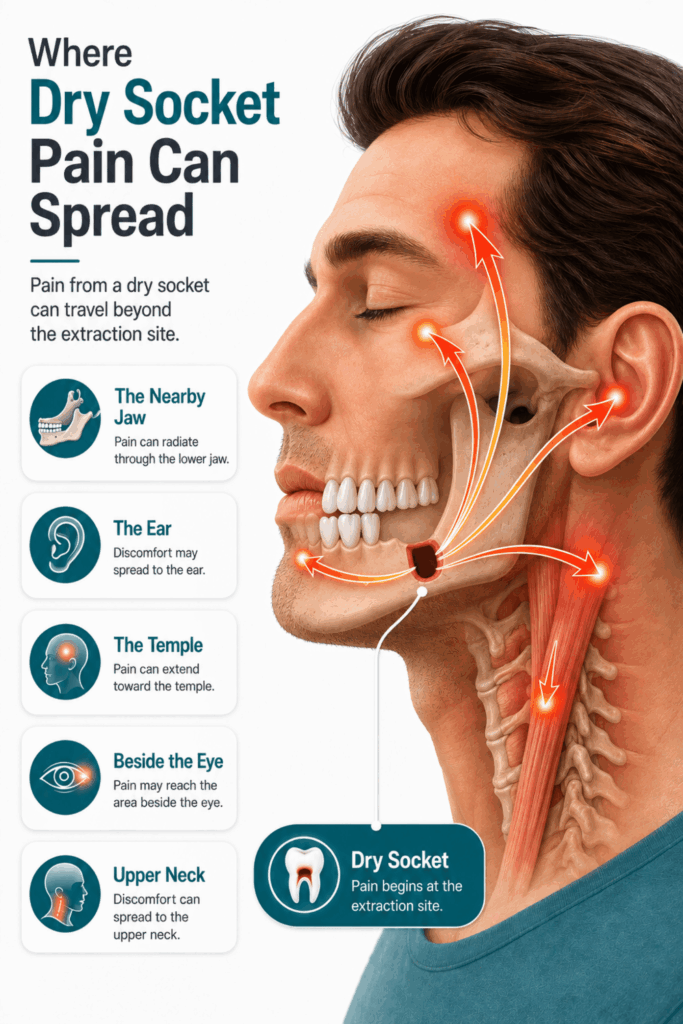
Where Can Dry Socket Pain Spread?
Dry socket pain can spread from the empty socket toward the ear, jaw, temple, eye area, or neck. This usually occurs on the same side of the face as the tooth that was removed. The pain follows connected nerve pathways, so your ear may hurt even though nothing is wrong inside it.
Radiating pain is an important clue, especially when it begins a few days after the extraction and keeps getting worse. Still, jaw-muscle strain, nearby tooth problems, and other post-surgical conditions can also cause spreading dental pain. A dentist or oral surgeon must examine the area to identify the source.
Does Dry Socket Pain Come and Go or Stay Constant?
Dry socket pain may remain constant, but its intensity can rise and fall. Some patients describe a continuous ache with stronger waves of throbbing pain. Eating, drinking, speaking, or allowing food particles to enter the socket may make it worse.
Other people notice short periods of relief after taking pain medicine, followed by a return of intense pain. There is no single pattern that every patient experiences. What matters most is whether the discomfort is improving as expected or becoming stronger several days after the tooth was pulled.
When Does Dry Socket Pain Start?
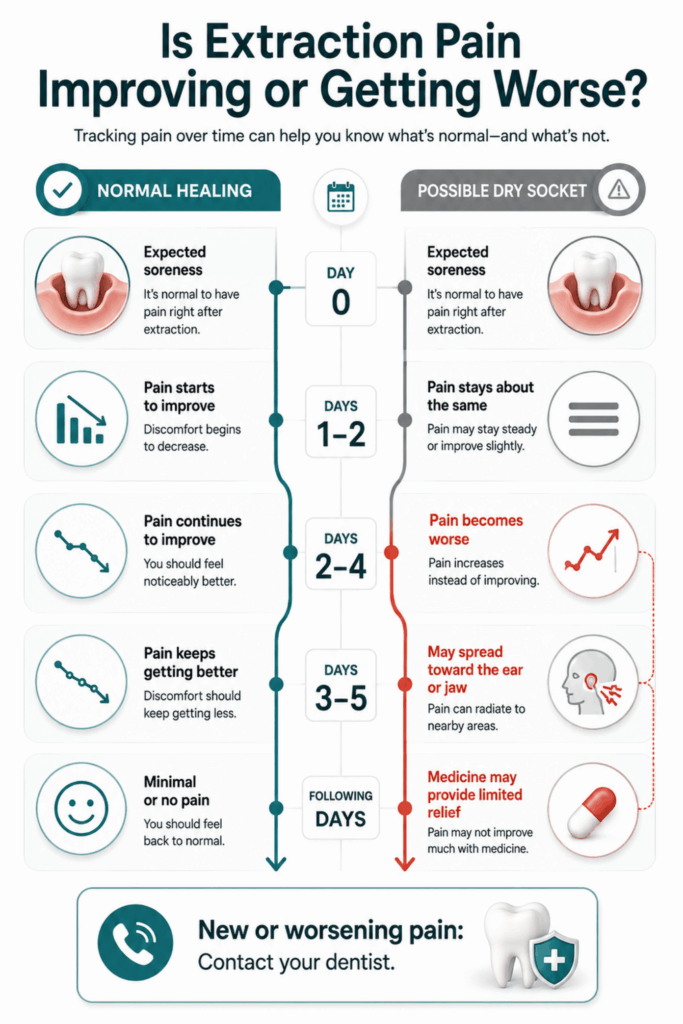
Normal surgical soreness usually begins as the local anesthetic wears off. It is often strongest during the first two or three days and then gradually improves. Dry socket pain tends to follow a different path: it may appear after a short period of improvement or become much stronger during the days after the extraction.
A typical timeline may look like this:
- Day 0: A blood clot forms in the socket after the tooth is removed. Some bleeding, tenderness, and numbness are expected.
- Days 1–2: Normal soreness and swelling may continue. These symptoms should remain manageable and start moving in the right direction.
- Days 2–4: Dry socket pain may begin or become noticeably worse. The pain can be deep, throbbing, and difficult to control.
- Days 3–5: Spreading pain, a bad taste, or unpleasant breath may become more obvious.
The exact timing varies. For example, NHS guidance on dental surgery and dry socket describes increasing pain, bad taste, and bad breath commonly developing three to five days after treatment. Contact your dentist if you develop new or worsening pain rather than waiting for a specific day.
How Long Does Dry Socket Pain Last?
Dry socket usually improves as new tissue grows over the sensitive bone. The severest pain may continue for several days, but the course depends on when treatment begins, the extraction site, and how your body heals. Lower wisdom teeth and difficult extractions may take longer to settle than simple extractions.
Pain relief and complete healing are not the same. Irrigation and a medicated dressing may reduce pain before the gum has covered the socket. The extraction site can continue healing for several weeks after the intense pain has eased. If the pain remains unchanged, returns repeatedly, or becomes worse after treatment, the dentist may need to examine the area again.
Dry Socket Pain vs. Normal Healing Pain
Some soreness after tooth removal is expected. The most useful difference is often the direction of the symptoms: normal healing pain generally improves, while dry socket pain often becomes worse after the first few days.
| Feature | Normal Healing Pain | Possible Dry Socket Pain |
|---|---|---|
| When It Begins | Starts as the anesthetic wears off | Often appears or worsens a few days later |
| Pain Trend | Gradually improves | Becomes stronger or returns after improvement |
| Severity | Usually mild to moderate and manageable | Often deep, severe, or difficult to control |
| Pain Spread | Usually stays near the surgical area | May spread to the ear, jaw, temple, or neck |
| Response to Medicine | Often improves with recommended medicine | May improve only partly or briefly |
| Taste and Breath | Temporary changes may occur | Persistent bad taste or unpleasant breath may occur |
| Socket Appearance | May contain a dark blood clot or white healing tissue | May look empty, with part of the bone visible |
Do not rely on color alone. Normal new tissue may look white, cream, or yellow as healing continues. Food debris can also change how the socket looks. A worsening pain pattern is usually more meaningful than a mirror check, but only a dental examination can confirm the cause.
What Other Symptoms Can Occur With Dry Socket?
Pain is the main symptom of alveolar osteitis, also known as dry socket. Other findings may appear, but not every patient has all of them.
- Bad Taste: Food debris and inflammation in the socket may cause an unpleasant taste that returns after gentle rinsing.
- Bad Breath: An odor may come from trapped debris or the exposed extraction site.
- Missing Blood Clot: The dark blood clot may be partly or fully absent, although the socket can be difficult to see.
- Empty-Looking Socket: Dry socket sometimes looks like an empty hole instead of a socket filled with a dark clot.
- Visible Bone: Exposed bone may appear pale or whitish at the bottom or side of the socket.
- Delayed Improvement: Pain may remain strong while normal post-extraction soreness would usually be getting better.
A white or yellow layer is not automatically exposed bone, pus, or infection. New tissue and normal healing material can have these colors. Avoid touching the area to find out what it is.
Why Does a Dry Socket Cause So Much Pain?
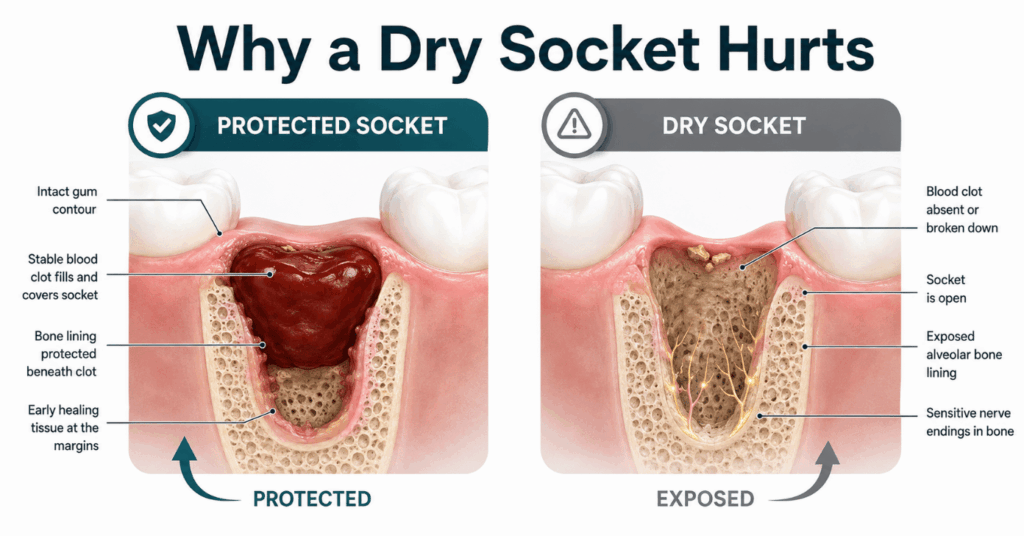
After tooth removal, a blood clot forms in the empty socket. It protects the bone and nerves underneath while new tissue begins to develop. The clot also creates a stable surface over which the gum can heal.
Dry socket happens when this clot does not form properly, breaks down too early, or becomes dislodged before enough tissue covers the socket. The underlying bone and nerves become exposed to air, liquids, pressure, and food debris. This irritates the bony socket lining and can cause intense pain.
Is Dry Socket an Infection?
Dry socket is not an infection in the usual sense. It is an inflammatory complication of tooth extraction linked to early loss or breakdown of the protective blood clot. That is why antibiotics do not treat the main cause of dry socket or replace local dental care.
Antibiotics may be appropriate if the dentist finds spreading infection, fever, worsening facial swelling, pus, or systemic illness. Current HSE guidance for managing dry socket recommends local treatment and states that antibiotics are not indicated unless there are signs of spreading infection or systemic involvement.
Who Is More Likely to Develop Dry Socket?
Dry socket can happen even when a patient follows every instruction. Certain factors increase the risk, but they do not mean that the condition will definitely develop.
- Smoking or Tobacco Use: Tobacco can interfere with healing, while inhaling creates suction that may disturb the clot. A systematic review of smoking and dry socket risk found that smokers had more than three times the odds of developing dry socket after extraction compared with nonsmokers.
- Lower Wisdom Tooth Removal: Dry socket is more common after a lower third molar extraction, especially when the tooth is impacted or difficult to remove.
- Difficult Extraction: More surgical trauma can increase inflammation and the risk of clot breakdown.
- Previous Dry Socket: A past episode may indicate that you are more likely to develop dry socket after another extraction.
- Poor Plaque Control: Heavy plaque and food debris near the surgical area may interfere with a clean healing environment.
- Disturbing the Clot: Forceful rinsing, repeated spitting, using a straw, or touching the socket may dislodge the blood clot.
- Not Following Aftercare Instructions: Cleaning too aggressively or returning to tobacco use too soon can increase risk. However, dry socket may still occur despite careful aftercare.
- Hormonal Factors: Some evidence links estrogen exposure, including oral contraceptive use, with a higher risk. Patients should not stop prescribed birth control without speaking with the prescribing clinician.
How a Dentist Diagnoses Dry Socket Pain
A dentist diagnoses dry socket by combining your symptom history with an examination of the extraction site. There is no reliable home test, and the socket does not always look like an empty hole.
The evaluation may include:
- Reviewing the Timeline: The dentist asks when the tooth was removed, when the pain began, and whether it improved before becoming worse.
- Mapping the Pain: You may be asked whether the pain stays near the socket or spreads toward the ear, temple, jaw, or neck.
- Checking Other Symptoms: The dentist reviews swelling, fever, taste changes, bad breath, numbness, bleeding, and your response to pain medicine.
- Examining the Socket: The area is checked for a missing clot, exposed bone, trapped food, drainage, swelling, or another visible problem.
- Checking Nearby Areas: Nearby teeth, the jaw muscles, and surrounding tissues may be examined because they can also cause pain after an extraction.
- Taking an X-Ray if Needed: An X-ray may help identify a retained root or tooth fragment, a small piece of bone, or another cause of persistent pain. An X-ray does not directly diagnose every dry socket.
What Else Can Cause Pain After a Tooth Extraction?
Not all severe or persistent pain is dry socket. The timing, location, swelling, and examination findings help the dentist separate several possible causes.
- Expected Surgical Soreness: Pain, swelling, bruising, and jaw stiffness can occur after difficult tooth removal. These symptoms should generally improve with time.
- Food Trapped in the Socket: Food particles can press against sensitive tissue and create an unpleasant taste or localized discomfort.
- Postoperative Infection: Infection may cause increasing swelling, pus, fever, tender glands, or a feeling of being unwell.
- Nearby Tooth Pain: The teeth beside the extraction may become temporarily sensitive from pressure during the procedure. A separate cavity, crack, or gum problem can also cause pain.
- Jaw-Muscle Strain: Keeping the mouth open during third molar removal can leave the jaw muscles sore and make opening difficult.
- Retained Fragment: A root tip, tooth fragment, or loose piece of bone may irritate the area and require assessment.
- Nerve Irritation: Nerve-related problems are more likely to cause numbness, tingling, burning, or altered sensation than classic throbbing dry socket pain.
An examination is important when pain is severe, unusual, or not improving. Treating the wrong suspected cause at home may delay the care you need.
What to Do if You Think You Have Dry Socket
Home care cannot confirm or fully treat dry socket, but a few safe steps can protect the area until you receive dental advice.
- Contact the Treating Office: Tell the dentist or oral surgeon that you have new or worsening pain after tooth removal.
- Describe the Pain Pattern: Explain when the pain started, whether it improved first, where it spreads, and how well your medicine controls it.
- Follow Your Aftercare Instructions: Continue the cleaning, eating, and medication plan provided by your dental team unless they advise a change.
- Protect the Socket: Avoid smoking, vaping, straws, forceful spitting, and poking the area with your finger, tongue, or another object.
- Use Only Approved Rinses: Do not rinse on the day of extraction unless specifically instructed. After that, use salt water or another rinse only as directed.
- Avoid Homemade Dressings: Do not pack the socket with cotton, tissue, herbs, aspirin, or concentrated oils. These products may burn the tissue, trap debris, or make professional cleaning harder.
How Dentists Treat Dry Socket Pain
Treatment focuses on reducing pain, removing irritating debris, and protecting the sensitive socket while healing continues. It does not recreate the original blood clot.
A dentist may:
- Examine the Area Gently: The dentist first confirms whether the symptoms fit dry socket or another complication.
- Remove Trapped Debris: Food particles or loose material may be cleared from the extraction site.
- Irrigate the Socket: The dentist may gently flush the area with saline to clean it without scraping the healing bone.
- Place a Medicated Dressing: A soothing material may be placed inside the socket to cover the sensitive surface and reduce pain.
- Review Pain Control: Your dentist may recommend suitable medicine based on your health, current medications, and pain level.
- Arrange Follow-Up Care: Some dressings dissolve or remain temporarily, while others need to be changed or removed.
Evidence for one ideal dry socket dressing remains limited. A Cochrane review of local interventions for alveolar osteitis found better evidence for some preventive measures than for choosing a single best treatment for an established dry socket. Dentists therefore adjust management to the patient and clinical findings.
How Quickly Can Treatment Ease the Pain?
Some patients feel meaningful relief soon after the socket is irrigated and dressed. Others improve more gradually or need a dressing changed as its soothing effect wears off. The response depends on how inflamed the socket is and whether another problem is contributing to the pain.
Feeling better does not mean the socket has fully healed. New tissue still needs time to cover the sensitive area. Return for review if relief is brief, the pain remains intense, or new symptoms develop.
How to Manage Dry Socket Pain Until Your Appointment
Protect the extraction site and use only low-risk comfort measures while waiting for dental care. These steps may reduce irritation, but they are not a substitute for an examination.
- Choose Soft Foods: Eat yogurt, eggs, soup that is not hot, soft pasta, or mashed foods. Chew on the other side when possible.
- Drink From a Cup: Avoid straws and other suction that could disturb the healing area.
- Keep the Mouth Clean: Brush the other teeth normally and clean near the socket gently without pushing the brush into it.
- Rinse Only as Directed: If more than 24 hours have passed and your dentist allows it, gently rinse your mouth with warm salt water. Let the liquid fall out instead of spitting forcefully.
- Avoid Tobacco: Smoking and vaping can irritate the wound and interfere with healing.
- Do Not Dig Into the Socket: Toothpicks, cotton swabs, fingers, and home irrigation devices can injure tissue or push debris deeper.
- Avoid Direct Home Remedies: Do not place aspirin, concentrated clove oil, alcohol, hydrogen peroxide, or crushed medicine inside the socket. These substances can irritate or burn the tissue.
Which Pain Medicines May Help?
Nonopioid medicines are usually the first choice for short-term dental pain when they are safe for the patient. The American Dental Association’s acute dental pain guidance supports nonsteroidal anti-inflammatory drugs, such as ibuprofen or naproxen, alone or combined with acetaminophen, as first-line options for many adolescents and adults.
Follow the dose on the label or the instructions from your dentist. Do not take more medicine because the first dose did not remove all the pain, and do not combine products without checking their ingredients. Several cold, flu, headache, and prescription products may contain the same pain reliever.
Check with a dentist, physician, or pharmacist before taking pain medicine if any of these apply:
- Medication Allergy: Avoid any medicine that has caused an allergic reaction.
- Stomach or Bleeding Problems: NSAIDs may not be suitable for people with stomach ulcers, gastrointestinal bleeding, or certain bleeding disorders.
- Kidney Disease: NSAIDs may worsen some kidney conditions.
- Liver Disease or Heavy Alcohol Use: Acetaminophen may require extra caution because excessive amounts can damage the liver.
- Blood Thinners: Some pain medicines can increase bleeding risk or interact with anticoagulants.
- Pregnancy or Breastfeeding: Ask a healthcare professional which options are appropriate for your stage of pregnancy or while nursing.
- Other Medicines or Conditions: Heart disease, uncontrolled blood pressure, asthma sensitive to NSAIDs, and medication interactions may change what is safe.
When Should You Contact a Dentist?
Contact your dentist or oral surgeon when pain after an extraction becomes worse instead of better. You do not need to wait until the socket looks empty or the pain becomes unbearable.
Call the dental office if you notice:
- New Pain After Improvement: The area felt better for a day or two, then began hurting more.
- Severe or Persistent Pain: The discomfort remains intense or interferes with eating, sleeping, or daily activities.
- Spreading Pain: Pain travels toward the ear, jaw, temple, eye area, or neck.
- Poor Relief From Medicine: Recommended pain relief has little effect or lasts only briefly.
- Persistent Bad Taste or Breath: An unpleasant taste or odor continues despite gentle oral care.
- Pain After Treatment: Symptoms return after the socket was irrigated or dressed.
A suspected dry socket is usually an urgent dental problem because of the pain, but it is not usually life-threatening. The treating dentist is often the best first contact because the office knows which tooth was removed and how the procedure went.
Which Warning Signs Need More Urgent Care?
Some findings suggest infection, bleeding, or another complication rather than uncomplicated dry socket.
Contact a dentist or oral surgeon urgently for:
- Increasing Facial Swelling: Swelling that becomes larger after the first few days or spreads beyond the extraction area needs assessment.
- Fever or Feeling Unwell: A high temperature, chills, weakness, or swollen glands may suggest infection.
- Pus or Drainage: Thick discharge from the socket is not a typical feature of simple dry socket.
- Uncontrolled Bleeding: Bleeding that does not stop after following the dental office’s pressure instructions needs prompt help.
- New or Persistent Numbness: Altered feeling in the lip, chin, or tongue should be reported, especially if it appears after the anesthetic has worn off.
Seek emergency medical care for:
- Trouble Breathing: Difficulty getting air is an emergency.
- Trouble Swallowing: Rapidly worsening swelling that affects swallowing needs immediate assessment.
- Rapidly Spreading Swelling: Swelling extending into the neck, floor of the mouth, eye area, or other facial spaces may threaten the airway or vision.
- Heavy, Uncontrolled Bleeding: Go for emergency care if firm pressure does not control significant bleeding or you feel faint.
What to Expect as the Socket Heals
The first sign of improvement is usually a steady reduction in pain. You may sleep more comfortably, need less pain medicine, and find it easier to eat. The socket may still look deep or pale during this time because pain relief can occur before the hole has closed.
New tissue gradually covers the exposed area as healing continues. Keep any follow-up appointments, especially if the dentist placed a dressing that needs review. Contact the office again if the pain does not move in the right direction, returns strongly, or is joined by swelling, fever, pus, or other new symptoms.
How to Protect the Extraction Site During Recovery
A stable healing environment reduces irritation and gives new tissue time to form. Your dentist’s instructions should take priority because care can differ based on the tooth, extraction difficulty, stitches, and your health.
- Avoid Rinsing Too Early: Do not rinse, spit forcefully, or touch the area during the first 24 hours unless your dental team gives different instructions. UCLH postoperative extraction guidance explains that these actions may disturb the blood clot.
- Clean Gently: Brush the rest of your teeth and use care near the socket. Do not push bristles into the wound.
- Use Salt Water Correctly: After the first day, a dentist may recommend gentle warm salt-water rinses. Do not swish hard.
- Eat Soft Foods: Choose foods that do not require forceful chewing and are unlikely to break into sharp particles.
- Avoid Smoking and Vaping: Tobacco, heat, chemicals, and suction can irritate the site and delay healing.
- Skip Straws: Drink directly from a cup until your dentist says suction is safe.
- Do Not Touch the Socket: Avoid checking the hole with your tongue, finger, or any object.
- Keep Follow-Up Appointments: Attend reviews for dressing changes, persistent pain, or any concern about healing.
Frequently Asked Questions
Can You Get Dry Socket Even if You Have Stitches?
Yes. Stitches can help hold the gum edges together and protect the area, but they do not guarantee that a stable blood clot will remain in the deeper socket. Dry socket can still develop under or beside stitches. Worsening pain a few days after the extraction matters more than whether the site was stitched.
Why Did the Pain Return After a Dry Socket Dressing?
A medicated dressing may lose its soothing effect, dissolve, move, or need replacement before new tissue has covered the sensitive socket. Returning pain does not always mean that treatment failed. Contact the treating dentist for advice; do not remove, replace, or add material to the dressing yourself.
Can Dry Socket Make the Nearby Teeth Hurt?
Yes. Inflammation and shared nerve pathways can make nearby teeth feel sore even when those teeth are healthy. Pressure used during the extraction may also cause temporary sensitivity. If one tooth remains painful, reacts strongly to temperature, or hurts after the socket improves, the dentist should check for a separate tooth problem.
Can You Have Dry Socket Without Seeing an Empty Hole?
Yes. The socket may be difficult to view because of its position, limited mouth opening, stitches, healing tissue, or food debris. A clot may also be partly lost rather than completely missing. Because appearance alone cannot confirm or exclude dry socket, worsening pain after initial improvement is a more useful reason to call your dentist.
Is Numbness or Tingling a Sign of Dry Socket?
Numbness and tingling are not typical dry socket symptoms. Dry socket mainly causes deep, aching, or throbbing pain. Altered feeling in the lip, chin, tongue, or nearby skin may relate to local anesthetic, swelling, or nerve irritation. Report new or persistent numbness to your dentist or oral surgeon for evaluation.
Can Dry Socket Come Back After It Has Been Treated?
Symptoms can return while the bone remains sensitive, especially if a medicated dressing wears off before enough new tissue forms. This is not necessarily a new dry socket. Repeated, changing, or worsening pain should be reassessed because the dressing may need attention or another cause of pain may be present.
Bottom Line
Dry socket pain usually becomes worse instead of better a few days after tooth extraction. It may feel deep or throbbing and can spread toward the ear, jaw, or temple. A missing clot, bad taste, or empty-looking socket may occur, but symptoms and appearance alone cannot confirm the diagnosis.
Contact your dentist if you develop new, severe, or worsening pain after a tooth is removed. A dental examination can identify the cause, while irrigation, a medicated dressing, and suitable pain relief can help you feel more comfortable as healing continues.
