Pain and swelling behind your last molar can make every day feel longer, especially when you do not know whether the problem is getting better. So, how long does pericoronitis last? A mild episode may begin to improve within a few days after the area is cleaned and treated. More severe inflammation can take longer, and the exact timeline depends on the tooth’s position, the severity of the infection, and how soon you receive care.
Feeling better does not always mean the problem has fully resolved. Pericoronitis often develops beneath a flap of gum over a partly erupted wisdom tooth. If that pocket remains, food and bacteria can collect again, causing symptoms to return even after the first flare settles.
The most useful question is not only how many days the pain may last, but whether it is steadily improving. Knowing what affects recovery, what treatment can change, and which symptoms need prompt attention can help you decide when temporary home care may help and when a dentist should examine the area.
How Long Does Pericoronitis Last?
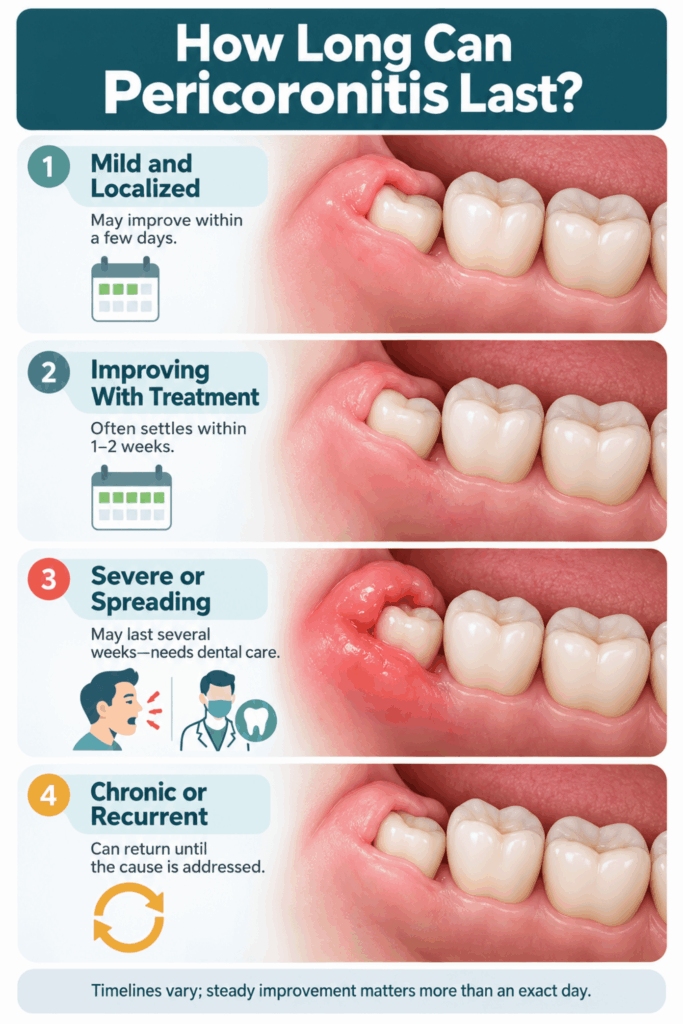
A mild episode of pericoronitis may last a few days. With appropriate dental treatment, most cases settle within one to two weeks. Severe inflammation or a spreading infection may last several weeks and should not be left to improve without professional care. These ranges come from the Cleveland Clinic’s medically reviewed guidance on pericoronitis recovery.
However, recovery has several meanings. Your pain may ease before the swollen gum tissue has fully healed. A recurrent flare may settle and then return because the gum flap is still trapping food debris and bacteria. Healing after wisdom tooth removal also follows a separate surgical timeline.
| Type of Pericoronitis | Typical Pattern | What the Timeline Means |
|---|---|---|
| Mild and localized | May improve within a few days after cleaning and suitable care | Pain and swelling should decrease steadily rather than disappear and return |
| Moderate or severe | May take one to several weeks, depending on treatment and whether infection has spread | A dentist should manage the cause and monitor the response |
| Chronic or recurrent | Mild symptoms may come and go over weeks or months | Each flare can settle, but the condition may return until the gum pocket or tooth problem is addressed |
| After gum-flap or tooth removal | The original inflammation should resolve, followed by a separate period of surgical healing | Postoperative soreness does not necessarily mean pericoronitis remains |
The short answer to “how long does pericoronitis last?” is several days for a mild flare and often one to two weeks with treatment. The more important sign is steady improvement. Ongoing pain, increasing swelling, or repeated episodes suggest that the underlying problem remains.
What Can Make Pericoronitis Last Longer?
Recovery depends on more than the number of days since symptoms started. A lower wisdom tooth that is difficult to clean may remain inflamed until trapped debris is removed and the area can stay clean.
- Severity of Inflammation: Mild tenderness around the gum behind the last molar may settle faster than marked swelling, drainage, or severe wisdom tooth pain.
- Trapped Debris: Food and plaque beneath the gum flap keep irritating the tissue and support bacterial growth. The pocket can be too deep to clean well with a toothbrush.
- Tooth Position: An impacted wisdom tooth or partly erupted tooth may leave a lasting space where bacteria collect. A tooth that continues erupting into a cleanable position has a better chance of staying healthy.
- Pressure From the Upper Tooth: An upper wisdom tooth may repeatedly bite the swollen gum over a lower wisdom tooth. This trauma can keep the inflamed tissue sore.
- Delayed Dental Care: Pain relief and rinsing may reduce symptoms without removing material beneath the gum flap. Waiting while the condition worsens can make recovery less predictable.
- Limited Mouth Opening: Jaw stiffness can make brushing and professional treatment harder. It may also be a sign that the inflammation is becoming more severe.
- Smoking: Tobacco can irritate oral tissue and interfere with normal healing. It may also make good oral hygiene more difficult.
- General Health: Poorly controlled diabetes, immune system problems, and some medicines may slow healing or increase infection risk. Tell your dentist about your medical conditions and current medications.
Not every patient has all these factors. A dental professional can identify which ones are affecting your recovery and build an appropriate treatment plan.
How to Tell Whether Pericoronitis Is Healing
Pericoronitis is usually improving when discomfort and inflammation decrease from day to day. One good hour after taking pain medicine is not enough to judge recovery; look at the overall pattern.
Signs of improvement include:
- Less Pain: The gum feels less sore when you chew, brush, or touch the area gently.
- Reduced Swelling: The gum flap looks and feels smaller rather than becoming more raised.
- Easier Mouth Opening: You can open your jaw and eat with less stiffness.
- More Comfortable Swallowing: Irritation at the back of the mouth is decreasing rather than extending toward the throat.
- Less Drainage or Bad Taste: Pus, unpleasant taste, and bad breath should improve as inflammation settles.
- Better Daily Function: Sleeping, eating, and cleaning behind the last tooth become easier.
Signs that it may not be healing include:
- Unchanged Symptoms: Pain or swelling remains at the same level for several days despite proper care.
- Worsening Symptoms: The swollen gum becomes larger, more painful, or begins draining pus.
- Returning Pain: Symptoms improve briefly but come back when food becomes trapped again.
- New General Symptoms: Fever, swollen lymph nodes, facial swelling, or feeling unwell can indicate that the infection is spreading.
- Increasing Jaw Stiffness: Mouth opening becomes more limited instead of easier.
Improvement does not prove that the pocket has disappeared. A dentist may still recommend monitoring or further treatment when a partially erupted wisdom tooth remains difficult to clean.
Why Pericoronitis Can Return After It Feels Better
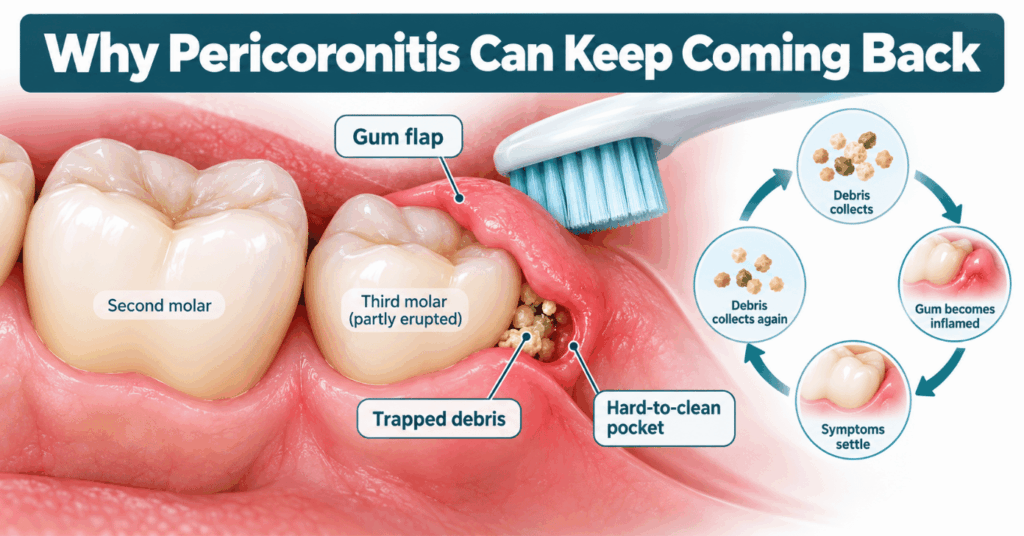
Pericoronitis often develops around a partially erupted tooth covered by a flap of gum tissue called an operculum. Food debris, plaque, and bacteria collect beneath this flap, where a toothbrush may not reach. Cleaning the pocket can settle the current flare, but it does not always change the shape or position of the tooth.
This is why recurrent pericoronitis can develop after several symptom-free weeks or months. Pain relief means the inflammation has decreased; it does not necessarily mean the cause has gone. If the wisdom tooth cannot erupt fully or the pocket remains uncleanable, your dentist may discuss removing the gum flap or completing a wisdom tooth extraction.
Does Pericoronitis Go Away on Its Own?
A mild episode may sometimes settle if trapped debris clears, irritation decreases, and the wisdom tooth continues erupting into a position that is easy to clean. Warm saltwater rinses and careful oral hygiene may help reduce inflammation during this period.
However, it is difficult to know at home whether the condition is temporary or whether an infected wisdom tooth needs treatment. Do not manage persistent, worsening, or repeatedly returning symptoms with rinses alone. Schedule an appointment so a dentist can check the tooth position and determine whether the gum pocket is likely to remain.
How a Dentist Checks Persistent Pericoronitis
A dentist first confirms whether the pain comes from inflamed gum tissue around a partly erupted tooth. Tooth decay, gum disease, an abscess, or another tooth problem can produce similar pain at the back of the mouth.
The examination may include:
- Symptom History: The dentist asks when the pain began, whether it has happened before, and whether you have swelling, drainage, fever, or difficulty swallowing.
- Gum-Flap Examination: The tissue is checked for redness, swelling, bleeding, pus, and trapped debris beneath the gum flap.
- Tooth Position: The dentist checks how much of the tooth has erupted and whether there is enough space for it to emerge normally.
- Bite Assessment: The upper wisdom tooth is examined to see whether it bites against the swollen lower gum.
- Jaw and Neck Check: Mouth opening, facial swelling, and nearby lymph nodes may be assessed when symptoms are more severe.
- Dental X-Rays: Imaging can show the position of impacted wisdom teeth, their roots, nearby bone, and the second molar. It can also help rule out decay, cystic changes, or damage from another condition.
This assessment helps separate temporary inflammation from a problem that needs longer-term dental treatment.
How Treatment Can Shorten or Change Recovery
Pericoronitis treatment has two goals: settle the current inflammation and reduce the chance of another flare. The right approach depends on the severity of the pericoronitis symptoms, whether the infection is spreading, and whether the tooth can erupt into a healthy position.
Professional Cleaning and Irrigation
For localized pericoronitis, a dentist can gently flush beneath the gum flap and remove trapped food, plaque, and inflamed debris. This local treatment directly addresses the source of irritation and may provide faster relief than rinsing the surface at home. An evidence-based review of pericoronitis management supports local cleaning and irrigation before routine antibiotic use in uncomplicated cases.
Pain Relief and Home Care
Home care for pericoronitis can make the area more comfortable while you arrange dental care or follow your dentist’s instructions. They cannot correct an impacted wisdom tooth or guarantee that the infection will not return.
- Clean the Area Gently: Use a soft toothbrush to remove visible plaque and food from around the last tooth. Do not force sharp objects beneath the gum flap.
- Use a Warm Saltwater Rinse: Rinse gently, then spit out the solution. Avoid aggressive swishing if the tissue is very painful or if you recently had a tooth extraction.
- Choose Softer Foods: Avoid hard, sharp, sticky, or spicy foods that can press against the swollen gum or become trapped beneath it. Chew on the other side when possible.
- Consider Suitable Pain Medicine: Over-the-counter pain relief may help while the cause is treated. The American Dental Association’s guidance on acute dental pain supports nonopioid options such as an NSAID, alone or with acetaminophen, when they are medically appropriate.
- Check Medication Safety: Ibuprofen and other NSAIDs may not suit people with certain stomach, kidney, bleeding, or allergy problems. Ask a dentist, physician, or pharmacist before use if you take blood thinners, are pregnant, or have a relevant medical condition. Follow the label and avoid combining products that contain the same ingredient.
- Arrange Follow-Up Care: Contact your dentist if pain or swelling continues, worsens, or returns. Home care should support a professional plan rather than replace it.
When Antibiotics May Be Needed
Antibiotics are not required for every wisdom tooth infection. The HSE guideline for pericoronitis recommends local measures first and reserves antibiotics for spreading infection or systemic involvement, such as fever, malaise, cellulitis, swollen lymph nodes, or significant jaw restriction.
When antibiotics are prescribed, take them exactly as directed and tell the prescriber about allergies and other medicines. Antibiotics alone do not remove food debris, eliminate an uncleanable gum pocket, or change the position of an impacted tooth. The local cause still needs dental care.
Removing the Gum Flap or Wisdom Tooth
A dentist may consider removing the gum flap if the tooth is well positioned, has room to erupt, and can become easy to clean. This procedure is called an operculectomy. The flap can sometimes grow back, so the tooth’s position and the likelihood of recurrence matter when choosing treatment.
Wisdom tooth removal may be more suitable when the tooth is impacted, keeps causing pericoronitis, damages the nearby tooth, or has another disease. The NICE recommendations for wisdom tooth extraction state that a first mild episode of pericoronitis is not automatically a reason for surgery, while a severe or repeated episode may support removal.
After the tooth is removed, the original gum pocket no longer remains. However, extraction creates a surgical socket that needs its own recovery period. Expected postoperative soreness, swelling, and limited mouth opening should not be confused with ongoing pericoronitis.
When Pericoronitis Needs Professional Care
Mild localized symptoms and a spreading tooth infection do not require the same response. Knowing the difference helps you seek the right level of care without assuming every sore gum is an emergency.
When to Arrange a Dental Appointment
Schedule a dental appointment if you notice:
- Persistent Pain or Swelling: The area is not steadily improving or remains uncomfortable despite gentle cleaning and rinsing.
- Repeated Flare-Ups: Wisdom tooth pain settles but keeps returning in the same place.
- Pus or a Bad Taste: Drainage beneath the gum flap may indicate active infection.
- Difficulty Cleaning: Food repeatedly becomes trapped around a partially erupted wisdom tooth.
- Pain When Biting: The upper tooth may be striking the swollen tissue over a lower wisdom tooth.
- Bleeding or Inflamed Tissue: The gum remains red, tender, or bleeds easily.
- Concern About Tooth Position: Only part of the tooth is visible, or the last tooth appears tilted or blocked.
A dentist can clean the area, check for an abscess, and determine whether monitoring, gum-flap treatment, or wisdom tooth removal is appropriate.
When to Seek Urgent or Emergency Help
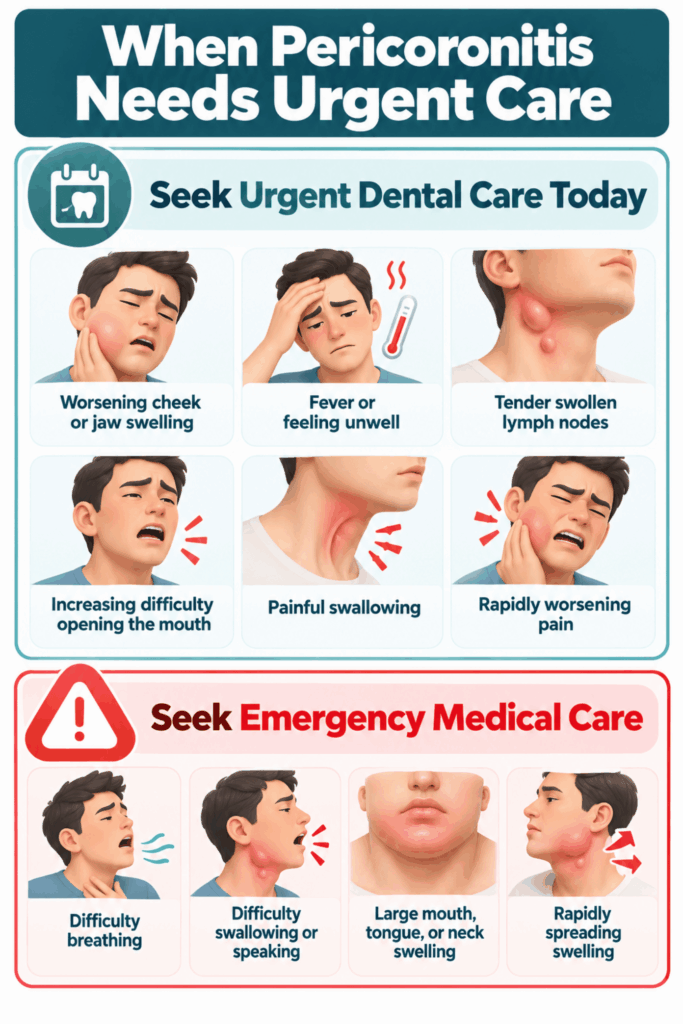
Seek urgent dental care on the same day if you develop:
- Spreading Swelling: Swelling is moving into the cheek, jaw, beneath the tongue, or toward the neck.
- Fever or Illness: You feel feverish, weak, or generally unwell alongside the dental symptoms.
- Swollen Lymph Nodes: Tender lumps develop beneath the jaw or in the neck.
- Increasing Mouth Restriction: It becomes harder to open your mouth, eat, or receive dental treatment.
- Painful Swallowing: Throat discomfort is increasing rather than feeling like mild referred pain.
- Rapidly Worsening Pain: Pain or swelling becomes much worse over a short period.
Seek emergency medical care if swelling makes it difficult to breathe, swallow, or speak, or if a large swelling is developing inside the mouth or neck. The NHS emergency guidance for serious dental infection identifies breathing or swallowing difficulty, major mouth swelling, and severe restriction in mouth opening as reasons for emergency assessment.
How to Reduce the Risk of Another Flare-Up
Good oral hygiene can lower the chance of another episode, but it cannot always overcome an impacted wisdom tooth or a deep gum pocket.
- Clean Behind the Last Molar Daily: Angle a soft toothbrush toward the back of the mouth and remove plaque gently without injuring the gum flap.
- Rinse After Meals When Advised: A gentle rinse can help loosen food debris. Use prescription mouthwash only as directed because some products are not suitable for long-term use.
- Follow Professional Cleaning Instructions: Your dentist may recommend a specific brush, cleaning method, or irrigation technique based on the tooth’s position.
- Attend Follow-Up Visits: Monitoring shows whether the tooth is still erupting, has become easier to clean, or is affecting the nearby second molar.
- Avoid Smoking: Smoke and heat can irritate oral tissue and interfere with healing.
- Discuss Recurrent Symptoms: If pericoronitis keeps returning, ask whether the gum flap or wisdom tooth should be treated. Repeated short courses of home care or antibiotics alone may not solve the cause.
Frequently Asked Questions
Can a Wisdom Tooth Be Removed While Pericoronitis Is Active?
Yes, extraction may sometimes be performed during an active episode; infection does not automatically make removal unsafe. However, severe swelling, spreading infection, or limited mouth opening may lead the dentist or oral surgeon to control the acute problem first. The timing depends on access, infection severity, the tooth’s position, and the patient’s general health.
Is Pericoronitis the Same as a Wisdom Tooth Abscess?
No. Pericoronitis is inflammation or infection of the gum tissue around a partly erupted tooth. An abscess is a localized pocket of pus. Pericoronitis can sometimes progress to an abscess, but pain and swelling alone cannot confirm this. A dentist may need to examine the area and take an X-ray.
Can Pericoronitis Occur If the Wisdom Tooth Is Not Visible?
It can occur when a small part of the wisdom tooth has broken through but is hidden by swollen tissue or a gum flap. True pericoronitis usually requires a connection between the tooth and the mouth. If the tooth is completely covered by intact gum and bone, another cause of pain may be more likely.
Can Pericoronitis Cause Ear Pain or a Sore Throat?
Pain from a lower wisdom tooth may cause referred ear pain or travel toward the jaw or throat because nearby areas share nerve pathways. Mild referred pain can occur without an ear infection. However, worsening throat pain, facial or neck swelling, fever, or difficulty swallowing may indicate spreading inflammation and require urgent assessment.
Can Pericoronitis Return After Wisdom Tooth Removal?
True pericoronitis should not return around a wisdom tooth that has been completely removed because the gum pocket around that tooth no longer exists. New pain after extraction could come from normal healing, food trapped in the socket, dry socket, or a postoperative infection. Contact the dentist if pain worsens or returns after improving.
Can Pericoronitis Damage the Tooth Next to the Wisdom Tooth?
Yes, the same hard-to-clean space can trap plaque against the second molar. Over time, this may contribute to tooth decay or gum and bone damage behind that tooth. A dentist may examine the area and use an X-ray to check for problems that are difficult to see directly.
Is Pericoronitis Contagious?
No. You cannot catch pericoronitis from another person through kissing, sharing food, or using the same utensils. Bacteria already present in the mouth contribute to the condition when food and plaque become trapped beneath a gum flap. The uncleanable pocket and the tooth’s position are the main local factors.
The Bottom Line
Mild pericoronitis may begin improving within a few days, and treated cases often settle within one to two weeks. Severe inflammation can take longer, while recurrent pericoronitis may keep returning until the gum pocket or affected wisdom tooth is addressed.
Pay attention to the direction of your symptoms rather than the calendar alone. Decreasing pain and swelling are encouraging. Ongoing pain, repeated flare-ups, fever, spreading swelling, or increasing difficulty with mouth opening or swallowing needs prompt professional assessment.
