Seeing blood on your toothbrush, floss, or in the sink can be unsettling. Bleeding gums are often a sign that plaque has irritated and inflamed the gumline, especially when the bleeding happens during brushing or flossing. They can also bleed after rough cleaning or when you first restart flossing. A single mild episode may not mean there is a serious problem, but repeated bleeding deserves attention.
The cause is not always limited to the mouth. Pregnancy, certain medicines, poorly fitting dental appliances, and some health conditions can make the gums more likely to bleed. The pattern matters: notice when it happens, how much blood you see, whether it stops quickly, and whether you also have swelling, pain, bad breath, loose teeth, easy bruising, or bleeding elsewhere.
Do not avoid the area because you see blood. Gentle, thorough daily cleaning may help when plaque-related inflammation is the cause, while hard tartar and gum disease need professional care. Knowing what bleeding gums can mean, how a dentist checks them, and which warning signs need prompt help will make your next step easier.
Are Bleeding Gums Normal?
Bleeding gums are common, but healthy gums should not bleed regularly during gentle brushing or flossing. A small amount of blood may appear after you floss for the first time in a while, brush too hard, or irritate one spot with sharp food. It should settle as the irritation heals and your cleaning technique improves.
Bleeding that happens often, starts without contact, or comes with swollen gums, bad breath, recession, pain, or loose teeth needs attention. It could be a sign of gingivitis or another oral health problem. Bleeding from your gums doesn’t reveal the cause by itself, so repeated episodes are a good reason to schedule a dental exam.
What Causes Bleeding Gums?
Most gum bleeding begins inside the mouth. Plaque-related inflammation is the leading cause, but brushing injuries, hormonal changes, medicines, and some health conditions can contribute. Understanding when and where your gums bleed can help a dentist narrow down the cause.
Plaque Buildup And Gingivitis
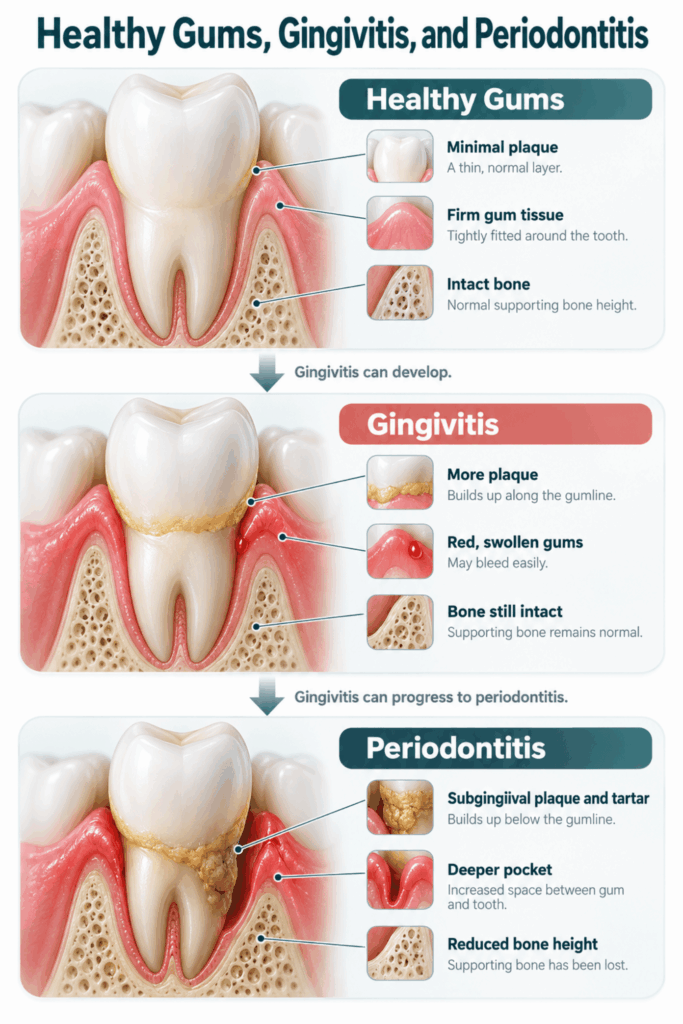
Plaque is a soft, sticky film of bacteria that forms on the teeth and along the gum line. If daily brushing and flossing do not remove it, the bacteria can irritate the gums and trigger inflammation. The gums may become red, puffy, tender, and prone to bleeding.
This early stage of gum disease is called gingivitis. It affects the gums but does not include the attachment and bone loss found in periodontitis. The consensus report defining periodontal health and gingivitis uses bleeding during gentle periodontal probing as an important clinical measure, although a dentist considers the whole examination before making a diagnosis.
Periodontitis And Deeper Gum Damage
Gingivitis can progress to periodontitis in some people if inflammation continues. Periodontitis affects the gums and supporting tissues around the teeth. It may create deeper spaces, called periodontal pockets, where plaque and tartar collect below the gum line.
Possible signs include:
- Frequent Gum Bleeding: The gums may bleed during gentle brushing, flossing, eating, or a dental examination.
- Receding Gums: The gumline may pull away from the teeth, making the teeth look longer.
- Ongoing Bad Breath: Bacteria and infection inside periodontal pockets can cause a persistent odor or unpleasant taste.
- Pus or Tender Swelling: Infection around a tooth may cause drainage, soreness, or a localized swelling.
- Loose or Shifting Teeth: Loss of supporting tissue and bone can affect tooth stability or change how the teeth meet.
Bleeding alone does not prove that someone has advanced gum disease. A dentist must check pocket depths, gum attachment, bone levels, and other findings before diagnosing periodontitis.
Brushing, Flossing, And Minor Gum Injuries
Hard brushing can irritate the gums, especially when you use a firm-bristled brush or scrub with heavy pressure. Floss may also cut the tissue if it snaps down between the teeth instead of sliding gently around each tooth.
Other local causes include:
- Sharp Foods: Chips, crusty bread, popcorn hulls, or fish bones may scratch or become trapped beneath the gumline.
- Dental Appliances: A poorly fitting denture, retainer, or mouthguard can rub the same area repeatedly.
- Damaged Restorations: A rough filling, broken crown, or overhanging edge may trap plaque or injure nearby tissue.
- Recent Flossing Changes: If you have just started flossing after a long break, inflamed gums might bleed at first. Continued bleeding still deserves a dental check.
Injury-related bleeding often affects one spot. Bleeding around many teeth is more likely to involve widespread inflammation, although only an examination can confirm what is happening.
Pregnancy And Hormonal Changes
Hormonal changes during pregnancy can make gum tissue respond more strongly to plaque. This may lead to pregnancy gingivitis, with redness, swelling, tenderness, or bleeding when you brush your teeth.
Pregnancy does not make oral hygiene less important. Gentle daily cleaning and regular dental care help control plaque, and needed dental treatment should not automatically be delayed. The American College of Obstetricians and Gynecologists’ guidance on oral care during pregnancy supports prevention, diagnosis, and treatment of oral conditions during pregnancy.
Medicines And Health Conditions
A dental cause remains common, but bleeding from your gums may also be affected by medicine or overall health. Tell your dentist about every prescription, over-the-counter medicine, and supplement you take.
Factors that may contribute include:
- Blood-Thinning Medicines: Anticoagulants and antiplatelet medicines can make bleeding easier to notice or slower to stop. Do not change or stop them without instructions from the clinician who manages the prescription.
- Bleeding or Platelet Disorders: Conditions that affect clotting may cause gum bleeding along with easy bruising, nosebleeds, or bleeding elsewhere.
- Vitamin Deficiencies: Severe vitamin C deficiency can affect the gums, while severe vitamin K deficiency can interfere with normal clotting. These are not reasons to begin high-dose supplements without medical advice.
- Diabetes: Poorly controlled diabetes can increase the risk and severity of gum disease and may affect healing.
- Blood or Immune Disorders: Less common illnesses can contribute to unusual bleeding, but gum bleeding by itself does not mean that a serious disease is present.
Seek medical guidance when bleeding is unexplained, affects several parts of the body, or appears with unusual bruising, weakness, fever, or other new symptoms.
What The Bleeding Pattern May Tell You
The pattern offers clues, but it cannot provide a diagnosis. Note what triggers the bleeding, which areas are involved, how often it happens, and whether you have other symptoms.
| Bleeding Pattern | Possible Explanation | Recommended Next Step |
|---|---|---|
| Bleeding around many teeth while brushing | Plaque-related gingivitis is possible | Improve gentle daily cleaning and arrange a dental examination if it continues |
| Bleeding when you have just started flossing | Inflamed tissue or forceful technique | Floss gently and consistently; seek advice if the bleeding persists |
| Bleeding from one spot | Local injury, trapped food, a rough restoration, or localized gum disease | Check for an obvious irritant without digging into the gum, then ask a dentist to examine recurring bleeding |
| Bleeding without brushing or flossing | More active inflammation, injury, medicine effects, or a medical contributor | Arrange a dental assessment, especially if it happens repeatedly |
| Bleeding with swelling, bad breath, recession, or loose teeth | Gum disease or infection may be present | Schedule a dental visit promptly |
| Gum bleeding with nosebleeds, easy bruising, or bleeding elsewhere | A clotting, medicine-related, or medical issue may be contributing | Contact an appropriate healthcare professional |
| Heavy bleeding that will not stop | Significant injury, a clotting problem, or another urgent cause | Seek urgent medical or dental help |
A photo or brief symptom note can help if the bleeding stops before your appointment. Record when it began, what you were doing, which medicines you take, and whether the same area has bled before.
What To Do When Your Gums Bleed
Do not scrub harder or stop cleaning your mouth completely. These steps can protect the tissue and reduce plaque while you arrange care if the problem continues:
- Rinse Gently: Use cool or lukewarm water to clear the blood. Avoid forceful rinsing if the bleeding followed recent dental surgery.
- Apply Light Pressure If One Spot Was Injured: Hold clean gauze against a small injured area. Seek help if the bleeding is heavy or does not stop.
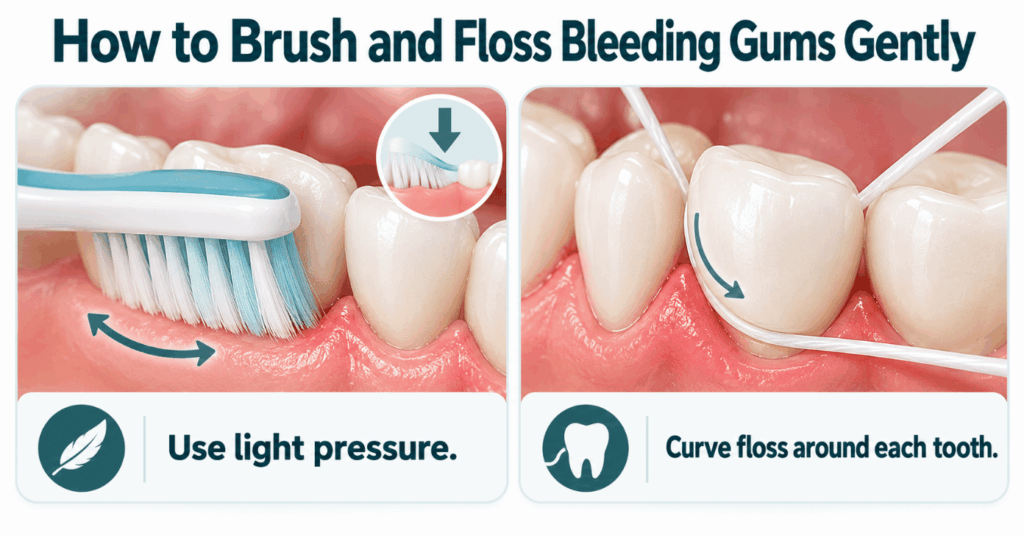
- Use A Soft-Bristled Toothbrush: Brush with light pressure and small, controlled movements along the gum line.
- Clean Between the Teeth Carefully: Use floss or another interdental cleaner that fits the space. Do not snap floss into the gums.
- Check For A Local Irritant: Look for trapped food, a sharp restoration, or an appliance rubbing the tissue. Do not use pins or other sharp objects under the gum.
- Track the Pattern: Note whether the bleeding affects one spot or many areas and whether it returns without brushing.
- Arrange A Dental Examination When Needed: Home care cannot remove hardened tartar or diagnose periodontitis, an infection, or a medical cause.
Should You Keep Brushing And Flossing?
In most cases, yes. Avoiding an inflamed area allows more plaque to remain along the gum line, which can keep the gums irritated. Use a soft brush, reduce the pressure, and clean slowly rather than skipping the bleeding area.
Pause and call a dentist for instructions if cleaning causes heavy bleeding, severe pain, or repeated injury. You may also need different advice after oral surgery or another recent procedure because disturbing a healing blood clot can restart bleeding.
Can Mouthwash or Salt Water Help?
A gentle warm salt-water rinse may temporarily soothe irritated tissue, but it does not remove plaque or tartar. Some therapeutic mouthwashes can help control plaque or gingivitis when used as part of a suitable care plan. The American Dental Association’s review of therapeutic mouthrinses explains that mouthwash can support oral hygiene but cannot replace brushing and flossing.
- Do Follow the Label: Use the correct amount and avoid swallowing the rinse.
- Do Ask About Medicated Rinses: Prescription products such as chlorhexidine can have side effects and are usually used for a specific reason and period.
- Do Not Use Rinsing To Delay Care: Mouthwash cannot remove hard tartar or treat deeper periodontal pockets.
- Do Not Assume Burning Means Better Cleaning: A strong sensation does not show that a product is more effective.
How A Dentist Finds The Cause
The dentist will first ask when the bleeding began, how often it happens, and whether it occurs during brushing, eating, or without contact. Be ready to discuss pregnancy, smoking, oral-care habits, recent dental treatment, health conditions, supplements, medicines, easy bruising, and bleeding elsewhere.
The examination may include:
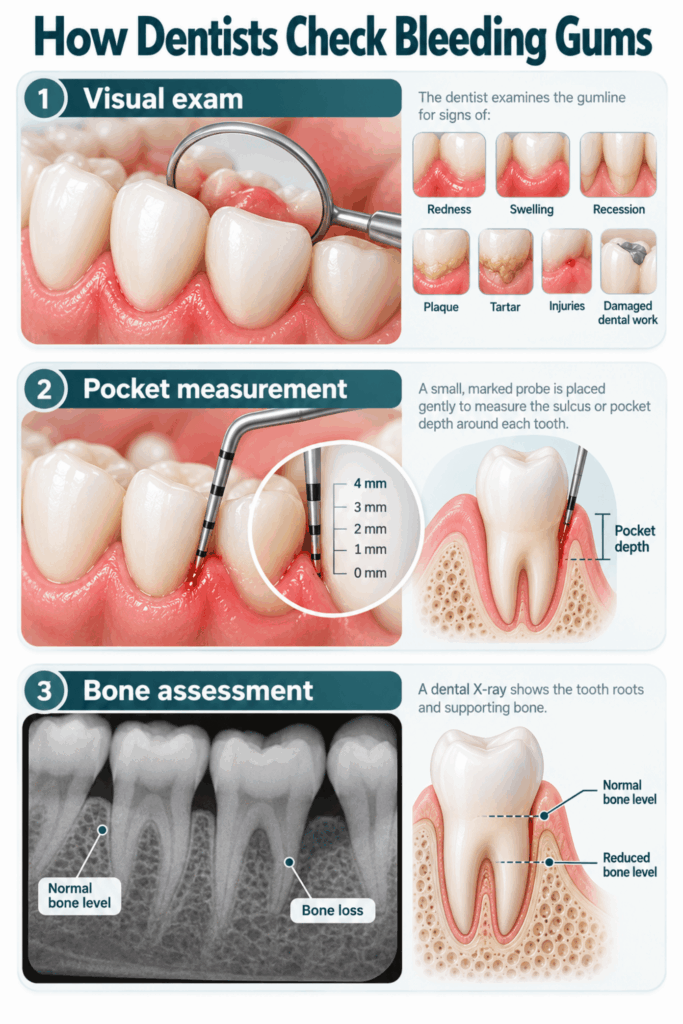
- A Gum and Tooth Check: The dentist looks for redness, swelling, plaque, tartar, recession, injuries, decay, and damaged dental work.
- Periodontal Measurements: A small marked instrument called a periodontal probe measures the spaces around the teeth and checks for bleeding with gentle pressure.
- Tooth-Mobility and Bite Checks: Movement or a changing bite may point to loss of supporting tissue or another dental problem.
- Dental X-Rays When Needed: Images can help show bone loss, tartar below the gumline, tooth infection, and other hidden findings. They are ordered according to the clinical need.
- Medical Follow-Up: If the mouth does not fully explain the bleeding, the dentist may recommend evaluation by a physician. That assessment may include a medication review or blood testing.
Gum bleeding is a finding, not a complete diagnosis. The treatment plan should address what is causing your bleeding gums rather than only the visible blood.
How Bleeding Gums Are Treated
Treatment depends on whether the cause is gingivitis, periodontitis, an injury, a dental appliance, medicine, or a health condition. Stopping the bleeding for a moment does not correct plaque buildup, tartar, or deeper inflammation.
Treatment For Plaque-Related Gingivitis
Treatment starts with effective plaque control. A dentist or dental hygienist can remove deposits that you cannot clean at home and show you how to brush along the gum line without damaging the tissue. You may also need help choosing floss, interdental brushes, or another cleaner that fits the spaces between your teeth.
Daily brushing and interdental cleaning must continue after the appointment. Gingivitis can often return if plaque builds up again, so follow-up care matters even when your gums no longer bleed.
Treatment For Periodontitis
Periodontitis requires professional care below the gum line. Initial treatment commonly includes oral-hygiene instruction, control of risks such as smoking, and subgingival instrumentation, often called scaling and root planing or deep cleaning, to remove deposits from root surfaces.
The dentist or periodontist then checks how the tissues respond. Some patients need additional treatment for deep pockets, difficult root shapes, or areas that remain inflamed. The evidence-based EFP guideline for treating stages I–III periodontitis describes a stepwise plan based on disease severity and treatment response.
Treatment can control disease and help patients keep their teeth, but it cannot promise to replace every part of the gum or bone already lost. Ongoing periodontal maintenance is often needed to limit recurrence.
Treatment For Injury or Dental Appliances
A minor gum injury may settle once the source of irritation is removed. Your dentist can smooth a rough filling, repair a broken crown, adjust an appliance, or show you how to clean without cutting the tissue.
Do not keep wearing an appliance that creates an open sore or repeated bleeding unless your dentist advises otherwise. Continued rubbing can delay healing and make the area harder to keep clean.
Treatment For Medical or Medication-Related Bleeding
When medicines or a medical condition may be contributing, the dentist may coordinate care with your physician. This is especially important when you have unusual bruising, bleeding elsewhere, a known clotting disorder, liver or kidney disease, or medicines that affect clotting.
Never stop an anticoagulant or antiplatelet medicine on your own. The American Dental Association’s guidance on anticoagulants, antiplatelet medicines, and dental procedures notes that most patients do not need to alter these medicines for dental treatment; any change for a higher-risk patient should involve the prescribing physician.
When To Make A Dental Appointment
Arrange a dental examination when the bleeding happens regularly, returns after improving, or has no clear cause. You do not need to wait for pain because early gum disease may cause little discomfort.
Book an appointment if you notice:
- Repeated Bleeding: Your gums bleed frequently during gentle brushing or flossing.
- Spontaneous Bleeding: Blood appears without cleaning, eating, or a known injury.
- Red or Swollen Gums: The tissue looks puffy, shiny, dark red, or tender.
- Persistent Bad Breath: The odor or unpleasant taste remains despite regular cleaning.
- Receding Gums: More of the tooth or root surface has become visible.
- Pus or A Gum Lump: Drainage or a localized swelling may indicate infection.
- Loose or Shifting Teeth: Tooth movement needs professional assessment.
- An Irritating Restoration or Appliance: A crown, filling, denture, retainer, or mouthguard repeatedly rubs the gum.
- Bleeding Despite Better Home Care: Continued symptoms may involve tartar below the gum line or a cause that home cleaning cannot correct.
Tell the dental office about medicines that affect bleeding when you schedule the visit. This helps the team plan your examination and any necessary treatment safely.
When Bleeding Gums Need Urgent Help
Mild bleeding during brushing or flossing usually does not require emergency care. Seek faster help when the bleeding is heavy, will not stop, follows a serious injury, or occurs with symptoms that may indicate a spreading infection or a medical problem.
Call Emergency Services Now If:
- Breathing or Swallowing Is Difficult: Severe swelling of the mouth, face, throat, or neck may affect the airway.
- Heavy Bleeding Will Not Stop: Apply steady pressure with clean gauze while arranging emergency care. NHS guidance identifies heavy bleeding from the mouth that will not stop as an emergency.
- You Feel Faint or Seriously Unwell: Weakness, confusion, pale or clammy skin, or difficulty staying awake with ongoing bleeding requires immediate help.
- A Major Injury Has Occurred: Seek emergency assessment after significant trauma to the face, jaw, mouth, or teeth.
Seek Urgent Dental or Medical Care If:
- Swelling Is Getting Worse: Facial swelling, fever, pus, severe pain, or increasing difficulty opening the mouth may indicate an infection that needs prompt treatment.
- Bleeding Keeps Restarting: Contact a dentist urgently if bleeding continues despite steady pressure or repeatedly returns after dental treatment or an injury.
- Bleeding Occurs Elsewhere: Gum bleeding with unexplained bruising, frequent nosebleeds, or blood in the urine or stool may require medical assessment.
If you feel faint, weak, or seriously unwell, do not drive yourself. Ask someone to take you or call emergency services.
How To Prevent Bleeding Gums From Returning
A consistent routine reduces plaque and helps keep your teeth and gums healthy. The best tools and visit schedule may differ if you have periodontitis, braces, implants, limited hand movement, or dental appliances.
For daily care:
- Brush Twice A Day: Use fluoride toothpaste and a soft-bristled brush. Angle the bristles toward the gum line and use light pressure.
- Clean Between Your Teeth Daily: Use floss, an interdental brush, or another tool recommended for the size and shape of your spaces.
- Clean All Gumline Areas: Pay attention to crowded teeth, back teeth, bridges, implants, and areas around orthodontic appliances.
- Replace Worn Brush Heads: Bent or frayed bristles clean less effectively and may irritate the gums.
For long-term prevention:
- Attend Dental Visits: Professional checks can find tartar, gingivitis, periodontal pockets, and damaged dental work that you may not notice.
- Follow A Periodontal Maintenance Plan: If you have periodontitis, regular maintenance helps control the condition after active treatment.
- Avoid Tobacco: Smoking raises the risk of periodontal disease, can impair healing, and may hide visible inflammation.
- Manage Relevant Health Conditions: Work with your healthcare team to manage diabetes, nutritional problems, and conditions that affect healing or clotting.
- Review New Bleeding: Do not ignore bleeding gums simply because the symptom has happened before. A changing pattern may need a fresh examination.
Common Questions About Bleeding Gums
Do Bleeding Gums Mean I Need A Deep Cleaning?
No. Bleeding alone does not show whether you need routine cleaning or scaling and root planing. A dentist considers tartar location, periodontal pocket depths, gum attachment, bone levels, and your full health history. Deep cleaning is generally used for periodontitis, while plaque-related gingivitis may improve with routine professional cleaning and better daily care.
Can Bleeding Gums Lead To Tooth Loss?
The bleeding itself does not make a tooth loose. However, it may be a sign of periodontitis, which can damage the gum attachment and bone supporting the teeth. Left untreated, advanced gum disease can lead to tooth movement and tooth loss. An examination can distinguish early inflammation from more serious periodontal damage.
Why Are My Gums Bleeding After A Dental Cleaning?
Inflamed gums may bleed during or shortly after plaque and tartar removal. The tissue should become less tender as inflammation settles and daily cleaning improves. Call the dental office if bleeding is heavy, keeps restarting, or appears with increasing pain, swelling, fever, or another symptom that was not expected after your treatment.
Should I See A Dentist If My Gums Have Stopped Bleeding?
An isolated episode after a clear minor injury may not require a special visit. Arrange an examination if the bleeding has been recurring, affected several areas, or came with swelling, recession, bad breath, or loose teeth. You should also attend if you are overdue for routine care, even when the symptom has stopped.
Can I Use An Electric Toothbrush If My Gums Bleed?
Usually, yes. Choose a soft brush head, guide it gently along the gum line, and let the brush do the work instead of pressing or scrubbing. A pressure sensor can help if you tend to push too hard. Continued bleeding still needs assessment because changing the toothbrush cannot remove tartar or treat periodontitis.
Can Smoking Hide Bleeding Gums?
Yes. Smoking can reduce the visible bleeding and redness that normally accompany gum inflammation, partly by altering the tissue’s vascular and inflammatory response. This means a smoker can have significant periodontal disease without obvious blood in the sink. The absence of bleeding should not replace regular gum examinations, especially for someone who uses tobacco.
Are Bleeding Gums Contagious?
Bleeding gums are not contagious. Oral bacteria can pass between people through saliva, but exposure alone does not mean another person will develop gingivitis or periodontitis. Plaque control, smoking, diabetes, genetics, and other personal factors influence risk. Avoid sharing toothbrushes because they may carry blood and microorganisms.
The Bottom Line
Bleeding gums most often point to plaque-related inflammation, but brushing injuries, pregnancy, medicines, and health conditions can also contribute. Clean gently with a soft toothbrush, continue careful interdental cleaning, and arrange a dental examination if the bleeding repeats, begins without contact, or appears with other gum changes.
Seek prompt help for heavy bleeding that will not stop, major injury, spreading swelling, difficulty breathing or swallowing, or bleeding elsewhere in the body. Finding the cause early gives you the best chance to treat the problem and keep your teeth and gums strong.
